

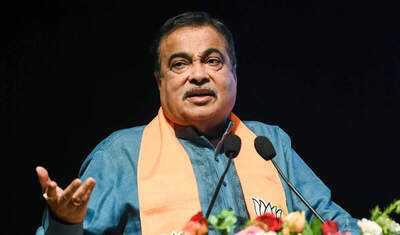
Union Minister for Road Transport and Highways Nitin Gadkari has proposed the introduction of innovative flying buses as part of India’s future urban mobility ecosystem, highlighting the need to adopt cutting-edge transportation technologies to address growing traffic congestion and improve connectivity in cities.
Speaking about the future of transportation, Gadkari emphasised that India must embrace modern mobility solutions capable of meeting the demands of rapidly expanding urban populations. He said emerging technologies such as flying buses have the potential to revolutionise public transportation by reducing travel time, easing pressure on roads, and offering efficient alternatives to conventional transport systems.
The proposal reflects the government’s continued focus on innovation, sustainable transportation, and smart infrastructure development.
Flying Buses Envisioned as a Modern Mobility Solution
According to Gadkari, flying buses could become an important component of future urban transport networks by operating above congested roads and providing faster connectivity between different parts of cities.
Unlike conventional buses, these advanced aerial vehicles are expected to utilise modern aviation and electric mobility technologies to transport passengers efficiently while avoiding traffic bottlenecks. The concept aligns with global efforts to explore advanced air mobility systems capable of transforming public transportation.
Although the technology is still evolving, the proposal demonstrates India’s interest in exploring futuristic mobility solutions that could complement existing road, rail, and metro networks.
Addressing Urban Traffic Challenges
Rapid urbanisation has led to increasing traffic congestion in many Indian cities, resulting in longer travel times, higher fuel consumption, and increased environmental concerns.
Gadkari noted that innovative transportation technologies will be essential for addressing these challenges in the coming decades. He observed that conventional road expansion alone may not be sufficient to accommodate the growing number of vehicles in densely populated urban areas.
Flying buses, if successfully implemented, could reduce dependence on congested road networks while improving the overall efficiency of urban transportation systems.
The proposal also highlights the importance of long-term planning in preparing cities for future mobility needs.
Focus on Sustainable and Smart Transportation
The Union Minister reiterated the government’s commitment to promoting sustainable transportation through the adoption of environmentally friendly technologies.
India has already been encouraging electric vehicles, alternative fuels, intelligent transport systems, and green mobility initiatives aimed at reducing carbon emissions and improving energy efficiency. Flying buses, particularly if powered by clean energy technologies, could contribute to these broader sustainability objectives.
Gadkari has consistently advocated the use of innovation to modernise India’s transport infrastructure while balancing economic growth with environmental responsibility.
The concept fits within the larger vision of creating smarter, cleaner, and more efficient cities.
Technology Could Revolutionise Public Transport
Experts believe that advanced air mobility technologies have the potential to reshape urban transportation by introducing faster and more flexible travel options.
Flying buses could eventually serve fixed routes connecting airports, business districts, transport hubs, educational institutions, and residential areas. Such systems may significantly reduce travel time while offering greater convenience for commuters.
However, experts also note that widespread implementation would require substantial technological development, regulatory approvals, safety standards, air traffic management systems, and supporting infrastructure before commercial operations become feasible.
The proposal represents an early vision of how future transportation networks may evolve.
Infrastructure and Regulatory Preparedness Essential
Successful deployment of flying buses would depend on the development of specialised infrastructure, including designated landing facilities, maintenance centres, charging stations, communication systems, and integrated traffic management networks.
Authorities would also need to establish comprehensive regulatory frameworks covering passenger safety, certification, licensing, airspace management, operational standards, and emergency response procedures.
Experts emphasise that collaboration among government agencies, aviation authorities, technology developers, infrastructure planners, and private industry will be essential to transform the concept into a practical transportation solution.
Investment in research and innovation will also play a critical role in advancing the technology.
India’s Push Towards Future Mobility
India has been steadily expanding its focus on future mobility through investments in electric vehicles, hydrogen-powered transport, intelligent highways, digital traffic management, and smart city initiatives.
The proposal for flying buses complements these efforts by encouraging exploration of emerging technologies capable of enhancing transportation efficiency over the long term.
Government initiatives promoting innovation have also encouraged startups, research institutions, and technology companies to develop next-generation mobility solutions that can support India’s rapidly growing economy.
Officials believe that adopting advanced transportation technologies will strengthen India’s position as a leader in future mobility innovation.
Vision for Smarter Cities
Gadkari’s proposal reflects a broader vision of creating cities that are better connected, environmentally sustainable, and technologically advanced.
As urban populations continue to grow, governments worldwide are increasingly exploring innovative transport systems capable of reducing congestion while improving accessibility and quality of life. Flying buses represent one of several concepts being examined as part of this global transformation.
While commercial deployment may still require considerable technological advancement and regulatory preparation, the proposal highlights India’s willingness to explore bold transportation ideas that could redefine urban mobility in the years ahead.
By proposing innovative flying buses, Nitin Gadkari has opened discussions on the future of public transportation in India. The concept underscores the government’s emphasis on innovation, sustainable development, and smart mobility while encouraging long-term planning for rapidly expanding urban centres. If supported by technological progress, infrastructure development, and appropriate regulations, flying buses could eventually become an important component of India’s next-generation transport ecosystem, helping transform the way people travel in the country’s cities.