

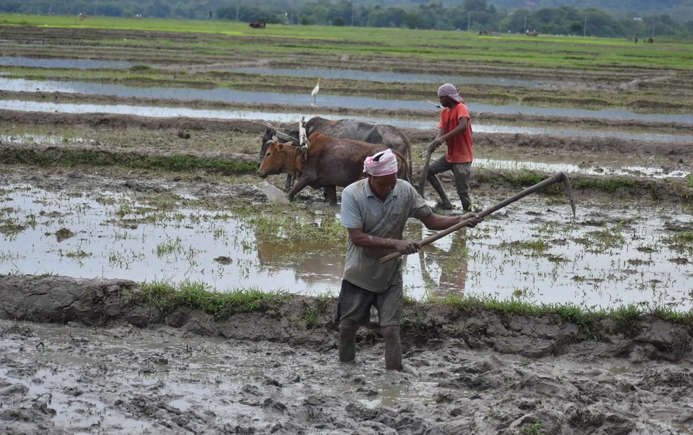
As climate change increasingly disrupts agricultural systems worldwide, indigenous farming practices in Northeast India are drawing renewed attention from researchers, policymakers, environmentalists, and farming communities. Long regarded as repositories of traditional ecological knowledge, these farming systems are now being recognized for their potential to enhance climate resilience, preserve biodiversity, and support sustainable livelihoods in one of India’s most ecologically sensitive regions.
The Northeast, comprising eight states and home to hundreds of indigenous communities, has a rich agricultural heritage shaped by centuries of interaction with diverse landscapes and climatic conditions. Traditional farming methods developed by these communities have enabled them to cultivate crops, manage natural resources, and maintain food security while preserving environmental balance.
As climate threats such as erratic rainfall, rising temperatures, soil degradation, floods, and landslides become increasingly frequent, experts are examining how indigenous agricultural practices can contribute to more resilient and sustainable food systems.
Climate Change Poses Growing Challenges
Agriculture in Northeast India is particularly vulnerable to climate change due to the region’s dependence on rainfall and its fragile ecological environment. Farmers have reported changes in weather patterns, delayed monsoons, prolonged dry spells, unseasonal rainfall, and increased occurrences of extreme weather events.
These disruptions affect crop productivity, water availability, and farming schedules. In several areas, traditional cropping cycles that have been followed for generations are becoming increasingly difficult to predict.
The impact is especially significant for small and marginal farmers who rely heavily on agriculture for their livelihoods. Reduced yields and unpredictable weather conditions can affect food security and economic stability.
Scientists warn that climate-related challenges are likely to intensify in the coming decades, making adaptation strategies increasingly important for rural communities across the region.
Indigenous Knowledge as a Climate Solution
Amid these challenges, indigenous farming systems are attracting attention for their inherent adaptability and sustainability. Many traditional agricultural practices have evolved over centuries through observation, experimentation, and close interaction with local ecosystems.
Unlike intensive agricultural models that often depend heavily on external inputs, indigenous systems generally emphasize biodiversity, soil conservation, water management, and ecological balance. These characteristics can make them more resilient to environmental stress.
Researchers have noted that indigenous communities possess extensive knowledge about crop diversity, weather patterns, seed preservation, and resource management. Such knowledge can complement modern scientific approaches and contribute to climate adaptation efforts.
There is growing recognition that traditional agricultural wisdom may hold valuable lessons for addressing contemporary environmental challenges.
The Legacy of Traditional Farming Systems
Northeast India is home to a variety of indigenous farming systems, each adapted to specific geographical and ecological conditions. These include shifting cultivation practices, terrace farming, agroforestry systems, mixed cropping, and community-based resource management models.
Many of these systems emphasize diversification rather than monoculture. Farmers often cultivate multiple crops simultaneously, reducing risks associated with weather variability and pest outbreaks.
Traditional agricultural landscapes frequently integrate crops, trees, livestock, and water resources into a single system, creating ecological stability and supporting biodiversity.
Experts argue that such integrated approaches are increasingly relevant as policymakers seek sustainable alternatives to environmentally intensive farming methods.
Angami Terrace Farming as a Model
One of the most widely studied examples of indigenous agriculture in Northeast India is the terrace farming system practiced by the Angami community in Nagaland. This method involves cultivating rice on carefully engineered terraces built along hill slopes.
The system utilizes sophisticated water management techniques that allow farmers to regulate irrigation while minimizing soil erosion. Over generations, local communities have developed extensive knowledge about maintaining productivity while protecting the surrounding environment.
Researchers have highlighted the sustainability of this farming model, noting its ability to conserve water, preserve soil fertility, and support biodiversity.
Studies suggest that such traditional practices could provide valuable insights for climate-resilient agriculture in other regions facing similar environmental challenges.
Biodiversity at the Core of Indigenous Agriculture
A defining feature of indigenous farming systems is their emphasis on biodiversity. Traditional farmers often cultivate multiple crop varieties, including local seeds adapted to specific environmental conditions.
This diversity enhances resilience by reducing dependence on a single crop and providing protection against diseases, pests, and climate-related risks. It also contributes to nutritional security by supporting a wider range of food sources.
Many indigenous communities maintain seed-saving traditions that preserve valuable genetic resources. These locally adapted varieties may possess traits that enable them to withstand droughts, floods, or changing climatic conditions more effectively than some commercial alternatives.
Conservationists increasingly view indigenous agriculture as an important tool for safeguarding agricultural biodiversity.
Sustainable Resource Management
Indigenous farming practices are often closely linked to sustainable resource management. Communities typically develop systems that regulate the use of forests, water sources, grazing lands, and agricultural fields.
These approaches help maintain ecological balance while ensuring that resources remain available for future generations. Traditional knowledge often incorporates principles of conservation, collective responsibility, and long-term stewardship.
For example, many indigenous communities follow customary rules governing land use and natural resource management. Such practices can contribute to ecosystem resilience and reduce environmental degradation.
As concerns about sustainability grow, policymakers are paying greater attention to community-led approaches to resource management.
Balancing Tradition and Modern Agriculture
While indigenous farming systems offer valuable strengths, experts emphasize the importance of integrating traditional knowledge with modern agricultural innovations. Climate change presents complex challenges that require a combination of approaches.
Improved weather forecasting, scientific research, climate-resilient crop varieties, and modern technologies can complement indigenous practices and enhance agricultural productivity.
Rather than viewing traditional and modern systems as competing alternatives, many researchers advocate a collaborative approach that combines the best aspects of both. Such integration can improve resilience while preserving cultural heritage and ecological sustainability.
The challenge lies in ensuring that modernization efforts do not undermine valuable traditional knowledge or disrupt established community practices.
Policy Support and Recognition
In recent years, there has been growing policy interest in recognizing and supporting indigenous agricultural systems. Government agencies, research institutions, and international organizations have increasingly acknowledged the role of traditional knowledge in climate adaptation and sustainable development.
Several initiatives aim to document indigenous practices, promote community participation, and encourage knowledge exchange between farmers and researchers. Such efforts seek to ensure that traditional expertise is preserved and incorporated into broader agricultural strategies.
Experts argue that policy frameworks should provide greater support for indigenous communities by facilitating access to markets, infrastructure, education, and climate adaptation resources.
Recognition of indigenous farming practices can also contribute to cultural preservation and community empowerment.
Importance for Food Security
Climate change poses significant risks to food security, particularly in regions where agriculture remains heavily dependent on natural conditions. Indigenous farming systems offer important lessons in diversification, resilience, and sustainability that can strengthen food production under changing climatic conditions.
By maintaining diverse cropping systems and preserving local seed varieties, indigenous communities have developed strategies that help reduce vulnerability to environmental shocks. These approaches can contribute to more stable food supplies and improved nutritional outcomes.
Experts believe that strengthening climate-resilient agriculture will require learning from communities that have successfully adapted to environmental variability over long periods.
The experiences of indigenous farmers in Northeast India therefore hold relevance not only for the region but also for broader agricultural policy discussions.
Looking Ahead
As climate change continues to reshape agricultural landscapes, the indigenous farming systems of Northeast India are gaining recognition as valuable sources of resilience and sustainability. Practices developed over centuries by local communities offer important insights into biodiversity conservation, resource management, and climate adaptation.
The region’s traditional agricultural knowledge demonstrates how farming can be productive while remaining closely aligned with ecological principles. From terrace cultivation in Nagaland to diversified cropping systems across the Northeast, indigenous practices highlight the potential of community-based approaches to sustainable development.
Moving forward, experts emphasize the need to protect, document, and integrate this knowledge into contemporary agricultural strategies. Combining traditional wisdom with scientific innovation could help strengthen resilience against climate threats while supporting food security and rural livelihoods.
As policymakers search for sustainable solutions to the challenges posed by climate change, Northeast India’s indigenous farming heritage may prove to be one of the region’s most valuable assets. Its lessons in adaptation, conservation, and coexistence with nature are increasingly relevant in a world facing growing environmental uncertainty.