

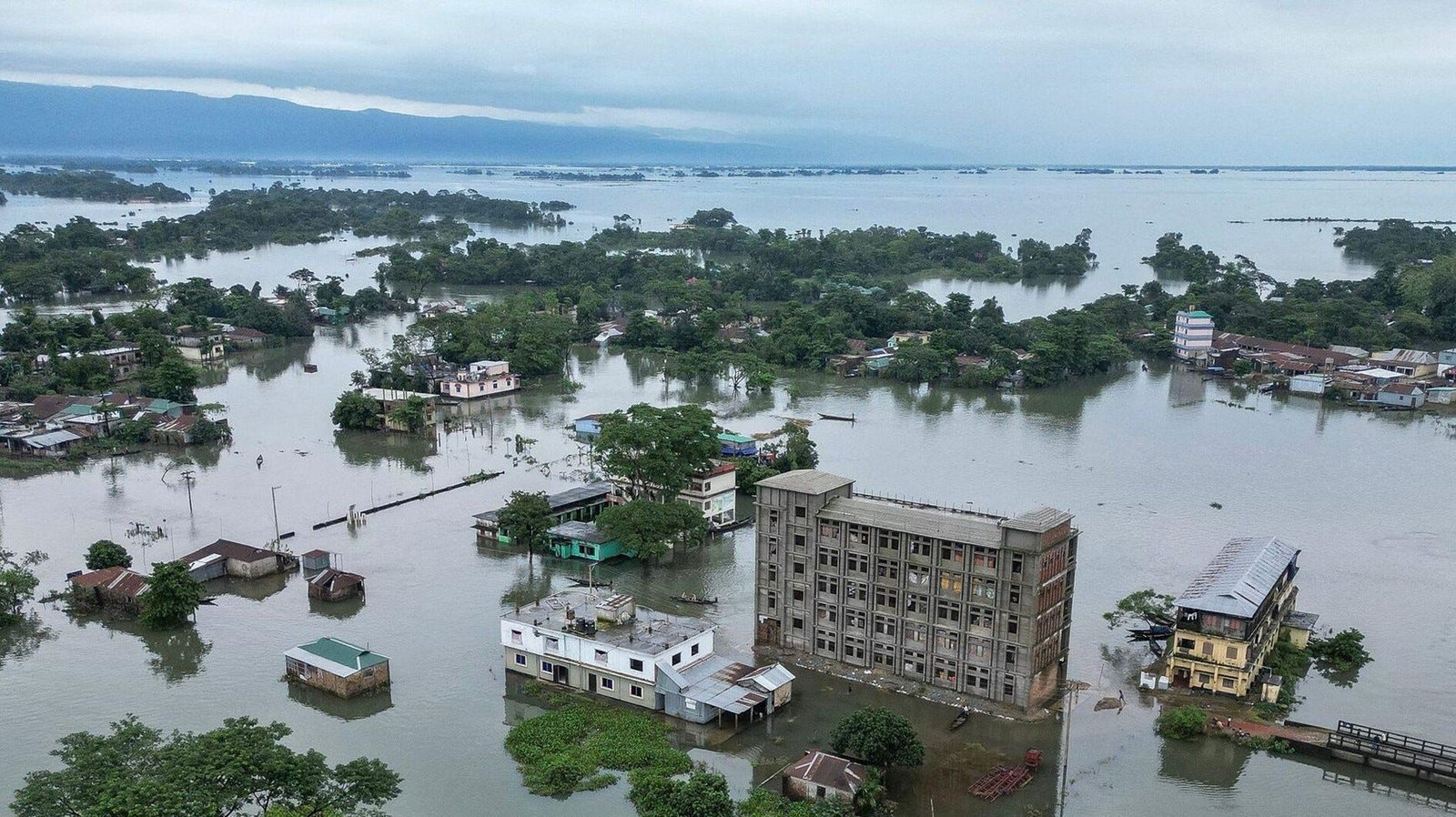
Opposition parties have intensified their criticism of the Central Government, alleging that long-promised commitments to establish permanent flood mitigation infrastructure across Northeast India have not been adequately fulfilled. The criticism comes amid recurring monsoon floods and landslides affecting multiple states in the region, leading to renewed political debate over disaster preparedness, infrastructure investment, and long-term flood management strategies. Moreover, the issue has emerged as a significant point of contention in discussions surrounding regional development and climate resilience.
Manipur Milk Producers’ Cooperative Union Launches Modernisation Drive to Boost Dairy Production
Chief Minister Himanta Biswa Sarma Announces Major Cabinet Expansion
Opposition Questions Long-Term Flood Management Strategies
Political opposition leaders have reportedly accused the Central Government of failing to implement comprehensive and permanent flood control mechanisms despite repeated assurances regarding disaster mitigation and infrastructure development. Consequently, the debate has gained considerable political and public attention during the ongoing monsoon season.
According to opposition representatives, recurring floods and associated infrastructure damage highlight the need for stronger long-term planning and investment in flood management systems. Moreover, critics have argued that temporary relief measures alone are insufficient to address the structural challenges faced by flood-prone regions. Therefore, calls for more robust and permanent solutions have intensified.
Political observers noted that flood management has remained a persistent challenge across several northeastern states due to complex geographical and climatic conditions. As a result, discussions regarding infrastructure modernization and disaster preparedness continue to dominate public discourse.
Meanwhile, authorities continue to conduct relief and rehabilitation operations in affected areas.
Flood Mitigation Infrastructure Remains a Key Development Challenge
Experts have emphasized that effective flood management requires sustained investment in infrastructure, early warning systems, river management, and climate adaptation measures. Moreover, the increasing frequency and intensity of extreme weather events have placed additional pressure on existing disaster management frameworks. Therefore, long-term mitigation strategies remain a major policy priority.
Environmental and infrastructure analysts noted that permanent flood control systems often require extensive planning, intergovernmental coordination, and substantial financial resources. Consequently, governments frequently adopt multi-phase approaches involving embankments, drainage networks, river basin management, and resilience planning. Such initiatives can contribute to reducing disaster risks and improving community preparedness.
Furthermore, investments in flood mitigation infrastructure can support economic stability and protect critical public assets. As a result, policymakers continue to debate the most effective strategies for long-term disaster management.
Meanwhile, experts continue to advocate for integrated and science-based approaches to flood prevention.
Political Debate Intensifies Over Disaster Preparedness
The latest criticism has also brought renewed attention to broader questions surrounding disaster preparedness, governance, and public infrastructure investment. Moreover, political parties across the spectrum continue to debate the effectiveness of existing disaster management policies and institutional response mechanisms. Therefore, flood mitigation remains a prominent political issue.
Political analysts observed that natural disasters often become focal points for discussions on governance effectiveness and development priorities. Consequently, demands for greater accountability, improved planning, and enhanced infrastructure investment frequently intensify following major disaster events. Such debates can influence future policy decisions and development strategies.
Furthermore, public expectations regarding disaster resilience and infrastructure preparedness continue to increase. As a result, governments face growing pressure to strengthen preventive measures and improve response capabilities.
Meanwhile, discussions regarding future flood mitigation projects remain ongoing.
Long-Term Resilience and Climate Adaptation Remain Essential
The ongoing debate underscores the broader challenge of developing sustainable and resilient infrastructure systems capable of addressing future climate-related risks. Moreover, experts continue to emphasize the importance of combining disaster preparedness, environmental management, and infrastructure development strategies. Therefore, long-term resilience planning remains a critical objective.
Climate and disaster management specialists noted that successful flood mitigation requires continuous investment, scientific planning, and institutional coordination. Consequently, governments increasingly prioritize climate adaptation measures and disaster-resilient infrastructure projects. Such efforts contribute to improving public safety and long-term economic stability.
Furthermore, strengthening flood management systems may help reduce future humanitarian and economic losses. As a result, policymakers remain focused on enhancing resilience and preparedness across vulnerable regions.
Conclusion
The opposition’s criticism of the government’s flood management efforts has reignited debate over the effectiveness of long-term disaster mitigation strategies in Northeast India. Moreover, the discussion highlights the continuing challenges posed by recurring floods, climate variability, and infrastructure vulnerabilities.
As policymakers, experts, and political leaders continue to assess the region’s disaster preparedness framework, investments in sustainable flood management and climate resilience are expected to remain central to future development planning. Therefore, the issue will likely continue to attract significant public and political attention.
The latest debate underscores the importance of long-term planning, infrastructure investment, and coordinated governance in addressing the recurring challenge of floods in Northeast India.
FAQs
1. What criticism has the opposition raised?
The opposition has alleged that long-promised permanent flood mitigation measures have not been adequately implemented.
2. Why has the issue gained attention?
Recurring floods and widespread damage across Northeast India have intensified concerns over disaster preparedness.
3. What types of flood mitigation measures are often proposed?
These include embankments, drainage systems, river management projects, and early warning infrastructure.
4. Why is long-term flood management important?
It helps reduce disaster risks, protect infrastructure, and improve community resilience.
5. What broader challenges does this debate highlight?
The discussion reflects concerns about climate adaptation, infrastructure planning, and disaster governance.