

More than 700 protesters were detained in New Delhi on Friday, October 2, as demonstrations demanding the resignation of Chief Election Commissioner (CEC) Gyanesh Kumar spread across several Indian cities, including Mumbai, Ahmedabad, Lucknow and Patna.
The protests were organised by opposition parties, student organisations, youth groups and civil society members over alleged irregularities in the Election Commission’s Special Intensive Revision (SIR) of electoral rolls.
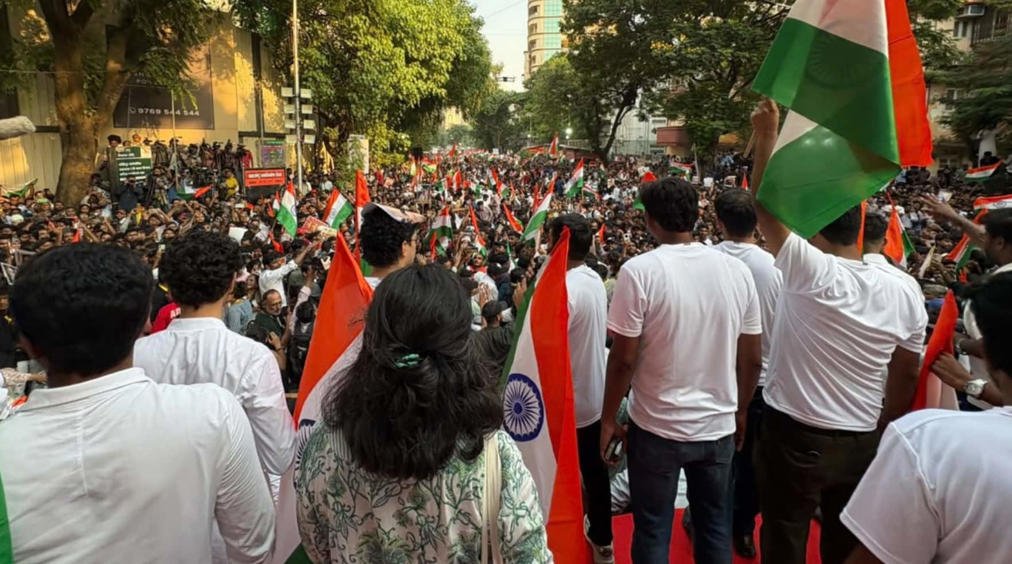
In Delhi, demonstrators attempted to reach Jantar Mantar despite police restrictions, leading to multiple detentions and the closure of several roads and metro station gates. Meanwhile, thousands gathered at Mumbai’s Shivaji Park for a demonstration organised by the Cockroach Janata Party (CJP).
Opposition Leaders and Student Activists Detained in Delhi
The Delhi demonstration witnessed the detention of several prominent political leaders, including Aam Aadmi Party (AAP) leaders Atishi, Saurabh Bharadwaj, Sanjeev Jha and Sanjay Singh.
Communist Party of India (Marxist) leaders Brinda Karat and M A Baby, RJD leader Manoj Jha, activist Yogendra Yadav, AISA president Neha Bora and former JNU Students’ Union president Aishe Ghosh were also among those detained.
Police said approximately 700 people were detained from Jantar Mantar and surrounding areas.
Authorities had denied permission for the gathering and imposed restrictions across parts of the New Delhi district, citing security and law-and-order concerns.
Protesters arriving from Ashoka Road, Janpath and Tolstoy Road were stopped at barricades and taken away in police vehicles.
Mumbai Witnesses Thousands at Shivaji Park
In Mumbai, thousands of people gathered at Shivaji Park despite police refusing permission for the demonstration.
The rally was organised by the Cockroach Janata Party, led by founder Abhijeet Dipke, and demanded the resignation of Gyanesh Kumar over alleged voter-list irregularities.
Several public figures attended the gathering, including actors Naseeruddin Shah and Shabana Azmi, singer Vishal Dadlani and Tushar Gandhi, great-grandson of Mahatma Gandhi.
Protesters carried national flags and placards calling for the CEC’s resignation.
The demonstration also received support from Shiv Sena (UBT) and Maharashtra Navnirman Sena (MNS).
Police maintained a heavy presence around the venue, while access routes were barricaded to regulate the movement of demonstrators.
Demonstrations Reported in Ahmedabad, Lucknow and Patna
The protest movement also reached Ahmedabad, Lucknow and Patna, with demonstrations focusing on electoral transparency and the revision of voter lists.
In Ahmedabad, protesters gathered outside Gujarat University and raised slogans demanding the resignation of the Chief Election Commissioner.
Demonstrations were also reported in Lucknow and Patna, where participants raised concerns over the SIR process and alleged exclusion of eligible voters.
The protests formed part of a wider opposition campaign seeking accountability from the Election Commission over the preparation and revision of electoral rolls.
SIR Process at Centre of Opposition’s Anger
The Special Intensive Revision of electoral rolls has emerged as a major point of disagreement between opposition parties and the Election Commission.
Opposition leaders have alleged that the exercise could lead to the deletion of eligible voters and have demanded greater transparency in the verification process.
The protesters have also questioned the functioning of the Election Commission under Gyanesh Kumar and called for his resignation.
The Election Commission, however, has defended the revision exercise, maintaining that it is intended to remove duplicate and ineligible entries while ensuring that all eligible citizens are included in the electoral rolls.
The poll panel has also stated that decisions concerning the SIR were taken unanimously by its three-member body.
Police Restrictions and Metro Disruptions in Delhi
The Delhi protests resulted in significant security arrangements and restrictions on public movement.
Entry and exit gates at 12 metro stations, including Rajiv Chowk, Central Secretariat and Janpath, remained closed during parts of the day.
Police deployed personnel around Jantar Mantar and adjoining roads to prevent unauthorised gatherings.
Several protesters criticised the denial of permission, arguing that peaceful demonstrations were a constitutional right. Police maintained that restrictions were necessary to manage security and public order.
Opposition Plans Further Protests Over Electoral Transparency
The demonstrations on Gandhi Jayanti marked a fresh escalation in the opposition’s campaign against the SIR exercise and the functioning of the Election Commission.
The Cockroach Janata Party has indicated that its agitation will continue, while opposition parties have also discussed further demonstrations and coordinated action.
With protests taking place across multiple cities, the debate over voter-list revisions, electoral transparency and the Election Commission’s accountability has moved to the forefront of national political discourse.