


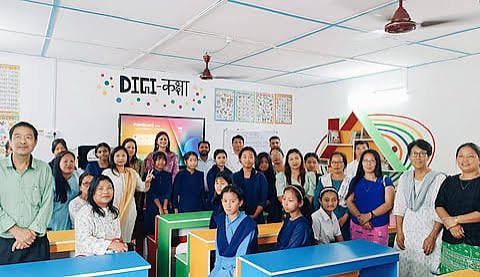
Pasighat smart education systems are strengthening the use of digital learning tools in schools across East Siang district of Arunachal Pradesh. Government data shows that 20 schools in East Siang had smart classrooms, while wider state initiatives have continued to expand technology-enabled education.
The move is particularly relevant for schools serving communities where access to learning resources can remain challenging. Digital classrooms can give teachers additional ways to explain lessons through visual and interactive content. Moreover, the expansion supports Arunachal Pradesh’s broader push toward technology-supported education.
Loktak Lake Fishermen Schemes: Manipur Expands Support for Sustainable Floating Livelihoods
Pasighat Smart Education Systems Bring Digital Learning Closer to Students
The development of Pasighat smart education systems forms part of a wider effort to modernise classroom teaching in Arunachal Pradesh. Government records show that East Siang had 20 schools with smart classrooms in the available district-level data. Across the state, the same government data listed smart classrooms in several districts, demonstrating that digital education has expanded beyond the major urban centres.
The state had already introduced smart-classroom programmes through initiatives such as the Chief Minister’s Adhunik Shiksha Yojana. Earlier government planning included smart classrooms in government primary, upper-primary, secondary and higher-secondary schools, with provisions for schools facing unreliable electricity through solar-based power solutions.
Consequently, technology is becoming an additional teaching resource rather than a replacement for classroom teachers. Teachers can use digital displays, educational content and other technology-supported resources to make lessons easier to understand.
For primary-school students, this approach can be particularly useful because visual explanations can support early learning in subjects such as mathematics, language, environmental studies and basic science.
Digital Classrooms Address Remote Learning Challenges
Arunachal Pradesh presents particular challenges for education infrastructure because of its mountainous terrain and dispersed settlements. Therefore, improving access to digital learning facilities can help schools provide students with a wider range of educational material without depending entirely on conventional printed resources.
However, installing equipment alone does not guarantee effective digital education. Reliable electricity, internet connectivity, teacher training and regular maintenance remain equally important. Evidence from an assessment of 40 schools in East Siang illustrates this challenge. The assessment found that all 40 schools had received interactive LED panels, with 39 reported as functional and being used by teachers. At the same time, only eight schools had dedicated internet connections, while 31 relied on mobile hotspots for connectivity.
This combination shows both the progress and the remaining gap. Smart classroom equipment can reach schools, but connectivity determines how consistently teachers can use online educational resources.
Therefore, the next stage of Pasighat smart education systems will depend not only on installing classroom technology but also on strengthening the supporting infrastructure.
Teacher Training Remains Central to Smart Education
Technology becomes more effective when teachers receive adequate support to integrate it into everyday lessons. Digital classrooms should therefore complement teacher-led instruction rather than operate as standalone equipment.
Arunachal Pradesh has been pursuing broader digital-learning initiatives alongside the National Education Policy 2020. A government proceedings document notes efforts to strengthen digital learning through computer laboratories, internet facilities and smart classrooms, alongside other technology-supported educational initiatives.
Furthermore, national school-modernisation programmes emphasise ICT integration and teacher training. Under the PM SHRI framework, teachers receive training related to ICT integration, competency-based education, assessment and other classroom practices. Arunachal Pradesh had 93 schools included among PM SHRI schools in the cited government data.
For primary schools, teacher training can determine whether digital facilities become part of regular teaching or remain underused. Teachers need confidence in selecting appropriate digital material, operating classroom equipment and combining technology with age-appropriate activities.
Additionally, local-language and culturally relevant learning material can make digital education more useful for students in Arunachal Pradesh. Technology can provide access to wider resources while teachers continue to connect lessons with students’ local environment and experiences.
Pasighat’s Digital Education Push Reflects a Wider Transformation
The growth of digital education in Pasighat is not limited to conventional school classrooms. The city has also received investment in digital learning infrastructure through the Smart Cities Mission. Government records list a ₹1.5 crore district library and children’s e-learning centre project in Pasighat.
At the school level, existing data also shows that some institutions in Pasighat have already developed substantial digital infrastructure. For example, Siang Model School has been reported with 12 smart classrooms, 13 internet-connected computers and internet connectivity.
These developments indicate that digital education is gradually becoming part of the broader learning environment in the region. Meanwhile, newer education initiatives are also introducing digital learning zones and other technology-supported facilities.
The wider objective is to reduce disparities in access to educational resources. Students in smaller or remote communities should have opportunities to learn from quality digital content while continuing to receive direct support from teachers.
However, sustainable implementation will require regular equipment maintenance, dependable connectivity, electricity, teacher training and monitoring. These factors will determine whether smart classrooms deliver long-term educational benefits.
Conclusion
Pasighat smart education systems represent an important part of Arunachal Pradesh’s continuing shift toward technology-supported learning. Government data already records smart classrooms in East Siang, while earlier state programmes established digital facilities across different categories of government schools.
The experience of schools in East Siang also shows that infrastructure and connectivity must develop together. Therefore, continued investment in internet access, teacher training and equipment maintenance will be essential for ensuring that digital classrooms remain useful for students.
For remote primary communities, the wider significance lies in improving access to learning resources without reducing the importance of teachers. With effective implementation, digital classrooms can become a practical tool for strengthening foundational education across Pasighat and surrounding areas.
FAQs
What are Pasighat smart education systems?
Pasighat smart education systems refer to the use of digital classroom infrastructure and technology-supported learning tools in schools and educational facilities around Pasighat and East Siang.
How many East Siang schools had smart classrooms?
Government data cited in Parliament recorded 20 schools with smart classrooms in East Siang district.
Why are digital classrooms important for remote schools?
Digital classrooms can provide teachers and students with additional visual, interactive and multimedia learning resources, which can complement conventional teaching.
Is internet connectivity available in all smart classrooms?
No. An assessment of 40 East Siang schools found that most relied on mobile hotspots rather than dedicated internet connections, highlighting connectivity as an important remaining challenge.
What will strengthen Pasighat smart education systems further?
Reliable internet, electricity, equipment maintenance, teacher training and suitable digital learning content can help make Pasighat smart education systems more sustainable and effective.