


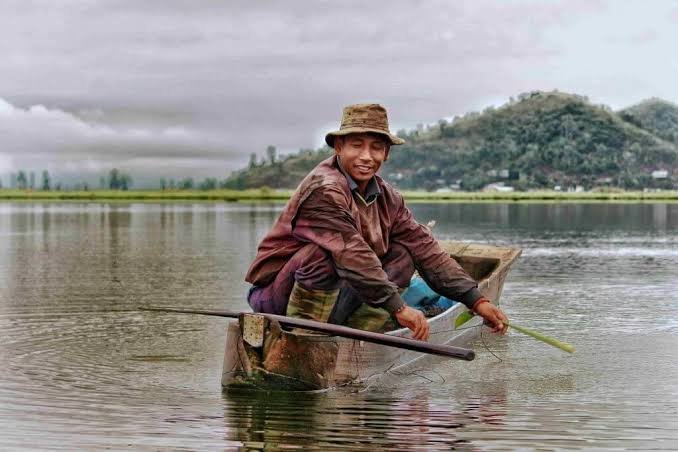
Loktak Lake remains central to the livelihoods of fishing communities in Manipur, particularly families living around its floating settlements. Loktak Lake Fishermen Schemes have increasingly focused on improving livelihoods while protecting the lake’s fragile ecosystem. However, available official records do not confirm a newly announced subsidy specifically for owners of sustainable floating huts. Instead, existing government programmes provide financial, institutional and livelihood support to fisherfolk connected with Loktak Lake.
The distinction matters because Loktak’s floating communities operate within a sensitive ecological and regulatory environment. Therefore, government assistance combines fisheries development, financial inclusion, sustainable aquaculture and lake conservation rather than treating floating settlements only as conventional housing or fishing units.
Abhijeet Dipke Urges Opposition to Stop Contesting Polls Amid ECI Row
Loktak Lake Fishermen Schemes Support Floating Communities
Manipur has implemented several programmes aimed at improving the economic conditions of fishermen around Loktak Lake. The state’s Fisheries Department identifies the Loktak Livelihood Mission as a major initiative for improving the livelihoods of fishermen living around the lake. The government has sanctioned and released ₹1,464.05 lakh for the mission, according to the department’s 2025–26 administrative report.
Furthermore, the mission includes infrastructure designed to expand sustainable fish production. Its first and second phases include plans for 45 cage-culture batteries and 35 pen-culture grow-outs. The programme also covers a feed production unit, four seed-production units, electric paddle aerators and water-testing kits.
These measures can provide fishermen with alternatives to relying entirely on traditional open-water fishing. Consequently, livelihood support can also contribute to broader fisheries management when communities adopt regulated aquaculture and responsible production practices.
However, the available records do not establish a new subsidy category specifically reserved for “floating hut owners.” Instead, current evidence points toward broader fisherfolk and livelihood schemes that can benefit communities associated with Loktak Lake.
Champu Khangpok Receives Financial Inclusion Support
Champu Khangpok, located within Loktak Lake, represents one of the most distinctive floating settlements associated with the lake. In January 2025, the National Fisheries Development Board, Loktak Development Authority and Manipur Fisheries Department participated in a Fisherman Card enrolment programme at the floating village.
According to the Press Information Bureau, Champu Khangpok was home to approximately 400 residents living in 134 houses at the time of the programme. The initiative sought to connect local fisherfolk with modern financial and institutional systems through the National Fisheries Digital Platform.
Moreover, the Fisherman Card was linked with the Pradhan Mantri Matsya Kisan Samridhi Sah-Yojana under the national fisheries framework. The initiative was designed to improve access to government schemes and financial services while strengthening economic security for fishing communities.
This approach is significant because financial inclusion can help fisherfolk access formal support without separating livelihood development from environmental protection. Additionally, the programme aimed to encourage sustainable development of Loktak Lake while supporting the people whose livelihoods depend directly on the water body.
Therefore, the Fisherman Card initiative provides a more clearly documented example of targeted support for floating-community fisherfolk than a newly announced hut-owner subsidy.
Sustainable Fisheries Remain Linked to Lake Conservation
Livelihood development at Loktak cannot be separated from environmental protection. The Loktak Development Authority’s programmes combine ecological conservation with livelihood improvement for communities dependent on the wetland. Its Sustainable Resource Development and Livelihood Improvement component involves the Fisheries Department along with other departments working on agriculture, horticulture, animal husbandry and related sectors.
The lake also operates under a specific legal framework. The Manipur Loktak Lake (Protection) Act, 2006 establishes the Loktak Development Authority and divides the lake into protected and buffer zones. The legislation defines activities and occupations associated with phumdis, including traditional fishing-related structures.
Consequently, support for fishermen must operate alongside conservation requirements. Any expansion of livelihood infrastructure therefore needs to consider the ecological sensitivity of the lake, particularly its floating phumdi ecosystem.
The Fisheries Department has also supported responsible fisheries practices through programmes involving cage and pen culture. In 2022, ICAR-CIFRI reported that inputs including floating fish feed, cage nets and HDPE pens were distributed to fishing beneficiaries during a fisheries programme at Loktak Lake. The initiative also promoted responsible fishing and sustainable use of the lake.
Thus, sustainable livelihood assistance can serve two purposes: improving household income and encouraging fisheries practices that place less pressure on the lake’s natural resources.
Government Support Covers More Than Direct Subsidies
Government assistance for Loktak’s fishing communities extends beyond direct financial subsidies. Earlier fisheries programmes included support for fishing equipment, aquaculture, housing, insurance, marketing infrastructure and alternative income-generation activities. The Union government has also reported that Manipur’s Loktak Development Authority has implemented livelihood programmes involving poultry, piggery and paddy-cum-pisciculture.
Furthermore, the Fisheries Department has developed institutional links that can improve access to financial services. Government information previously noted that the department had tied up with banks to facilitate credit access for people involved in fisheries activities.
Insurance represents another important component of fisheries welfare. Manipur’s 2025–26 fisheries report records implementation of the Group Accident Insurance Scheme, under which thousands of farmers across the state have been enrolled. The scheme provides coverage for specified forms of accidental death, disability and hospitalisation.
Meanwhile, the Loktak Livelihood Mission continues to focus on productive infrastructure rather than only direct cash assistance. Cage culture, pen culture, feed production, seed production and water-testing equipment can collectively strengthen the fisheries value chain.
Therefore, the broader policy direction suggests that Manipur is attempting to combine livelihood security with sustainable fisheries management. Any future subsidy specifically targeting floating hut owners would need to fit within this wider legal, ecological and fisheries framework.
Conclusion
Loktak Lake Fishermen Schemes continue to provide an important framework for supporting communities dependent on Manipur’s iconic freshwater lake. Official records confirm the Loktak Livelihood Mission, fisheries infrastructure support and financial-inclusion measures such as Fisherman Card enrolment at Champu Khangpok.
However, a specific new subsidy allocation exclusively for sustainable floating hut owners could not be independently confirmed from the latest official material reviewed. Therefore, the current evidence is better understood as a broader government effort to strengthen fisherfolk livelihoods, expand sustainable aquaculture and connect floating communities with formal welfare and financial systems.
At the same time, conservation remains essential because Loktak’s ecological health directly affects the communities that depend upon it. Consequently, future livelihood measures will need to balance economic assistance with responsible fisheries practices and protection of the lake’s fragile ecosystem.
FAQs
What are Loktak Lake Fishermen Schemes?
Loktak Lake Fishermen Schemes refer broadly to government programmes supporting fisherfolk livelihoods, fisheries infrastructure, financial inclusion and sustainable resource use around Loktak Lake.
Is there a confirmed new subsidy specifically for floating hut owners?
A newly announced subsidy exclusively for floating hut owners could not be confirmed from the latest official sources reviewed.
What is the Loktak Livelihood Mission?
It is a Manipur government initiative aimed at improving the livelihoods of fishermen around Loktak Lake through fisheries and aquaculture infrastructure.
What support has Champu Khangpok received?
Champu Khangpok participated in a Fisherman Card enrolment programme designed to connect local fisherfolk with financial services, welfare schemes and the national fisheries digital platform.
Why is sustainability important for Loktak fisheries?
Loktak is an ecologically sensitive lake, so livelihood programmes must balance fishing and aquaculture development with conservation and responsible resource use.