

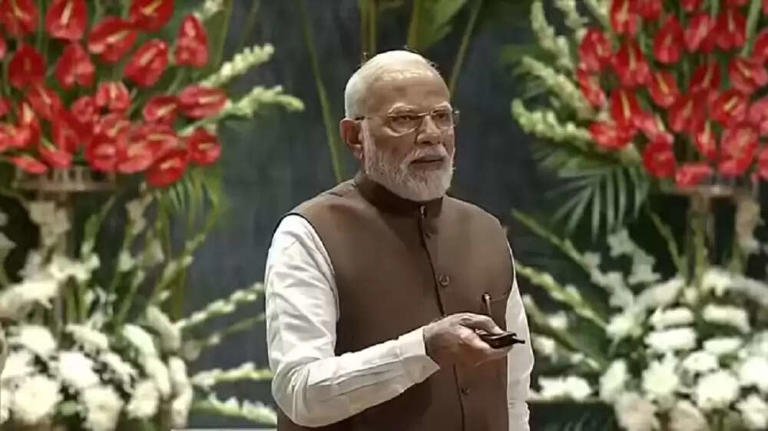
Prime Minister Narendra Modi has launched a ₹42,000 crore mega agricultural package aimed at supporting farmers and boosting agricultural productivity across India. The announcement came just before Diwali, signaling the government’s commitment to strengthen the farming sector and provide timely support to cultivators nationwide.
The new package is designed to benefit over 100 districts across multiple states, covering diverse crops, modern farming practices, and technology-driven solutions. It aims to increase farmer income, ensure sustainable agriculture, and improve rural livelihoods.
Read More: Tripura Proposes Over ₹500 Crore Tourism Projects to Boost North-East Travel
Key Features of the ₹42,000 Crore Package
The mega package includes a range of schemes focusing on crop diversification, irrigation, mechanization, and farmer welfare. Some key components include:
- Crop Insurance Expansion: Strengthening crop insurance schemes to protect farmers from losses due to natural disasters.
- Modern Farming Equipment: Subsidies for tractors, harvesters, and other modern machinery to enhance efficiency.
- Irrigation and Water Management: Funding for micro-irrigation, water harvesting, and efficient water use systems.
- Market Access and MSP Support: Improving access to markets and ensuring minimum support prices for key crops.
- Agri-Tech Initiatives: Encouraging use of digital tools, farm apps, and precision farming technologies.
- Organic and Sustainable Farming: Promoting organic farming and environmentally friendly practices to boost soil health.
The package also includes measures to support small and marginal farmers, women farmers, and youth engaged in agriculture.
Objectives of the PM Modi Agriculture Package
The government has outlined several objectives for the new agricultural initiative:
- Enhancing Farmer Income: By improving productivity, reducing costs, and ensuring better market access.
- Promoting Sustainable Agriculture: Supporting organic and eco-friendly farming practices.
- Encouraging Technology Adoption: Integrating modern farming equipment and digital tools.
- Reducing Risk for Farmers: Strengthening crop insurance and disaster management measures.
- Boosting Rural Economy: Generating employment and enhancing the overall economic status of rural communities.
The package is expected to modernize the agriculture sector, making it more competitive and resilient to climate challenges.
Implementation Across 100+ Districts
The package will be implemented across more than 100 districts, prioritizing areas with high agricultural activity and regions vulnerable to natural disasters. State governments are tasked with coordinating with the central government to ensure proper fund allocation and monitoring of schemes.
District-level committees will oversee execution, including identifying beneficiaries, distributing equipment, and providing technical support. Farmers will receive guidance on using modern tools and adopting best practices for crop management.
Farmer and Public Reactions
Farmers have welcomed the announcement, saying the package could help stabilize income and improve livelihoods. Many small and marginal farmers expressed optimism about accessing subsidies and modern equipment, which they hope will reduce manual labor and increase crop yields.
Agricultural experts believe the package could play a significant role in reducing rural distress, increasing farm productivity, and boosting overall food security. They also noted that effective monitoring and implementation will be crucial to achieving the desired outcomes.
Central Government’s Support
Prime Minister Modi emphasized that the government is committed to supporting farmers not only financially but also through capacity-building programs and technology transfer. He highlighted that the package is part of a broader strategy to modernize Indian agriculture, ensuring that farmers remain competitive both domestically and globally.
Union Agriculture Minister also highlighted the government’s role in facilitating training programs, workshops, and digital advisory services for farmers to maximize the benefits of the package.
Long-Term Impact
The ₹42,000 crore package is expected to have long-term impacts on the agriculture sector, including:
- Increased Productivity: Adoption of mechanization and improved farming methods.
- Reduced Losses: Crop insurance and better water management to minimize risk.
- Higher Income Levels: Improved market access and diversified cropping patterns.
- Rural Employment: Creation of jobs in farming, allied sectors, and agri-business.
- Sustainable Practices: Promotion of organic and eco-friendly farming methods.
Experts say these measures can strengthen India’s position as a leading agricultural producer while enhancing rural prosperity.
Challenges and Considerations
While the package promises significant benefits, some challenges remain. Effective implementation will require proper coordination between central and state governments, timely disbursal of funds, and continuous monitoring.
There is also a need to ensure equitable distribution, particularly for small and marginal farmers, women, and youth engaged in agriculture. Training and awareness programs are essential to help farmers adopt new technologies and modern farming methods.
Prime Minister Modi’s ₹42,000 crore agriculture package marks a major step toward transforming India’s farming landscape. By supporting farmers, promoting technology adoption, and encouraging sustainable practices, the initiative aims to boost productivity, income, and rural development.
With over 100 districts set to benefit, the package could play a pivotal role in strengthening the agriculture sector, reducing farmer distress, and contributing to the broader goal of economic growth in rural India. The launch before Diwali underscores the government’s commitment to uplifting farmers and ensuring that agriculture remains a sustainable and profitable livelihood for millions across the country.
Read More: Meghalaya Clears Salary Backlog for Garo Hills Council Employees