

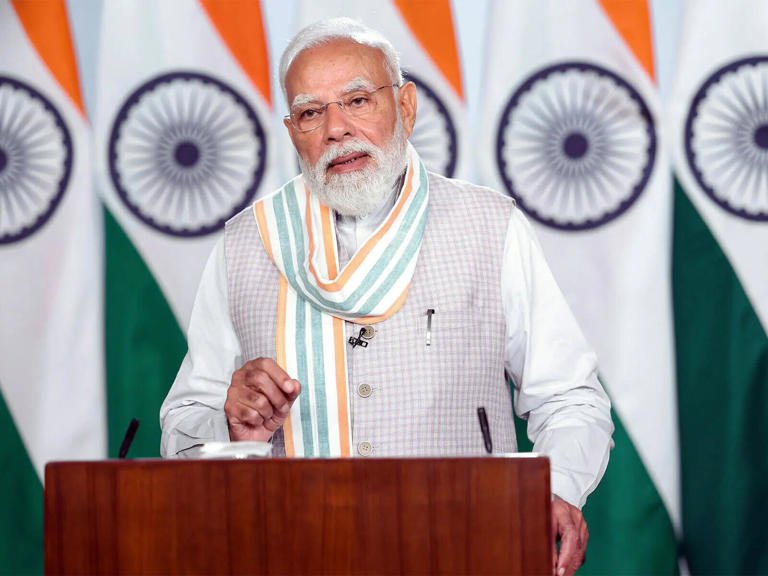
Prime Minister Narendra Modi paid homage to India’s first Prime Minister, Jawaharlal Nehru, on his death anniversary and remembered his contribution to the country’s development and nation-building journey.
The tribute marked another occasion when national leaders reflected on the legacy of Jawaharlal Nehru, who played a central role during India’s early years after Independence. Leaders across the political spectrum observed the day and remembered his contribution to shaping modern India.
Prime Minister Modi conveyed his tribute as the nation observed Nehru’s death anniversary and reflected on his place in India’s political and historical landscape.
PM Modi Remembers Jawaharlal Nehru’s Contribution To Nation Building
Prime Minister Narendra Modi paid tribute to Jawaharlal Nehru and acknowledged his role as independent India’s first Prime Minister.
Nehru served as Prime Minister from 1947 until his death in 1964 and became one of the country’s most influential political leaders during the formative years after Independence.
His leadership shaped several early national policies and influenced India’s institutional and developmental direction.
Each year, leaders and citizens remember Nehru on his death anniversary and revisit his contribution to governance, democracy, and public institutions.
The observance also serves as an occasion to reflect on the historical foundations that influenced India’s growth in the decades after Independence.
Prime Minister Modi’s tribute formed part of this broader national remembrance.
Jawaharlal Nehru’s Legacy Continues To Shape Public Memory
Jawaharlal Nehru remains one of the most prominent figures in India’s political history.
During his years in office, he focused on institution-building, industrial development, scientific progress, and strengthening democratic systems.
His tenure witnessed the establishment of several national institutions and development initiatives that contributed to India’s long-term growth.
Nehru also remained associated with India’s early foreign policy direction and its position in international affairs.
Historians often describe his period in office as one of institution-building and political transition following Independence.
His ideas and leadership continue to remain part of discussions on India’s political evolution.
As a result, occasions connected to Nehru continue to receive national attention.
Leaders Across India Mark The Occasion
Along with Prime Minister Modi, leaders from different political backgrounds also paid tribute and remembered Jawaharlal Nehru’s contribution.
Public figures and institutions marked the day through messages and commemorative programmes.
Observances on Nehru’s death anniversary generally focus on reflecting on his role in India’s democratic development and public life.
Political leaders often use the occasion to acknowledge historical contributions while discussing the country’s continued progress.
The day also provides an opportunity to revisit milestones from India’s early post-Independence years.
Across different parts of the country, public remembrance events highlighted Nehru’s place in Indian history.
Remembering India’s First Prime Minister
Jawaharlal Nehru passed away on May 27, 1964, after serving India for nearly seventeen years as Prime Minister.
His leadership period coincided with major developments in administration, economic planning, and institution-building.
Nehru’s contribution continues to remain part of public discussions and historical study.
Every year, leaders and citizens observe his death anniversary to remember his role in shaping the country during its formative decades.
Prime Minister Modi’s tribute on the occasion reflected the continued national practice of acknowledging contributions made by former leaders to India’s journey.
As India observed the death anniversary of its first Prime Minister, the occasion once again brought attention to Jawaharlal Nehru’s place in the country’s political and historical narrative.