

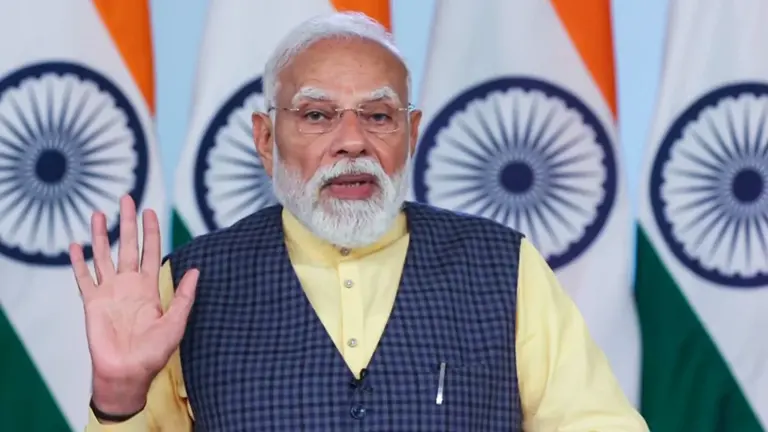
Prime Minister Narendra Modi on Thursday remembered the 1975 Emergency as one of the darkest chapters in India’s democratic history, describing it as an assault on the Constitution and democratic institutions. Marking the anniversary of the Emergency, the Prime Minister paid tribute to the countless individuals who resisted what he termed an attack on democratic values and fundamental freedoms, stating that their courage and sacrifice continue to inspire generations of Indians.
In his message, Modi emphasized the importance of preserving democratic institutions, protecting constitutional values, and safeguarding civil liberties. He said the Emergency serves as a reminder of the need for constant vigilance to ensure that democratic principles remain strong and that citizens’ rights are protected under the Constitution.
The Prime Minister’s remarks came as political leaders, government institutions, and organizations across the country observed the anniversary through commemorative programmes, discussions, and events reflecting on the significance of the Emergency period in India’s democratic journey.
Prime Minister Pays Tribute to Those Who Resisted
Prime Minister Modi honoured the individuals who opposed the Emergency despite facing imprisonment, censorship, and various forms of political repression during the period.
He said that thousands of political workers, journalists, social activists, students, and ordinary citizens demonstrated remarkable courage by standing up for democratic ideals under extremely difficult circumstances.
According to the Prime Minister, their sacrifices played an important role in preserving India’s democratic traditions and restoring constitutional governance.
He noted that their determination remains a lasting example of commitment to democracy, freedom, and public service.
The Prime Minister urged citizens to remember their contribution and continue strengthening democratic values.
Emergency Described as an Assault on Democracy
In his message, Modi referred to the Emergency as a direct assault on democratic institutions and constitutional principles.
He stated that the period witnessed the suspension of fundamental rights, restrictions on civil liberties, preventive detentions, press censorship, and limitations on political activity.
According to the Prime Minister, these developments represented one of the most challenging periods in independent India’s democratic history.
He said remembering the Emergency is essential not to revisit political differences but to reinforce the importance of protecting constitutional governance and democratic institutions.
The Prime Minister stressed that democracy flourishes only when citizens enjoy freedom, accountability, and the rule of law.
Remembering a Significant Chapter in History
The Emergency, declared on June 25, 1975, remains one of the most debated periods in India’s political history.
During the Emergency, several constitutional provisions relating to civil liberties were affected, political leaders were detained under preventive detention laws, press censorship was imposed, and various political and administrative measures were implemented.
The period concluded in 1977, following which general elections were held and democratic governance resumed under a newly elected government.
Historians, political leaders, constitutional scholars, and civil society organisations continue to study and debate the political, legal, and constitutional implications of the Emergency.
Importance of Constitutional Values
Prime Minister Modi emphasized that the Constitution remains the foundation of India’s democratic system.
He said safeguarding constitutional institutions requires continuous commitment from governments, public representatives, civil society, and citizens alike.
According to the Prime Minister, democratic governance depends on transparency, accountability, independent institutions, and respect for individual rights guaranteed by the Constitution.
He urged people, particularly the younger generation, to understand the importance of constitutional values and democratic participation.
The Prime Minister stated that preserving these principles strengthens national unity and democratic resilience.
Strengthening Democratic Institutions
The Prime Minister reiterated that strong democratic institutions are essential for ensuring accountable governance and protecting citizens’ rights.
He observed that Parliament, the judiciary, the Election Commission, the media, and other constitutional bodies collectively contribute to maintaining the democratic framework.
According to Modi, institutional independence and adherence to constitutional procedures remain fundamental to the healthy functioning of India’s democracy.
He emphasized that every generation has a responsibility to uphold democratic traditions while ensuring that constitutional safeguards remain effective.
Strengthening institutions, he said, contributes to long-term national stability and development.
Inspiring Future Generations
The Prime Minister said the stories of those who opposed the Emergency should continue inspiring future generations to value democracy and constitutional freedoms.
He encouraged young people to study India’s democratic journey, understand the significance of constitutional rights, and actively participate in democratic processes.
According to him, awareness of historical events helps strengthen civic responsibility while encouraging informed public participation.
Educational institutions and public forums, he suggested, play an important role in promoting democratic awareness among citizens.
Learning from history enables societies to protect democratic institutions more effectively.
Programmes Marking the Anniversary
Across the country, various programmes were organised to commemorate the anniversary of the Emergency.
Government institutions, educational organisations, cultural bodies, and political groups held seminars, discussions, exhibitions, and public events reflecting on the historical significance of the period.
These programmes highlighted constitutional values, democratic governance, and the importance of safeguarding civil liberties.
Participants also remembered individuals who were detained or otherwise affected during the Emergency, acknowledging their contribution to India’s democratic history.
The commemorative events sought to promote public awareness regarding the country’s constitutional evolution.
Continuing Public and Historical Debate
The Emergency continues to be discussed from multiple political, legal, and historical perspectives.
Different political parties, historians, constitutional experts, and scholars have offered varying interpretations regarding its causes, implementation, and long-term impact on Indian democracy.
While opinions differ on several aspects of the period, there is broad recognition of its historical significance and its influence on subsequent constitutional and political developments.
The Prime Minister’s remarks contribute to the continuing national conversation about democratic institutions, constitutional governance, and civic responsibility.
The anniversary remains an important occasion for reflection on India’s democratic journey.
Conclusion
Prime Minister Narendra Modi’s message commemorating the anniversary of the 1975 Emergency reaffirmed his government’s emphasis on protecting democratic values, constitutional institutions, and civil liberties. By describing the Emergency as an assault on democracy and honouring those who resisted it, the Prime Minister highlighted the importance of remembering a significant chapter in India’s political history while drawing attention to the enduring value of constitutional governance.
As the nation reflects on the lessons of the Emergency, the observance serves as a reminder of the importance of democratic participation, institutional accountability, and the protection of fundamental rights. The sacrifices of those who opposed the Emergency continue to occupy an important place in India’s democratic narrative, inspiring future generations to uphold the principles enshrined in the Constitution.