

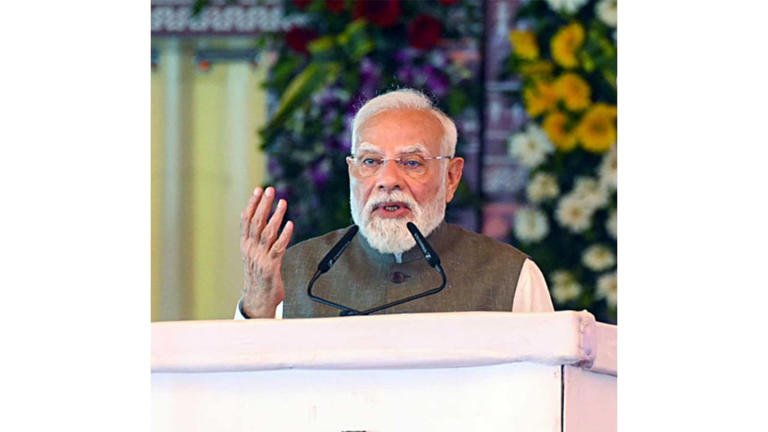
Prime Minister Narendra Modi has urged Indian Administrative Service (IAS) trainees to recognize the immense responsibility that comes with public service, emphasizing that the decisions they make throughout their careers will shape the future of crores of citizens. Addressing a gathering of young officer trainees, the Prime Minister highlighted the crucial role civil servants play in governance, development, and nation-building, reminding them that their work directly impacts the lives of millions across the country.
The interaction focused on the importance of ethical leadership, citizen-centric governance, innovation, and accountability in public administration. Prime Minister Modi encouraged the trainees to view their future responsibilities not merely as administrative duties but as opportunities to bring meaningful change to society and contribute to India’s growth journey.
His remarks underscored the significance of the civil services in implementing government policies, addressing public concerns, and ensuring that development reaches every section of society. The Prime Minister’s message reflected the broader vision of creating an efficient, responsive, and people-oriented governance system capable of meeting the aspirations of a rapidly developing nation.
Responsibility of Public Service
During his address, Prime Minister Modi emphasized that public service carries enormous responsibility because every administrative decision has consequences that affect citizens’ lives. Whether related to education, healthcare, infrastructure, agriculture, welfare programs, or economic development, the choices made by civil servants can influence the future of entire communities.
He urged the trainees to remain conscious of the trust placed in them by the nation and to approach their responsibilities with dedication and sincerity. According to the Prime Minister, civil servants occupy positions that allow them to become catalysts for positive transformation.
The Prime Minister stressed that governance is ultimately about serving people and addressing their needs. He encouraged the trainees to remain connected with citizens and ensure that administrative processes are guided by empathy and understanding.
Decisions That Impact Crores
A central theme of the Prime Minister’s address was the far-reaching impact of administrative decisions. He reminded the trainees that even seemingly routine decisions can have significant implications for large populations.
From approving development projects to implementing welfare schemes, civil servants often make choices that determine how resources are allocated and services delivered. These decisions can influence educational opportunities, healthcare access, employment prospects, and overall quality of life.
Prime Minister Modi noted that the future of crores of citizens depends on effective governance and responsible administration. He urged the trainees to approach every task with seriousness and a commitment to achieving positive outcomes for society.
Importance of Citizen-Centric Governance
The Prime Minister highlighted the need for governance systems that prioritize the interests and aspirations of citizens. He encouraged IAS trainees to adopt a people-first approach and ensure that public welfare remains at the center of their work.
According to him, effective governance is not measured solely by the formulation of policies but by the extent to which those policies improve people’s lives. Civil servants play a critical role in translating government initiatives into tangible benefits for communities.
The Prime Minister urged officers to remain accessible, responsive, and attentive to public concerns. By understanding local realities and engaging directly with citizens, administrators can make more informed decisions and deliver better outcomes.
Strengthening Trust in Institutions
Prime Minister Modi also emphasized the importance of trust in governance. Public confidence in institutions is strengthened when citizens experience transparency, accountability, and efficient service delivery.
He encouraged the trainees to uphold the highest standards of integrity and professionalism throughout their careers. Ethical conduct, he noted, is essential for maintaining public trust and ensuring that institutions function effectively.
The Prime Minister observed that civil servants often serve as the face of government at the grassroots level. Their actions and decisions can significantly influence how citizens perceive governance and public institutions.
Embracing Innovation and Technology
The Prime Minister highlighted the growing role of technology in modern administration and encouraged trainees to embrace innovation as a tool for improving governance. Digital platforms, data analytics, and technological solutions are increasingly transforming the way governments operate and deliver services.
He noted that technology can help improve efficiency, reduce delays, increase transparency, and expand access to public services. Young officers were encouraged to explore innovative approaches that address local challenges while enhancing administrative effectiveness.
According to the Prime Minister, a forward-looking mindset is essential for meeting the expectations of a rapidly evolving society. Civil servants must be willing to adapt and continuously seek better ways of serving citizens.
Learning from Ground Realities
A key aspect of the Prime Minister’s message was the importance of understanding grassroots realities. He advised trainees to spend time interacting with communities, visiting remote areas, and gaining firsthand knowledge of local challenges.
Direct engagement with citizens can provide valuable insights that may not always be evident through official reports or administrative records. Such experiences help administrators design more effective policies and interventions.
Prime Minister Modi emphasized that empathy and practical understanding are critical qualities for successful civil servants. By staying connected to the people they serve, officers can make decisions that reflect real needs and priorities.
Preparing for Emerging Challenges
The Prime Minister also spoke about the evolving nature of governance in the 21st century. Issues such as climate change, urbanization, technological disruption, public health challenges, and demographic shifts require innovative solutions and adaptive leadership.
He encouraged trainees to remain lifelong learners and continuously upgrade their knowledge and skills. The ability to anticipate future challenges and respond effectively will be essential for administrators in the years ahead.
According to the Prime Minister, modern governance requires a combination of technical competence, strategic thinking, and social awareness. Civil servants must be prepared to navigate complex issues while maintaining a focus on public welfare.
Nation-Building Through Effective Administration
Prime Minister Modi described civil servants as important partners in India’s development journey. He noted that government programs and policies can achieve their objectives only when implemented effectively at the grassroots level.
The Prime Minister emphasized that administrators play a central role in nation-building by ensuring that development reaches every village, town, and city. Their efforts contribute to economic growth, social progress, and improved quality of life for citizens.
Young officers were encouraged to view their careers as opportunities to make lasting contributions to the country. Through dedication, innovation, and commitment to public service, they can help shape a stronger and more inclusive India.
Inspiring a New Generation of Administrators
The interaction served as an opportunity to inspire the next generation of civil servants as they prepare to assume important responsibilities within the administrative system. The Prime Minister urged the trainees to remain motivated by the larger purpose of public service and national development.
He emphasized that leadership in administration is not about authority alone but about responsibility, compassion, and a willingness to serve. Officers were encouraged to act with integrity, maintain professionalism, and remain committed to the welfare of citizens.
The Prime Minister’s message reinforced the idea that effective governance depends on dedicated individuals who are prepared to work tirelessly for the public good.
Looking Ahead
Prime Minister Narendra Modi’s address to IAS trainees highlighted the profound impact that civil servants can have on the lives of citizens and the future of the nation. By reminding them that their decisions will shape the future of crores, he underscored the importance of responsibility, accountability, and people-centric governance.
The interaction emphasized key themes such as ethical leadership, innovation, transparency, citizen engagement, and lifelong learning. These principles are expected to guide the trainees as they embark on careers dedicated to public service and nation-building.
As India continues its journey of growth and transformation, the role of civil servants will remain central to ensuring that development reaches every corner of the country. The Prime Minister’s message serves as both an inspiration and a reminder of the significant responsibilities that accompany the privilege of serving the nation through the civil services.