

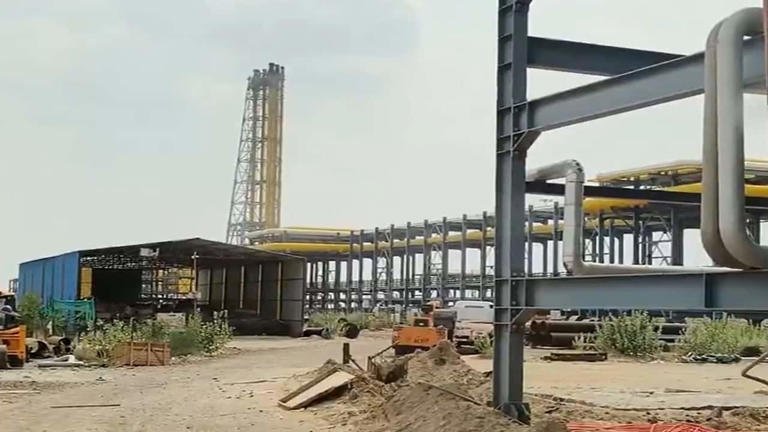
Prime Minister Narendra Modi is set to inaugurate India’s first integrated greenfield petrochemical complex in Rajasthan today, marking a significant milestone in the country’s energy and industrial development. Developed at an investment of Rs 79,459 crore, the mega project is expected to strengthen India’s refining and petrochemical capabilities while boosting industrial growth, employment generation, and energy security.
The integrated petrochemical complex is one of the largest infrastructure projects undertaken in the country’s oil and gas sector. It is designed to enhance domestic production of petroleum products and petrochemical feedstock, reducing import dependence while supporting the rapid growth of manufacturing industries that rely on petrochemical raw materials.
The inauguration is expected to be attended by senior government officials, industry leaders, and representatives from the energy sector, highlighting the project’s strategic importance for India’s long-term economic development.
A Historic Milestone for India’s Energy Infrastructure
The integrated greenfield petrochemical complex represents a landmark achievement in India’s energy infrastructure. Unlike conventional refinery projects, the facility combines petroleum refining and petrochemical production within a single integrated ecosystem, allowing greater operational efficiency and improved value addition.
The project has been developed with advanced technology and modern industrial systems designed to maximize productivity while meeting stringent environmental and operational standards.
Officials believe the integrated model will enable better utilization of crude oil by converting a larger proportion into high-value petrochemical products used across numerous manufacturing sectors.
The complex is expected to play a significant role in supporting India’s expanding demand for fuels, plastics, synthetic fibres, packaging materials, pharmaceuticals, automotive components, and various industrial chemicals.
Investment of Rs 79,459 Crore to Drive Industrial Growth
With a total investment of Rs 79,459 crore, the project ranks among the country’s largest industrial investments in recent years. The massive capital expenditure reflects the government’s commitment to strengthening domestic manufacturing capacity and developing world-class industrial infrastructure.
The complex is expected to attract additional investments in downstream industries, creating a strong industrial ecosystem around the project. Companies involved in plastics manufacturing, specialty chemicals, textiles, packaging, pharmaceuticals, and engineering products are likely to benefit from improved availability of petrochemical feedstock.
Industry experts believe the project will enhance India’s competitiveness in global petrochemical markets while supporting the government’s broader vision of expanding domestic manufacturing under various industrial development initiatives.
The investment is also expected to stimulate regional economic development by encouraging ancillary industries and infrastructure expansion.
Boost to Employment and Local Economy
One of the major benefits of the integrated petrochemical complex is its potential to generate large-scale employment opportunities. During the construction phase, the project created jobs for thousands of engineers, technicians, construction workers, contractors, and skilled labourers.
Following commissioning, the facility is expected to provide direct employment across refinery operations, maintenance, engineering, logistics, administration, environmental management, and technical services.
In addition to direct employment, the project is likely to generate significant indirect job opportunities through transport services, hospitality, warehousing, retail businesses, maintenance services, and various supporting industries.
Local businesses and small enterprises are also expected to benefit from increased economic activity associated with the large industrial ecosystem surrounding the complex.
Strengthening India’s Petrochemical Manufacturing
India’s petrochemical demand has been growing steadily due to rapid expansion in sectors such as automobiles, infrastructure, consumer goods, healthcare, agriculture, textiles, and electronics.
The new integrated complex is expected to significantly increase domestic production of petrochemical feedstock, helping meet rising industrial demand while reducing dependence on imported raw materials.
By strengthening domestic manufacturing capacity, the project supports India’s efforts to improve supply chain resilience and enhance self-reliance in strategically important industrial sectors.
Officials believe the availability of high-quality petrochemical products within the country will encourage further investments in downstream manufacturing while improving export competitiveness.
The project also aligns with India’s broader objective of building globally competitive industrial value chains.
Advanced Technology and Sustainable Operations
The integrated petrochemical complex has been developed using modern refining technologies and advanced industrial processes designed to maximize operational efficiency while minimizing environmental impact.
The facility incorporates energy-efficient systems, advanced emissions control technologies, water conservation measures, and modern waste management practices that support sustainable industrial operations.
Environmental monitoring systems have also been integrated into plant operations to ensure compliance with national environmental standards.
Officials have emphasized that technological innovation plays a crucial role in balancing industrial expansion with environmental responsibility, making the project an example of modern industrial development.
The adoption of advanced technologies is expected to improve productivity while ensuring long-term operational sustainability.
Strategic Importance for Rajasthan
The inauguration of the integrated petrochemical complex represents a major industrial milestone for Rajasthan. The project is expected to transform the state’s industrial landscape by attracting investments, improving infrastructure, and expanding manufacturing activities.
Improved industrial development is likely to stimulate growth in transportation, logistics, housing, education, healthcare, and urban infrastructure in surrounding regions.
The project also strengthens Rajasthan’s position as an emerging industrial destination capable of supporting large-scale manufacturing and energy-related investments.
State officials anticipate that the complex will contribute significantly to economic growth while creating new opportunities for local entrepreneurs, businesses, and skilled professionals.
The development is expected to have long-term multiplier effects on regional employment and industrial diversification.
Strengthening India’s Energy Future
The inauguration of India’s first integrated greenfield petrochemical complex marks a significant step in strengthening the country’s energy security and industrial capabilities. As demand for petroleum products and petrochemicals continues to rise, expanding domestic refining and manufacturing capacity has become increasingly important for sustaining long-term economic growth.
The project reflects the government’s emphasis on developing modern industrial infrastructure that supports manufacturing, employment generation, technological advancement, and self-reliance.
With an investment of Rs 79,459 crore, the integrated petrochemical complex is expected to become a key driver of India’s energy and manufacturing sectors while contributing to national economic development for decades to come.
As Prime Minister Narendra Modi inaugurates this landmark project in Rajasthan, it represents not only a major infrastructure achievement but also a strategic investment in India’s industrial future. By combining advanced refining technology, large-scale petrochemical production, sustainable practices, and significant employment generation, the project is poised to strengthen the country’s position as a leading global player in the energy and petrochemical industries while supporting inclusive economic growth and long-term industrial transformation.