

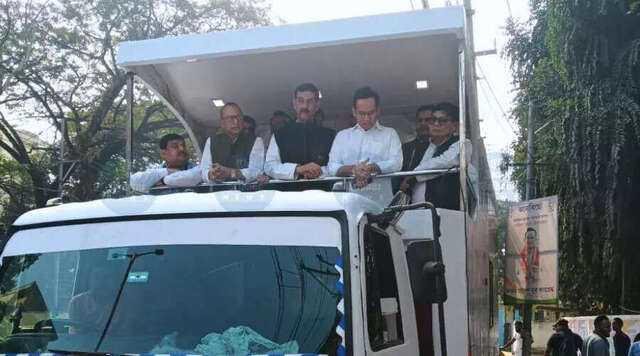
Political campaigns in Assam ahead of assembly elections have intensified, with major political parties ramping up rallies, grassroots outreach, and strategic messaging across the state. As the electoral contest draws closer, Assam has witnessed a surge in political activity, marked by high-profile visits, public meetings, and extensive door-to-door campaigns aimed at mobilising voters.
From urban centres to remote rural constituencies, party leaders and workers are actively engaging with the electorate. The intensified political campaigns in Assam ahead of assembly elections reflect the high stakes involved, as parties seek to consolidate support, address local issues, and shape voter perception in a competitive political environment.
Observers note that the campaign season has entered a decisive phase, where visibility, narrative control, and organisational strength will play a crucial role in influencing outcomes.
Read More: Cancer Awareness and Screening Camp Held in Digboi
Political campaigns in Assam ahead of assembly elections gain momentum
The political campaigns in Assam ahead of assembly elections have gained momentum over the past few weeks. Ruling and opposition parties alike have expanded their outreach programmes, focusing on rallies, public interactions, and social media engagement.
The ruling party, led by Chief Minister Himanta Biswa Sarma, has highlighted governance achievements, development projects, and welfare schemes. Party leaders have been touring districts to connect directly with beneficiaries and reinforce their performance-based narrative.
Meanwhile, opposition parties, including the Indian National Congress, have sharpened their criticism of the government. They have focused on issues such as price rise, employment, and social concerns, seeking to position themselves as a credible alternative.
High-profile rallies and leadership outreach
High-profile rallies have become a central feature of the political campaigns in Assam ahead of assembly elections. Senior leaders from national and state levels have addressed large gatherings, aiming to energise party workers and attract undecided voters.
Campaign events often combine political messaging with cultural elements, reflecting Assam’s diverse social fabric. Leaders use these platforms to connect emotionally with voters while outlining policy priorities.
In addition to mass rallies, smaller meetings and constituency-level interactions have increased. These targeted engagements allow leaders to address local grievances and tailor messages to specific communities.
Focus on grassroots mobilisation
Grassroots mobilisation remains a key strategy in the political campaigns in Assam ahead of assembly elections. Parties have activated booth-level committees and volunteer networks to ensure last-mile connectivity with voters.
Door-to-door campaigns have intensified, with workers distributing pamphlets, explaining party agendas, and gathering feedback. Such direct engagement helps parties understand voter sentiment and adjust campaign strategies accordingly.
Political analysts say strong grassroots organisation often determines electoral success. Therefore, parties are investing heavily in training and coordinating local cadres.
Key issues shaping the campaign narrative
Several issues dominate the political campaigns in Assam ahead of assembly elections. Development and infrastructure feature prominently in the ruling party’s narrative, with emphasis on roads, bridges, healthcare, and education.
On the other hand, opposition parties are highlighting economic concerns such as unemployment, inflation, and cost of living. They have also raised questions about governance, transparency, and social harmony.
Regional identity, cultural preservation, and language-related issues also find space in campaign discourse. Parties are careful to balance development promises with sensitivity to local aspirations.
Role of social media and digital outreach
Digital platforms play an increasingly important role in the political campaigns in Assam ahead of assembly elections. Parties are using social media to amplify messages, counter narratives, and reach younger voters.
Campaign videos, live-streamed rallies, and targeted digital advertisements have become common. Leaders regularly share updates, interact with supporters, and respond to criticism online.
Digital outreach complements traditional campaigning methods. While rallies and door-to-door efforts build physical presence, social media ensures constant engagement in the virtual space.
Election preparedness and organisational strength
Organisational preparedness remains a crucial factor as political campaigns in Assam ahead of assembly elections intensify. Parties are focusing on candidate selection, alliance management, and internal coordination.
Timely selection of candidates allows parties to give them sufficient time to build rapport with voters. At the same time, alliance dynamics continue to influence campaign calculations in several constituencies.
Political observers note that disciplined organisation and message consistency often provide an edge during intense campaigns.
Public response and voter engagement
Public response to the political campaigns in Assam ahead of assembly elections appears mixed but engaged. Large crowds at rallies indicate strong interest, while smaller meetings reflect deeper local engagement.
Voters are actively questioning leaders on issues affecting daily life. Employment, education, healthcare, and infrastructure remain recurring themes in public interactions.
Civil society groups have also urged voters to participate actively and make informed choices. Increased political activity has sparked discussions in communities, tea gardens, and marketplaces across the state.
Administrative measures and election conduct
As campaigns intensify, the administration has stepped up measures to ensure fair conduct. Election authorities have issued guidelines related to campaign spending, public meetings, and use of media.
Security arrangements have also been strengthened in sensitive areas to maintain law and order. Officials emphasise that peaceful campaigning remains essential for democratic processes.
The enforcement of the model code of conduct has added another layer of oversight, requiring parties to adhere to established norms.
Challenges amid intense campaigning
Despite the energy, political campaigns in Assam ahead of assembly elections face challenges. Managing misinformation, maintaining civility, and addressing voter fatigue remain concerns.
Political rhetoric can sometimes escalate tensions. Therefore, leaders have been urged to focus on issue-based campaigning rather than personal attacks.
Logistical challenges also arise in remote and flood-prone areas, where reaching voters requires additional effort and planning.
What lies ahead
As the election date approaches, political campaigns in Assam ahead of assembly elections are expected to intensify further. Parties will likely increase the frequency of rallies, sharpen messaging, and focus on swing constituencies.
The coming weeks will test organisational strength, leadership appeal, and the ability to connect with diverse voter groups. Analysts believe that ground-level engagement and credibility will play a decisive role.
Ultimately, the intensified political campaigns reflect the vibrancy of Assam’s democratic process. As voters prepare to exercise their franchise, the state stands at a crucial political juncture, where campaign strategies, public sentiment, and governance records converge to shape the electoral outcome.
Read More: Assam Government Boosts Culture with New Theatre Facilities