

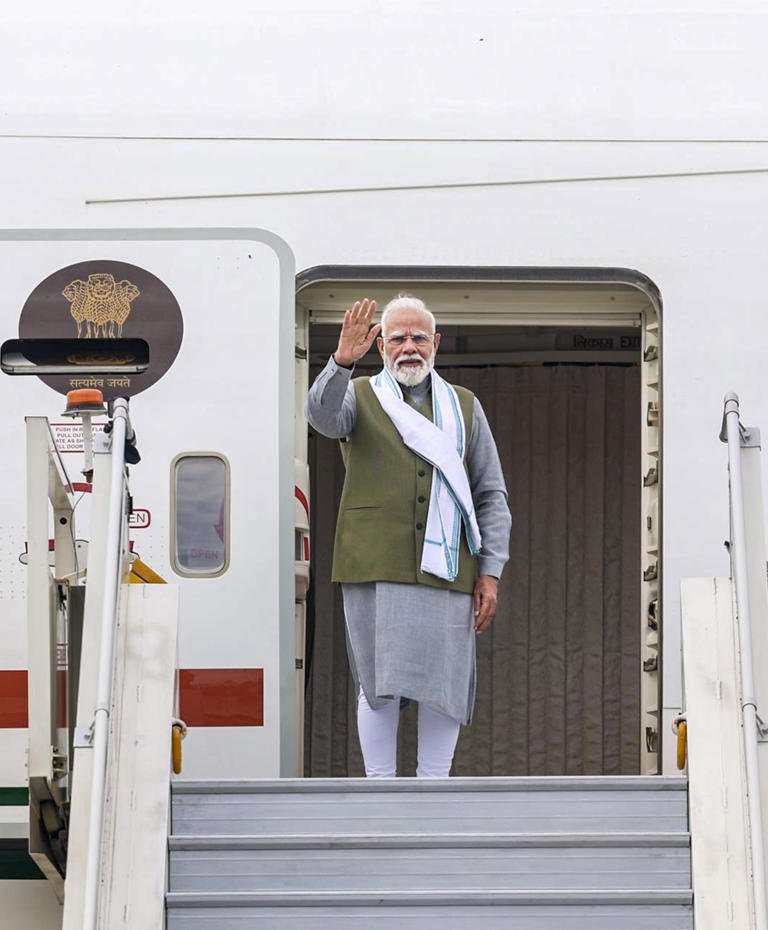
President Droupadi Murmu and Prime Minister Narendra Modi are scheduled to offer prayers at a revered Santali sacred site in Odisha on June 20, marking a significant moment for the recognition and celebration of India’s tribal heritage. The visit is expected to draw national attention to the rich cultural traditions, spiritual practices, and historical legacy of the Santali community, one of the country’s largest tribal groups.
The planned visit reflects the growing emphasis on preserving and promoting indigenous cultures and traditions across India. It also underscores the importance of acknowledging the contributions of tribal communities to the nation’s social, cultural, and historical development.
Officials said the programme will highlight the significance of tribal spiritual practices and reinforce efforts to protect cultural heritage sites associated with indigenous communities. The occasion is expected to attract community leaders, cultural representatives, government officials, and local residents.
The visit carries special significance because it brings the country’s highest constitutional authorities to a sacred site that holds deep spiritual and cultural importance for the Santali people.
Significance of the Santali Sacred Site
The sacred site occupies a central place in the spiritual and cultural life of the Santali community. For generations, tribal families have gathered at such sites to perform traditional rituals, offer prayers, and celebrate important community events.
These sacred spaces serve as symbols of cultural identity and continuity. They represent a living connection between present generations and their ancestral traditions. Community members regard them as places of worship, reflection, and collective memory.
Experts note that tribal sacred sites often embody unique ecological and cultural values. Many are closely linked to forests, natural landscapes, and traditional belief systems that emphasize harmony between humans and nature.
The visit by the President and Prime Minister is expected to increase awareness about the importance of preserving such heritage sites. It also highlights the need to safeguard traditional knowledge and cultural practices for future generations.
Officials believe the event will contribute to broader efforts aimed at recognizing India’s diverse cultural heritage.
Recognition of Tribal Communities
The upcoming visit reflects a growing national focus on tribal welfare, cultural preservation, and social inclusion. Tribal communities form an important part of India’s social fabric and contribute significantly to the country’s cultural diversity.
Over the years, governments have introduced various initiatives aimed at improving education, healthcare, livelihoods, and infrastructure in tribal regions. At the same time, there has been increasing emphasis on protecting tribal languages, traditions, and cultural institutions.
The presence of the President and Prime Minister at a Santali sacred site sends a strong message regarding the importance of tribal heritage in India’s national identity. It recognizes the role tribal communities have played in shaping the country’s history and cultural landscape.
Officials noted that symbolic gestures of recognition can strengthen community pride and encourage greater appreciation of indigenous cultures among the wider population.
The visit is therefore expected to hold both cultural and social significance.
Celebrating Santali Culture and Traditions
The Santali community possesses a rich cultural heritage characterized by unique customs, festivals, music, dance, language, and spiritual traditions. These cultural expressions have evolved over centuries and continue to remain an important part of community life.
Traditional ceremonies often emphasize collective participation and respect for nature. Community gatherings, religious observances, and seasonal festivals play a vital role in preserving cultural identity and strengthening social bonds.
The upcoming programme is expected to showcase aspects of Santali culture through traditional performances and community participation. Such events provide opportunities to celebrate cultural diversity while promoting understanding and respect among different communities.
Experts believe that increased visibility can help preserve cultural practices that face challenges from modernization and changing social dynamics. Public recognition often encourages younger generations to engage more actively with their heritage.
The visit therefore serves as both a symbolic and practical step toward cultural preservation.
Importance of Indigenous Spiritual Traditions
India’s tribal communities maintain diverse spiritual traditions that have evolved over generations. These belief systems often emphasize respect for nature, community harmony, and ancestral connections.
The Santali spiritual tradition reflects many of these values. Sacred sites serve not only as places of worship but also as centers of cultural continuity and community identity.
Officials noted that indigenous spiritual practices form an integral part of India’s broader cultural heritage. Protecting these traditions contributes to preserving the country’s diversity and historical richness.
The visit by the President and Prime Minister highlights the importance of recognizing and respecting different faith traditions within India’s multicultural society. It reinforces the principle that cultural diversity remains one of the nation’s greatest strengths.
Such recognition can also encourage greater academic and public interest in tribal history, spirituality, and traditional knowledge systems.
Odisha’s Role in Preserving Tribal Heritage
Odisha occupies a unique position in India’s tribal landscape. The state is home to numerous tribal communities, each with distinct languages, traditions, and cultural practices.
Over the years, Odisha has undertaken several initiatives aimed at preserving tribal heritage and promoting socio-economic development in tribal regions. These efforts include cultural documentation, educational programmes, museum projects, and heritage conservation initiatives.
The upcoming visit further highlights Odisha’s importance as a center of tribal culture and history. Officials believe the event will draw attention to the state’s efforts to preserve and celebrate its rich indigenous traditions.
The state government has consistently emphasized the need to balance development with cultural preservation. Protecting sacred sites and supporting traditional practices remain important components of this approach.
The programme is expected to reinforce Odisha’s reputation as a state that values and promotes its diverse cultural heritage.
Strengthening Cultural Awareness and Inclusion
The visit carries broader implications for cultural awareness and social inclusion. Public recognition of tribal traditions helps promote understanding and respect across different sections of society.
Cultural inclusion strengthens national unity by ensuring that all communities feel valued and represented. It also creates opportunities for dialogue and mutual appreciation among diverse cultural groups.
Officials emphasized that preserving cultural heritage requires participation from governments, educational institutions, community organizations, and citizens. Collaborative efforts can help ensure that traditional knowledge and practices remain relevant in contemporary society.
The event is expected to encourage greater public interest in tribal cultures and inspire initiatives aimed at documenting and protecting indigenous heritage.
By highlighting the significance of Santali traditions, the programme contributes to broader efforts to celebrate India’s cultural diversity.
Impact on Heritage Preservation Efforts
Experts believe the high-profile visit could provide momentum to heritage preservation initiatives. Increased visibility often attracts attention to the challenges facing cultural sites and traditional communities.
The recognition of tribal sacred spaces may encourage additional efforts to protect these locations from environmental, developmental, or social pressures. It can also strengthen support for documentation and research initiatives focused on tribal heritage.
Officials noted that heritage preservation involves more than safeguarding physical sites. It also requires protecting languages, oral traditions, rituals, and cultural knowledge passed down through generations.
The visit is expected to contribute positively to these objectives by raising awareness at both national and local levels.
Such efforts play an important role in ensuring that future generations remain connected to their cultural roots.
A Symbolic Moment for Tribal Recognition
The planned visit by President Droupadi Murmu and Prime Minister Narendra Modi to the Santali sacred site in Odisha represents an important symbolic moment for tribal recognition and cultural preservation in India.
The programme highlights the significance of indigenous traditions and underscores the country’s commitment to celebrating its cultural diversity. By offering prayers at a site revered by the Santali community, the nation’s top leaders acknowledge the importance of tribal heritage within India’s broader national identity.
The visit is expected to strengthen awareness of tribal culture, encourage heritage preservation, and inspire greater appreciation for indigenous traditions. It also reflects ongoing efforts to promote inclusion, cultural pride, and respect for diversity.
As preparations continue for the June 20 event, community members and cultural leaders view the occasion as a meaningful recognition of their history, traditions, and contributions to the nation. The visit stands as a reminder that India’s strength lies in its rich tapestry of cultures, traditions, and shared heritage.