

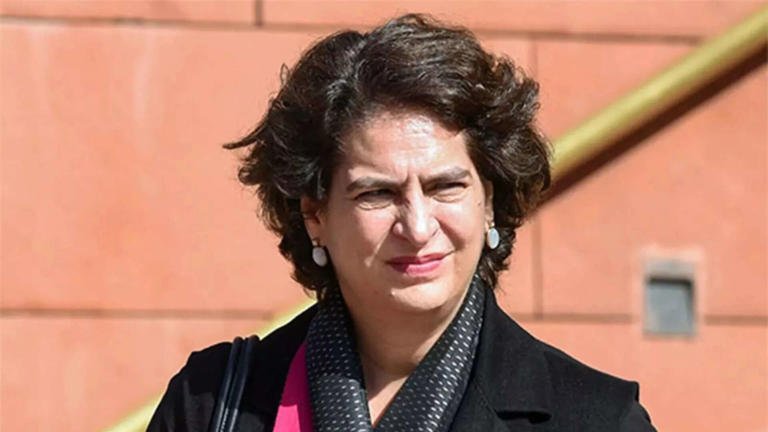
Senior Congress leader Priyanka Gandhi has accused the central government of deliberately avoiding the Census 2027 exercise in order to deny Other Backward Classes (OBCs) their rightful benefits. Her remarks have intensified the ongoing political debate over the delay in conducting the national census.
The Census 2027 OBC rights allegation comes at a time when opposition parties have been raising concerns about the absence of updated population data. According to Priyanka Gandhi, the delay in the census affects policymaking and deprives marginalized communities of adequate representation.
She stated that accurate data is essential for ensuring social justice. Without it, she argued, the government cannot properly assess the needs of OBC communities or implement effective welfare measures.
Read More: Assam Fuel Supply Stable Amid Global Concerns
Demand for Transparency and Immediate Action
Highlighting the importance of the Census 2027 OBC rights allegation, Priyanka Gandhi called for greater transparency from the government. She urged authorities to clarify the reasons behind the delay and provide a clear timeline for the census.
She emphasized that the census is a crucial exercise that should not be postponed indefinitely. According to her, timely data collection is necessary for equitable distribution of resources and opportunities.
Moreover, she pointed out that the absence of updated data creates gaps in governance. Policies based on outdated figures may fail to address current realities. Therefore, she demanded immediate steps to initiate the census process.
Her remarks have resonated with several opposition leaders who have echoed similar concerns.
Impact on OBC Representation and Welfare
The Census 2027 OBC rights allegation centers on the issue of representation. Priyanka Gandhi argued that without accurate population data, it becomes difficult to determine the share of OBC communities in various sectors.
She stated that this lack of data can affect reservation policies and welfare schemes. As a result, communities may not receive benefits proportionate to their population.
Furthermore, she highlighted that many government programmes rely on census data for planning and implementation. Without updated figures, these programmes may not reach the intended beneficiaries effectively.
She also stressed that conducting a caste-based census could provide deeper insights into social inequalities. This information, she said, would help design targeted interventions.
Political Reactions and Debate
The Census 2027 OBC rights allegation has sparked a wider political debate. Opposition parties have supported Priyanka Gandhi’s stance, calling for the immediate conduct of the census.
Several leaders have argued that the delay raises questions about the government’s commitment to social justice. They have urged authorities to prioritize the census as a national responsibility.
On the other hand, the government has maintained that logistical and administrative challenges have contributed to the delay. Officials have indicated that preparations are ongoing and that the census will be conducted at an appropriate time.
Despite these assurances, the opposition continues to press for clarity. The issue has become a focal point in political discussions.
Importance of Census in Policy Planning
The Census 2027 OBC rights allegation underscores the broader importance of the census in governance. The exercise provides critical data on population, demographics, and socio-economic conditions.
This information serves as the foundation for policy planning. Governments use census data to allocate resources, design welfare schemes, and monitor development indicators.
Without updated data, decision-making becomes less effective. Policymakers may struggle to identify priorities and address emerging challenges.
Experts have emphasized that regular census exercises are essential for maintaining the accuracy of national data. They have called for timely completion of the process to ensure effective governance.
Call for Inclusive and Accurate Data Collection
In her remarks, Priyanka Gandhi also stressed the need for inclusive data collection. She argued that all sections of society must be adequately represented in the census.
The Census 2027 OBC rights allegation reflects concerns about inclusivity and fairness. Ensuring that marginalized communities are counted accurately is crucial for equitable development.
She urged the government to adopt transparent methods and involve stakeholders in the process. This approach, she said, would enhance credibility and public trust.
Additionally, she highlighted the role of technology in improving data collection. Modern tools can help ensure accuracy and efficiency in the census process.
Broader Implications for Governance
The Census 2027 OBC rights allegation has implications beyond immediate political debates. It raises questions about governance, accountability, and social equity.
Delays in the census can affect multiple sectors, including education, healthcare, and employment. Accurate data is essential for addressing challenges in these areas.
Moreover, the issue highlights the importance of balancing administrative constraints with public expectations. Governments must ensure that essential processes are not delayed unnecessarily.
Observers believe that resolving the issue will require constructive dialogue between the government and opposition. A collaborative approach can help address concerns and ensure timely action.
Conclusion
The statement by Priyanka Gandhi alleging that the government is avoiding Census 2027 to deny OBC rights has brought the issue into sharp focus. The Census 2027 OBC rights allegation highlights the need for timely data collection and transparent governance.
As political debate continues, the importance of the census remains clear. Accurate and inclusive data is essential for effective policymaking and social justice.
Moving forward, all eyes will be on the government’s response and the steps taken to address these concerns. The outcome will play a crucial role in shaping both policy and public trust in the coming years.
Read More: Tipra Motha Leads in 15 Seats, Pradyot Calls for Peace