

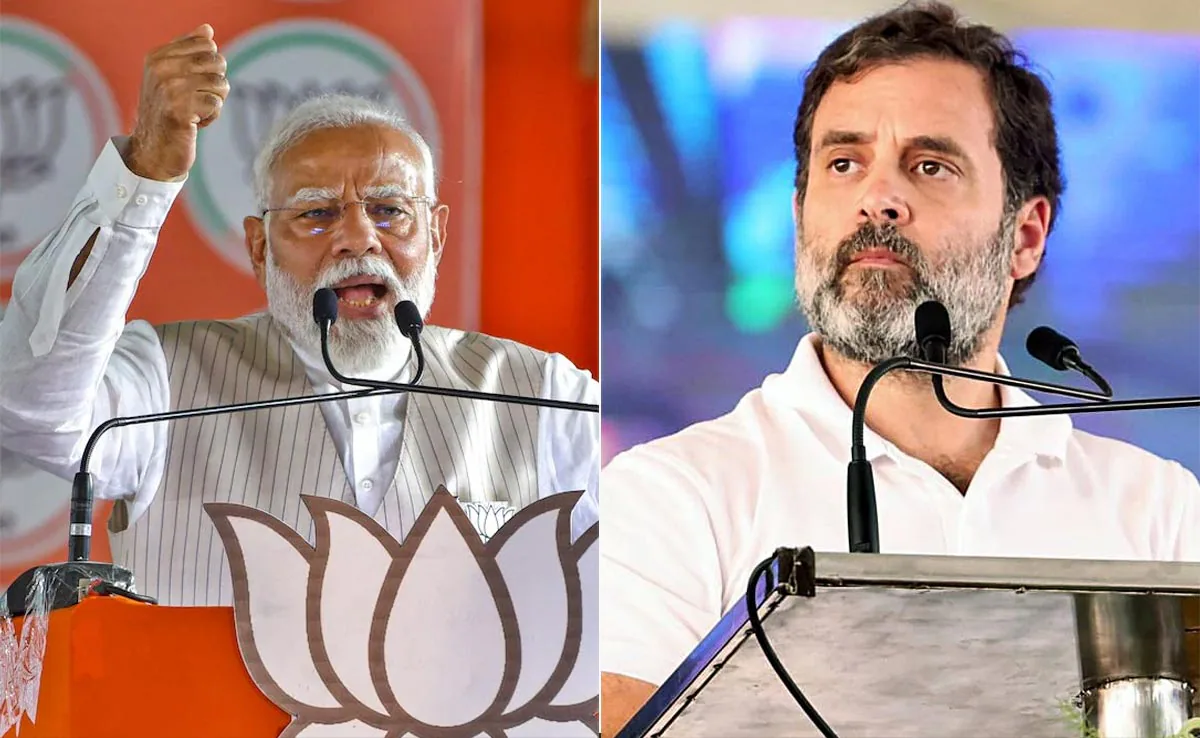
Congress leader Rahul Gandhi launched a sharp attack on Prime Minister Narendra Modi over the ongoing controversy surrounding the CBSE issue and claimed that India’s younger generation would respond strongly to policies and attitudes they view as dismissive of public concerns. His remarks added fresh political intensity to the debate and brought youth participation into the centre of the discussion.
Addressing the issue publicly, Rahul Gandhi accused the government of failing to understand changing public expectations and argued that younger generations increasingly expect accountability, transparency, and responsiveness from institutions and leadership.
His statement that “Gen Z will shatter arrogance” quickly gained political attention and triggered reactions across political circles and social platforms.
Rahul Gandhi Targets Government Over CBSE Controversy
Reacting to the issue, Rahul Gandhi criticised the central government and questioned its approach toward concerns being raised in connection with the CBSE-related developments.
According to his remarks, public institutions should remain responsive to citizens and ensure that concerns affecting students and young people receive serious consideration.
He argued that governance should involve dialogue and accountability and stated that dismissing criticism could widen the disconnect between leadership and younger generations.
Rahul Gandhi also suggested that students and youth today engage more actively with public issues and are increasingly vocal about expectations regarding governance and decision-making.
His comments placed the education-related issue within a broader political conversation.
‘Gen Z Will Shatter Arrogance’ Remark Draws Attention
One of the strongest parts of Rahul Gandhi’s remarks came through his statement that Generation Z would challenge what he described as political arrogance.
According to him, younger citizens are becoming more informed, aware, and willing to express their views through democratic participation and public engagement.
The statement quickly gained traction and became a major talking point because it connected youth sentiment with political accountability.
Political observers noted that leaders increasingly focus on younger voters because of their growing influence in shaping public discourse and political outcomes.
Rahul Gandhi positioned youth participation as an important force in future political developments.
Youth and Education Issues Become Political Talking Point
The controversy has brought attention to broader questions relating to education policy, student expectations, and institutional responsiveness.
Political observers stated that education-related issues often generate strong public reaction because they directly affect students and families.
Rahul Gandhi argued that policies connected to education require sensitivity and stronger engagement with stakeholders.
According to him, younger generations increasingly expect institutions to adapt to changing realities and remain open to criticism.
The issue therefore expanded beyond administration and entered wider political discussion.
Observers noted that youth-related issues continue to shape contemporary political narratives.
Opposition Raises Questions Around Governance Approach
Through his remarks, Rahul Gandhi also attempted to frame the controversy as part of a larger debate around governance and public accountability.
According to political observers, opposition parties often use such issues to question administrative priorities and encourage wider public discussion.
Rahul Gandhi argued that leadership should remain open to feedback and avoid appearing disconnected from public concerns.
He stated that political systems become stronger when institutions encourage participation and maintain trust.
The comments reflected the Congress party’s broader messaging around accountability and citizen engagement.
The debate has continued to generate responses from different political stakeholders.
Political Focus Shifts Towards Younger Generations
The remarks also highlighted increasing political focus on younger voters and their growing influence.
Observers stated that youth participation has become a major factor in shaping political communication and campaign narratives.
Political parties continue to engage younger audiences through issues connected to education, employment, and governance.
Rahul Gandhi’s statement attempted to position youth as a central force in political change and democratic engagement.
According to analysts, younger generations increasingly influence public debate through both online and offline participation.
The comments therefore connected a current controversy with larger political themes.
Debate Continues Around Accountability and Public Expectations
The latest exchange has added another dimension to political discussions surrounding governance and institutional response.
Observers noted that debates involving education and youth often evolve into broader conversations regarding accountability and public trust.
Rahul Gandhi maintained that public institutions should remain responsive and adapt to changing expectations.
Political reactions continued as leaders interpreted the remarks through different perspectives.
The controversy remains part of wider discussions around policy, governance, and citizen engagement.
Attention now remains focused on how the debate develops in the coming days.
Remarks Add New Political Dimension to CBSE Row
Rahul Gandhi’s criticism of Prime Minister Narendra Modi over the CBSE issue and his comments regarding Generation Z have intensified political discussion around youth, education, and governance.
His remarks positioned younger citizens as an increasingly influential voice and linked current concerns to broader expectations around accountability and public engagement.
As political reactions continue, the debate is expected to remain focused on education issues, institutional response, and the evolving role of youth in shaping India’s political discourse.