

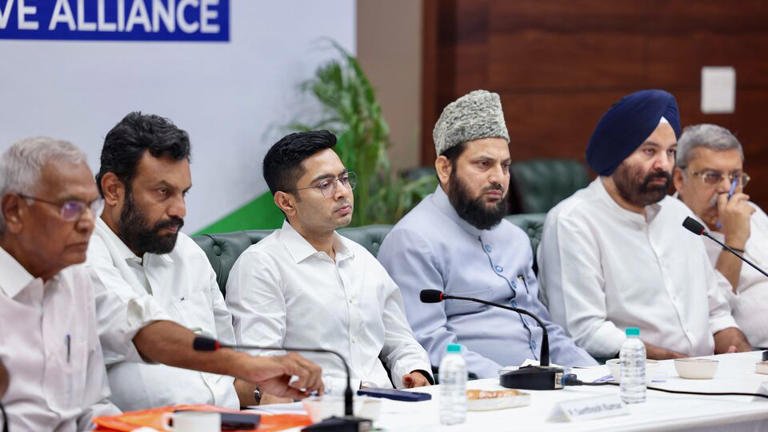
Congress leader Rahul Gandhi met Trinamool Congress (TMC) national general secretary Abhishek Banerjee amid ongoing political developments within the TMC and renewed efforts to strengthen coordination among parties in the INDIA bloc. The meeting has drawn considerable political attention as opposition parties continue discussions on cooperation and strategy ahead of upcoming political challenges.
The interaction comes at a time when sections of the TMC are dealing with internal political developments, while opposition leaders are also focusing on maintaining unity within the INDIA alliance. Political observers view the meeting as part of broader efforts to sustain communication among key opposition figures and reinforce cooperation on national issues.
Although leaders did not publicly disclose detailed discussions, the meeting has sparked speculation regarding future political coordination and the direction of opposition politics. The interaction reflects the continuing importance of dialogue among opposition parties as they seek to address emerging challenges and strengthen collective engagement.
The development also highlights the growing significance of personal interactions between leaders of different opposition parties within the INDIA bloc framework.
Rahul Gandhi and Abhishek Banerjee Hold Key Meeting
The meeting between Rahul Gandhi and Abhishek Banerjee took place amid increasing political activity within opposition circles. Both leaders are considered influential figures within their respective parties and play important roles in shaping political strategies.
Political observers noted that the interaction comes during a period when opposition parties are working to maintain unity while addressing issues of common concern. Regular consultations among leaders have become an important feature of the INDIA bloc’s functioning.
The meeting is viewed as an opportunity to exchange views on political developments at both the national and regional levels. Discussions between senior leaders often help strengthen communication channels and improve coordination among alliance partners.
While no official details of the conversation were released, analysts believe topics related to opposition unity, parliamentary strategy, and future cooperation may have featured in the discussions.
The interaction underscores the continued relevance of dialogue in coalition politics.
INDIA Bloc Continues Outreach Efforts
The INDIA bloc has remained engaged in efforts to strengthen cooperation among opposition parties. Leaders from various constituent parties have frequently met to discuss common strategies and coordinate their responses to national issues.
The meeting between Gandhi and Banerjee is being seen within the context of these broader outreach efforts. Opposition leaders have repeatedly emphasized the importance of maintaining unity and effective communication.
Political analysts note that alliances involving multiple parties require constant engagement and consultation. Such interactions help build trust and ensure that different viewpoints are considered during decision-making.
The INDIA bloc has sought to present a united front on several issues in Parliament and beyond. Meetings among senior leaders play a crucial role in advancing these objectives.
The latest interaction therefore reinforces the alliance’s focus on dialogue and coordination.
Developments Within TMC Draw Attention
The meeting also comes amid political developments within the Trinamool Congress. Recent events have generated discussions regarding internal dynamics and organizational matters within the party.
Political observers believe that developments within regional parties often attract wider attention when they occur alongside broader alliance-building efforts. As one of the most influential parties within the INDIA bloc, the TMC remains an important player in opposition politics.
Abhishek Banerjee has emerged as a prominent leader within the party and plays a key role in organizational and political affairs. His interactions with leaders from other opposition parties are therefore closely watched.
Analysts suggest that maintaining strong communication between alliance partners becomes especially important during periods of political change or internal debate.
The meeting with Rahul Gandhi has consequently generated interest both within West Bengal and at the national level.
Importance of Opposition Coordination
Coordination among opposition parties remains a central aspect of contemporary Indian politics. With multiple regional and national parties participating in alliances, regular discussions are necessary to address shared concerns and develop common approaches.
The meeting highlights the efforts being made by opposition leaders to sustain cooperation despite differences in regional priorities and political contexts. Effective coordination often requires balancing diverse perspectives while pursuing common objectives.
Political experts note that successful alliances depend not only on formal agreements but also on strong interpersonal relationships among leaders. Meetings such as this help build understanding and facilitate future collaboration.
The interaction between Gandhi and Banerjee demonstrates the continued emphasis on maintaining open channels of communication.
Such engagement is often viewed as essential for the functioning of broad political coalitions.
Focus on Future Political Strategy
While the exact details of the meeting remain undisclosed, political observers believe future political strategy may have been among the topics discussed. Opposition parties continue to evaluate changing political conditions and explore opportunities for cooperation.
Leaders across the INDIA bloc have emphasized the need for long-term planning and coordinated action. Discussions often focus on parliamentary strategies, policy issues, organizational matters, and public outreach efforts.
The meeting provides an opportunity for senior leaders to exchange perspectives and assess political developments. Such consultations help parties understand emerging challenges and identify areas of cooperation.
Analysts suggest that continued engagement among opposition leaders is likely to remain an important feature of the political landscape.
The interaction between Gandhi and Banerjee reflects this ongoing process of consultation and strategic discussion.
West Bengal’s Role in Opposition Politics
West Bengal continues to play a significant role in national opposition politics. The Trinamool Congress remains one of the most influential regional parties in the country and a key participant in the INDIA alliance.
Political developments in the state often attract national attention because of their broader implications for opposition dynamics. Interactions between TMC leaders and other opposition figures are therefore closely followed by political observers.
Abhishek Banerjee’s growing profile within the party has further increased interest in his political engagements. As a senior leader, he plays an important role in shaping the party’s approach to both state and national issues.
The meeting with Rahul Gandhi highlights the importance of West Bengal within the broader opposition framework.
It also reflects ongoing efforts to strengthen communication among major opposition stakeholders.
Political Significance of the Meeting
The meeting carries significance beyond the immediate political context. It signals a willingness among opposition leaders to continue engaging with one another despite challenges and differences.
Political alliances often require sustained efforts to maintain cohesion and address evolving circumstances. Regular interactions help leaders build consensus and coordinate responses to important developments.
Observers believe that meetings such as this contribute to the overall functioning of opposition coalitions. They provide opportunities for discussion, trust-building, and strategic planning.
The interaction between Gandhi and Banerjee therefore holds importance both symbolically and politically. It demonstrates the continuing emphasis on dialogue within opposition circles.
Such engagements are expected to remain an important part of political activity in the coming months.
Looking Ahead
The meeting between Rahul Gandhi and Abhishek Banerjee has attracted considerable attention amid developments within the Trinamool Congress and ongoing efforts to strengthen the INDIA bloc. While details of the discussion remain private, the interaction underscores the importance of communication and coordination among opposition leaders.
As political parties continue to navigate a changing landscape, dialogue and cooperation remain essential components of alliance-building. The meeting reflects broader efforts to maintain unity and address shared challenges through consultation and engagement.
Political observers will continue to monitor developments within both the TMC and the INDIA bloc in the coming weeks. Future interactions among opposition leaders are expected to play a key role in shaping political strategies and strengthening partnerships.
The meeting serves as a reminder that personal diplomacy, political coordination, and regular communication remain central to coalition politics in India. As opposition parties prepare for future challenges, such engagements are likely to remain an important feature of the national political discourse.