

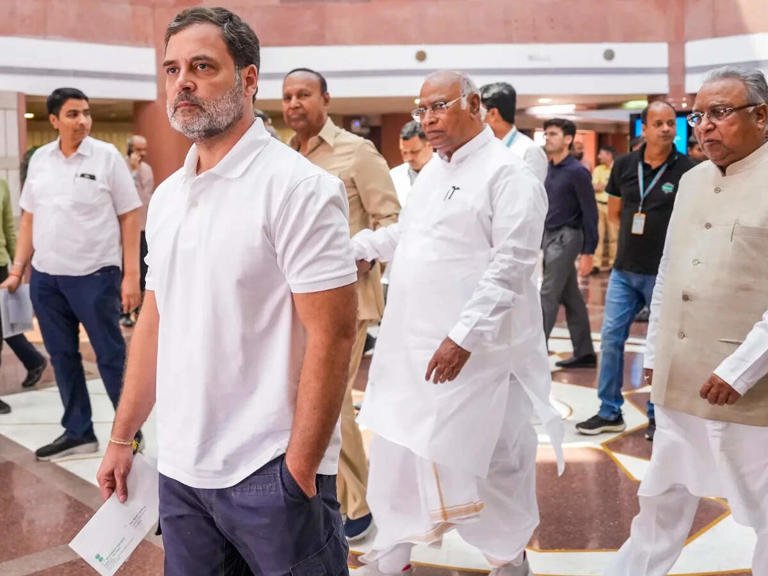
Leader of the Opposition in the Lok Sabha Rahul Gandhi has reaffirmed his commitment to continue raising public issues and defending constitutional values as his tenure in the post entered its third year. Reflecting on his journey since assuming the role, Gandhi said he would continue to hold the government accountable on issues affecting citizens while remaining committed to democratic principles and parliamentary responsibilities.
In a public message marking the milestone, the Congress leader thanked party workers, supporters, and citizens for their trust and support. He stated that the role of the Leader of the Opposition extends beyond parliamentary debates and involves representing the concerns of ordinary people, safeguarding democratic institutions, and ensuring that diverse voices are heard in the country’s legislative process.
His remarks come as Parliament continues to witness active debates on governance, economic development, social welfare, foreign policy, and legislative reforms.
Rahul Gandhi Reflects on Two Years as Leader of Opposition
As his tenure entered its third year, Rahul Gandhi described the position of Leader of the Opposition as a responsibility that requires constant engagement with public concerns and parliamentary duties.
He said that over the past two years, his focus has remained on highlighting issues affecting farmers, workers, youth, women, small businesses, and economically weaker sections of society.
According to Gandhi, the Opposition plays a crucial role in strengthening democracy by presenting alternative viewpoints, questioning government policies, and participating constructively in legislative discussions.
He reiterated that his commitment to public service remains unchanged as he continues to discharge his parliamentary responsibilities.
Commitment to Democratic Values
In his message, Gandhi emphasized the importance of protecting democratic institutions and constitutional principles.
He stated that democracy functions effectively when multiple viewpoints are represented and debated through established parliamentary processes.
According to the Congress leader, the Opposition has an important constitutional role in ensuring accountability, transparency, and public scrutiny of government policies.
He reaffirmed his commitment to continuing this role while respecting democratic institutions and parliamentary traditions.
The statement underscored the significance of constructive political engagement within India’s democratic framework.
Continuing to Raise Public Issues
Rahul Gandhi said he would continue to raise issues that directly affect citizens across the country.
These include employment generation, economic opportunities, education, healthcare, agriculture, social justice, and welfare programmes.
He stated that parliamentary debates provide an important platform for discussing challenges faced by different sections of society while seeking policy solutions through democratic dialogue.
According to Gandhi, representing public concerns remains one of the central responsibilities of elected representatives.
He pledged to continue engaging with citizens across the country to better understand their aspirations and challenges.
Role of the Leader of Opposition
The Leader of the Opposition occupies an important constitutional position within India’s parliamentary democracy.
Although the government is responsible for executive decision-making, the Opposition performs the vital function of examining legislation, scrutinizing public policies, questioning executive actions, and offering alternative perspectives during parliamentary proceedings.
Rahul Gandhi noted that a strong Opposition contributes to better governance by encouraging informed debate and ensuring accountability.
He stated that democratic institutions become stronger when diverse opinions receive adequate representation within Parliament.
Parliamentary Engagement
Since assuming the position, Gandhi has participated in parliamentary discussions on a range of national issues, including economic policy, social welfare, governance, national security, education, agriculture, and foreign affairs.
He said Parliament remains the appropriate forum for discussing important legislative proposals and public policy matters.
The Congress leader emphasized the importance of meaningful parliamentary debate in strengthening democratic decision-making and ensuring that legislation receives careful examination before implementation.
He reiterated his commitment to active participation in future parliamentary sessions.
Gratitude to Party Workers and Supporters
Rahul Gandhi expressed appreciation to Congress workers, elected representatives, alliance partners, and supporters for their continued encouragement during his tenure.
He acknowledged the efforts of party members working across the country to engage with citizens and communicate public concerns through democratic processes.
According to Gandhi, political organisations derive their strength from grassroots workers who maintain regular contact with local communities.
He credited their dedication with helping the party remain connected to issues affecting ordinary people.
The message also conveyed optimism regarding the party’s future organisational efforts.
Focus on Inclusive Development
The Congress leader reiterated his party’s commitment to policies aimed at inclusive economic and social development.
He stated that governance should prioritize opportunities for youth, support for farmers, improved education, accessible healthcare, employment generation, and protection of constitutional rights.
According to Gandhi, balanced development requires addressing regional disparities while ensuring that economic growth benefits all sections of society.
He emphasized that public policy discussions should remain focused on improving the quality of life for citizens through inclusive and sustainable development.
Importance of Political Dialogue
Rahul Gandhi highlighted the importance of healthy political dialogue in a democratic society.
He stated that differences in political opinion should be debated through constitutional institutions, parliamentary discussions, and peaceful public engagement.
According to him, constructive debate contributes to better policymaking by allowing different perspectives to be examined before decisions are made.
The Congress leader emphasized that democratic governance benefits when political parties participate responsibly in institutional processes while respecting constitutional norms.
Looking Ahead
As his tenure enters its third year, Gandhi said he intends to continue focusing on issues affecting citizens while fulfilling his responsibilities as Leader of the Opposition.
He expressed confidence that democratic institutions remain capable of addressing national challenges through dialogue, constitutional governance, and parliamentary engagement.
Future priorities, according to Gandhi, include sustained interaction with people across the country, active participation in legislative debates, and continued advocacy on issues raised by citizens.
He reaffirmed that his political efforts would remain centred on democratic accountability and public service.
Conclusion
Rahul Gandhi’s statement marking the beginning of his third year as Leader of the Opposition reflects his commitment to continuing his parliamentary responsibilities and engaging with issues affecting the country. Reaffirming his intention to “keep fighting,” the Congress leader emphasized the importance of democratic values, constitutional institutions, and constructive political dialogue in strengthening India’s parliamentary democracy.
As Parliament continues to deliberate on key national issues, the role of the Opposition remains an integral part of the democratic process. Gandhi’s remarks underscore his stated intention to continue representing public concerns, participating in legislative debates, and contributing to parliamentary accountability as he enters the next phase of his tenure as Leader of the Opposition.