

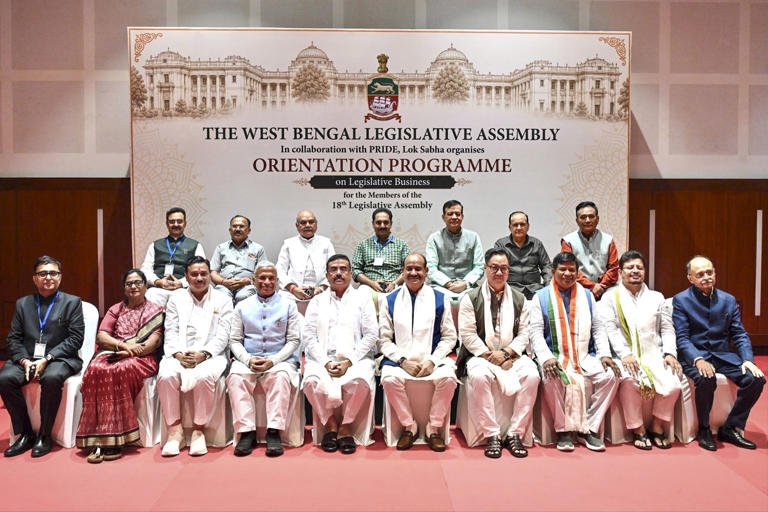
Union Minister Kiren Rijiju has expressed concern over the distribution of cash during elections, describing the practice as undemocratic and urging collective efforts to eliminate it from the country’s electoral process. Stressing the importance of preserving the integrity of democracy, the minister said elections should be decided by informed choices and public trust rather than monetary inducements.
Addressing a public gathering, Rijiju observed that the practice of distributing cash to influence voters undermines the fundamental principles of free and fair elections. He called upon political parties, candidates, election authorities, and citizens to work together to ensure that democratic values are upheld throughout the electoral process.
The minister said India’s democratic system has grown stronger over the decades, but certain practices continue to pose challenges that require firm action and greater public awareness.
Cash Distribution Undermines Democratic Values
Rijiju stated that offering cash or other inducements to voters weakens the credibility of elections and affects the spirit of representative democracy. According to him, elections are meant to reflect the genuine will of the people, and any attempt to influence voters through financial incentives compromises that objective.
He remarked that democracy functions effectively only when citizens are able to exercise their franchise freely and independently without external pressure or material inducements.
The minister stressed that public representatives should be elected on the basis of their policies, governance record, leadership qualities, and commitment to public service rather than financial influence.
He added that eliminating such practices is essential for strengthening public confidence in the electoral system.
Need for Electoral Reforms and Public Participation
Highlighting the broader issue of electoral integrity, Rijiju said meaningful reforms require the active participation of all stakeholders, including political parties, government institutions, civil society organisations, and voters.
He observed that while legal provisions and enforcement mechanisms play an important role, lasting change can only be achieved when citizens reject attempts to influence their voting decisions through cash or other incentives.
The minister encouraged greater public awareness regarding ethical voting practices and emphasized that every vote should reflect informed judgment rather than short-term financial gain.
He noted that a healthy democracy depends not only on strong institutions but also on responsible civic participation.
Free and Fair Elections Strengthen Democracy
Rijiju reiterated that free, fair, and transparent elections remain the cornerstone of India’s democratic system. He said the credibility of electoral outcomes depends on ensuring that every eligible voter can cast their vote independently and without undue influence.
The Election Commission of India and other constitutional institutions, he noted, have consistently taken measures to strengthen electoral transparency through monitoring mechanisms, expenditure regulations, and enforcement against violations of election laws.
The minister appreciated the efforts undertaken by election authorities to curb electoral malpractices while encouraging continued vigilance during election periods.
He stressed that maintaining the integrity of elections is a shared responsibility that extends beyond regulatory agencies alone.
Citizens Have a Crucial Role to Play
The Union Minister emphasized that voters themselves have an important role in protecting democratic values by refusing inducements and participating responsibly in elections.
He urged citizens to evaluate candidates based on their vision, governance capabilities, public service, and commitment to development rather than temporary incentives offered during election campaigns.
According to Rijiju, informed and responsible voting strengthens democratic institutions while encouraging greater accountability among elected representatives.
He also highlighted the importance of civic education in promoting awareness about constitutional rights, electoral responsibilities, and ethical participation in the democratic process.
Greater public consciousness, he said, is one of the strongest safeguards against electoral malpractice.
Political Parties Urged to Uphold Ethical Standards
Rijiju called upon political parties to maintain high ethical standards during election campaigns and to avoid practices that could undermine public trust in democratic institutions.
He observed that healthy political competition should be based on ideas, policies, governance performance, and constructive public debate rather than financial inducements or other unfair methods.
Political parties, he said, have a responsibility to strengthen democratic traditions by conducting campaigns that respect both legal requirements and ethical principles.
The minister noted that transparent and issue-based election campaigns contribute to stronger democratic governance while enhancing public confidence in elected institutions.
Responsible political conduct, he added, ultimately benefits both democracy and society.
Strengthening Public Trust in Democratic Institutions
The minister stated that preserving public trust in democratic institutions requires continuous efforts to improve transparency, accountability, and fairness throughout the electoral process.
Strong institutions, effective law enforcement, independent election management, and active citizen participation together form the foundation of a robust democratic system.
Rijiju observed that India’s democratic success has been built upon regular elections, peaceful transfer of power, and widespread public participation, making it important to address practices that could weaken these achievements.
He stressed that protecting the integrity of elections contributes directly to stronger governance, better public representation, and increased confidence in constitutional institutions.
Commitment to Democratic Values
Concluding his remarks, Kiren Rijiju reiterated that the distribution of cash during elections has no place in a healthy democracy and must be stopped through collective action and sustained public awareness.
He called for stronger commitment from political parties, election authorities, civil society, and citizens to ensure that elections remain free, fair, transparent, and reflective of the genuine will of the people.
The minister expressed confidence that continued efforts toward electoral reforms, stricter enforcement of existing laws, and greater voter awareness would further strengthen India’s democratic framework.
His remarks underscore the importance of safeguarding electoral integrity as the foundation of democratic governance. By discouraging practices such as cash distribution and promoting ethical political participation, India can continue to reinforce public confidence in its electoral system while ensuring that democratic institutions remain strong, transparent, and accountable. Strengthening the culture of free and fair elections, Rijiju emphasized, is essential for preserving the values upon which the country’s democracy is built.