

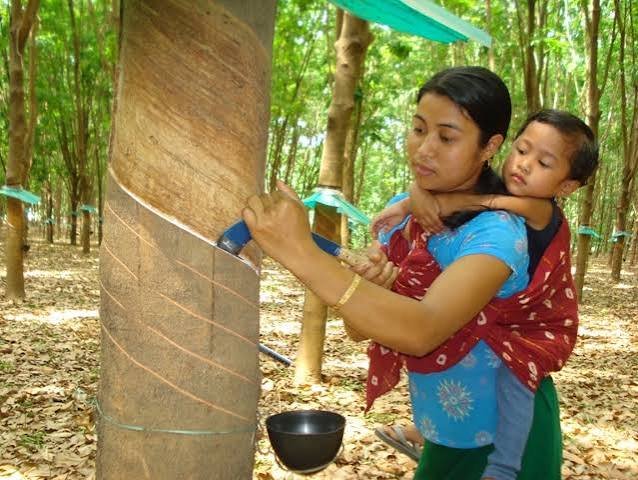
Tripura has targeted an additional 5,000 hectares for high-yield natural rubber cultivation under its latest Rubber Plantation Drive (TR). The expansion aims to increase the area under rubber cultivation and strengthen the state’s agricultural and plantation economy while creating further opportunities for farmers and rural communities.
Marathi Test for Mumbai Auto-Taxi Drivers: What Changes From August 18
The Rubber Plantation Drive (TR) represents an effort to expand Tripura’s natural rubber cultivation by another 5,000 hectares. The target focuses on high-yield varieties and could increase the state’s plantation area if authorities and growers achieve the proposed expansion.
Rubber remains an important plantation crop in Tripura, where agricultural communities have developed experience in rubber cultivation. Moreover, expanding plantation coverage can create additional opportunities for farmers who seek commercially viable crops.
However, the information provided does not specify the exact districts selected for the additional 5,000 hectares, the number of farmers expected to participate, or the timeframe for completing the expansion.
Therefore, those details require confirmation from the state government or relevant plantation authorities.
Rubber Plantation Drive (TR) Expands Cultivation Target
The Rubber Plantation Drive (TR) has set a target of adding 5,000 hectares to Tripura’s natural rubber cultivation area. The proposed expansion focuses on high-yield cultivation, indicating an emphasis on improving productivity alongside increasing plantation coverage.
High-yield planting material can potentially produce greater output from a given area when growers maintain suitable cultivation practices and environmental conditions. Furthermore, improved productivity can strengthen the commercial value of plantation farming.
The expansion could also create demand for activities associated with plantation development, including land preparation, planting, maintenance, tapping, and processing.
However, the available information does not provide a projected annual rubber output from the additional 5,000 hectares.
Consequently, the potential increase in production cannot yet be quantified.
The immediate confirmed development remains the government’s target to expand high-yield natural rubber cultivation across an additional 5,000 hectares.
Rubber Plantation Drive (TR) Could Benefit Rural Farmers
The Rubber Plantation Drive (TR) could have implications for rural households involved in agriculture and plantation activities. Expanding cultivation can provide farmers with opportunities to participate in a commercially established crop.
Moreover, rubber cultivation involves several stages of plantation management and harvesting, which can support rural economic activity.
The proposed expansion may also encourage greater use of improved planting materials and cultivation practices. Additionally, larger plantation areas can strengthen the supply base for rubber-related processing and commercial activities.
However, rubber trees require time to mature before they reach productive tapping stages. Therefore, the 5,000-hectare target should not be interpreted as an immediate increase in rubber production.
The information provided does not state when the newly planted areas would begin producing commercial quantities of latex.
Further details about plantation timelines and farmer support would help clarify the expected economic impact.
Rubber Plantation Drive (TR) Focuses on High-Yield Cultivation
The emphasis on high-yield natural rubber forms an important part of the Rubber Plantation Drive (TR). Instead of focusing only on expanding plantation acreage, the initiative also highlights productivity.
Furthermore, high-yield cultivation can help farmers increase output when suitable varieties receive proper management. Soil conditions, rainfall, plantation maintenance, disease management, and harvesting practices can all influence final yields.
Tripura’s climate and agricultural landscape have supported the development of rubber plantations, but individual plantation performance can vary.
However, the available information does not identify the specific rubber varieties included in the expansion plan or provide expected yield figures per hectare.
Therefore, it would be premature to estimate the precise production increase from the proposed target.
The focus on high-yield cultivation nevertheless suggests that productivity will remain an important consideration alongside plantation expansion.
Rubber Plantation Drive (TR) May Strengthen the Plantation Economy
The Rubber Plantation Drive (TR) could contribute to the broader plantation economy by increasing the area available for natural rubber production.
Moreover, an expanded rubber sector can support activities beyond cultivation, including latex collection, processing, transportation, and related commercial services.
A larger production base could also provide opportunities for strengthening local value chains. However, the actual economic effect will depend on factors such as plantation productivity, rubber prices, processing capacity, market access, and farmer participation.
The information provided does not include estimates of investment, employment generation, expected revenue, or the projected contribution of the additional plantations to Tripura’s rubber sector.
Consequently, the broader economic impact remains difficult to quantify at this stage.
Successful implementation will depend on how authorities translate the 5,000-hectare target into actual plantation development and sustained farmer participation.
Conclusion
The Rubber Plantation Drive (TR) marks an effort by Tripura to expand high-yield natural rubber cultivation across an additional 5,000 hectares. The target could strengthen the state’s plantation base and create further opportunities for farmers and rural communities.
Moreover, the focus on high-yield cultivation places productivity alongside acreage expansion. However, rubber trees require time to mature, so the additional plantation area will not immediately translate into equivalent increases in commercial rubber production.
Overall, the Rubber Plantation Drive (TR) could support the long-term development of Tripura’s natural rubber sector if authorities and growers successfully implement the expansion. Further details on locations, participating farmers, planting schedules, varieties, and government support will determine the scale and eventual impact of the initiative.
FAQs
1. What is the Rubber Plantation Drive (TR)?
The Rubber Plantation Drive (TR) refers to Tripura’s initiative to expand high-yield natural rubber cultivation across an additional 5,000 hectares.
2. How much additional land does Tripura target?
Tripura has targeted an additional 5,000 hectares for high-yield natural rubber cultivation.
3. Why is high-yield rubber cultivation important?
High-yield cultivation can potentially increase rubber production from a given plantation area when growers use suitable planting materials and follow effective cultivation practices.
4. Will the new plantations immediately increase rubber production?
No. Rubber trees require several years to mature before farmers can begin regular commercial tapping. Therefore, the production impact will develop over time.
5. How could the Rubber Plantation Drive benefit Tripura?
The initiative could expand the state’s plantation economy and create opportunities for farmers, plantation workers, processing activities, and related rural businesses.