

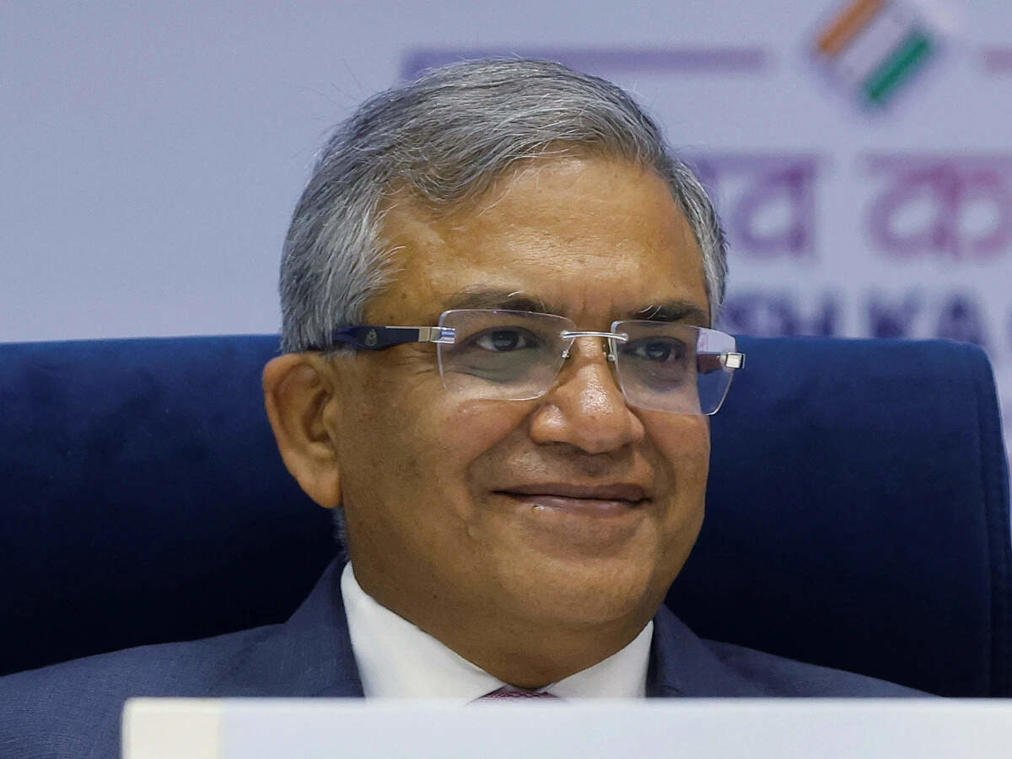
The Supreme Court has agreed to hear a petition questioning the functioning of the Election Commission of India under Chief Election Commissioner Gyanesh Kumar.
The plea raises questions about how the three-member poll panel takes important decisions. It particularly challenges whether the CEC can exercise powers assigned to the Election Commission as a whole.
The matter was mentioned before a bench headed by Chief Justice of India Surya Kant. Justices Joymalya Bagchi and V. Mohana are also part of the bench. The court agreed to hear the matter next week.
Plea Questions Collective Decision-Making
The petition challenges the alleged exercise of Election Commission powers without the concurrence of the other two Election Commissioners.
According to the plea, several decisions connected with electoral-roll revision were allegedly taken without the knowledge or approval of Election Commissioners Sukhbir Singh Sandhu and Vivek Joshi.
The petition argues that Article 324 of the Constitution vests electoral powers in the Election Commission as a body. It also refers to the Chief Election Commissioner and Other Election Commissioners Act, 2023.
However, these allegations remain part of the petition. The Supreme Court has not yet made any finding on them.
SIR Exercise at Centre of Dispute
The petition is closely linked to the ongoing Special Intensive Revision (SIR) of electoral rolls.
The SIR process has triggered a wider political debate over voter-list revisions. Opposition parties have questioned the process and raised concerns about voter exclusions.
The petition also seeks judicial scrutiny of decisions and measures connected with the SIR exercise. It asks the court to examine whether such decisions followed the constitutional and statutory framework governing the ECI.
The Election Commission, meanwhile, has defended the process.
ECI Says Decisions Were Unanimous
The Election Commission has rejected suggestions of a formal split among its members.
The ECI has said its final decisions on the SIR exercise were unanimous. It has also explained that commissioners can raise questions, make suggestions and record observations during internal discussions.
According to the Commission, such discussions form part of its normal decision-making process. It maintains that final decisions received the approval of all three commissioners.
The Commission’s position is therefore different from the allegations raised in the petition.
Petition Seeks Scrutiny of CEC’s Powers
The petitioner has sought several forms of relief from the Supreme Court.
One request concerns the manner in which powers vested in the Election Commission were allegedly exercised by the CEC. The plea also seeks safeguards to ensure that decisions remain within the constitutional and statutory framework.
Reports say the petition seeks a writ of quo warranto against Gyanesh Kumar. It also questions decisions that the petitioner claims were taken without collective approval.
A court listing, however, does not mean that the Supreme Court has accepted these allegations.
Earlier Petitions Also Challenged SIR Decisions
The latest case comes after other petitions were filed before the Supreme Court over the SIR process.
One earlier petition challenged decisions, guidelines and software changes allegedly introduced during electoral-roll revision. It also sought an independent investigation into alleged voter deletions.
Another petition sought an investigation into the alleged deletion of around 13 crore names from electoral rolls. It also questioned decisions allegedly taken without the concurrence of the other two Election Commissioners.
These claims have not been established by the court.
Political Controversy Surrounds Election Commission
The legal developments come amid a growing political dispute over the Election Commission.
Congress and several other Opposition parties have criticised Gyanesh Kumar and demanded greater transparency in the SIR process. Congress has also organised nationwide protests over what it calls electoral irregularities.
The BJP and the Election Commission have rejected the allegations.
The BJP has defended the poll panel’s functioning. Meanwhile, the ECI has maintained that its decisions followed established procedures.
Supreme Court Hearing Next Week
The upcoming hearing will give the Supreme Court an opportunity to examine the legal questions raised by the petition.
The court may consider whether the challenged decisions followed the constitutional and statutory framework governing the Election Commission. It may also examine the petitioner’s claims about collective decision-making.
For now, no finding has been made against Gyanesh Kumar or the Election Commission.
The case remains at the stage of judicial consideration. The hearing next week could bring greater clarity to the legal questions surrounding the ECI’s functioning and the SIR exercise.