

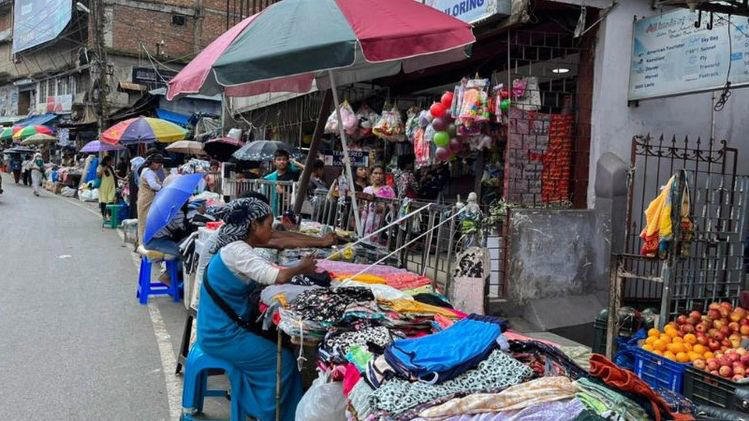
The Shillong Municipal Board (SMB) has relocated 86 roadside vendors from the Laitumkhrah area as part of an effort to reduce traffic congestion and improve pedestrian movement in one of the city’s busiest commercial zones.
The relocation forms part of a wider traffic-management initiative aimed at addressing persistent congestion caused by roadside vending, parked vehicles and heavy pedestrian movement. Authorities have shifted the vendors to a designated area to create more space along the main road and improve the movement of vehicles.
Laitumkhrah remains one of Shillong’s busiest neighbourhoods. The area attracts large numbers of residents, shoppers, students and visitors every day. Its narrow roads and concentration of commercial activity often create severe traffic bottlenecks.
The latest move seeks to balance the needs of vendors with the city’s requirement for safer and more organised public spaces.
86 Vendors Moved From Roadside
The SMB relocated 86 vendors who had been operating along the roadside in Laitumkhrah.
Officials identified roadside vending as one of the factors contributing to congestion in the area. Vendors often occupied portions of pedestrian paths and road margins, leaving less space for vehicles and pedestrians.
The relocation provides these vendors with a designated space while freeing up the roadside.
Authorities hope the move will reduce obstruction and make traffic movement more predictable.
The initiative also forms part of efforts to create a cleaner and more orderly commercial environment in Laitumkhrah.
Laitumkhrah Faces Persistent Congestion
Laitumkhrah has become an important commercial and residential hub in Shillong.
The area contains restaurants, shops, markets, educational institutions and other businesses. Its popularity has increased pedestrian and vehicular movement, particularly during peak hours.
Traffic congestion often becomes worse when vehicles stop along narrow stretches to pick up passengers or goods. Roadside stalls can further reduce the available space.
The accumulation of these activities can create bottlenecks that affect both commuters and businesses.
Authorities have therefore been looking at ways to reorganise commercial activity without disrupting the livelihoods of people who depend on street vending.
Designated Space Offers Alternative for Vendors
The relocation does not remove vendors from the local economy. Instead, authorities have moved them to a designated vending area.
Providing an organised space can offer several advantages. Vendors can continue their businesses while authorities can manage the location more effectively.
A designated market can also provide better arrangements for waste disposal, pedestrian movement and basic amenities.
For customers, an organised vending area can make it easier to access stalls without stepping onto busy roads.
The arrangement could also improve safety for vendors who previously worked close to moving traffic.
Balancing Livelihoods and Traffic Needs
Street vending provides an important source of income for many families.
Any relocation policy therefore needs to consider the economic impact on vendors. Moving them too far from their existing customer base could reduce sales.
The authorities’ decision to provide a designated location attempts to address this concern.
A successful relocation programme will depend on whether customers continue visiting the new vending area and whether vendors receive adequate support during the transition.
Maintaining good access to the relocated market will also be important.
Pedestrian Safety Becomes a Priority
One of the main benefits expected from the relocation is improved pedestrian movement.
Roadside vending can force pedestrians to walk along carriageways when stalls occupy footpaths. This increases the risk of accidents, particularly in areas with heavy traffic.
Removing obstructions can give pedestrians more space to move safely.
The authorities can also use the freed-up space to improve footpaths, crossings and other pedestrian facilities.
Such improvements could make Laitumkhrah more accessible for elderly people, children and people with mobility difficulties.
Better Traffic Management Needed
Relocating vendors alone will not solve every traffic problem in Laitumkhrah.
The area also faces challenges from illegal parking, loading and unloading, taxis and private vehicles. Traffic volumes remain high throughout the day.
Authorities will therefore need to combine the vendor relocation with stronger enforcement and better traffic planning.
Clear parking rules can prevent vehicles from blocking roads. Dedicated spaces for loading and unloading could also reduce random stops.
Traffic police and civic officials may need to monitor the area regularly to ensure that newly cleared spaces do not become occupied again.
Market Organisation Could Improve Hygiene
Organised vending can also support better sanitation.
When vendors operate along roadsides, waste can accumulate around stalls and drainage channels. Food waste and plastic packaging can create additional problems during heavy rainfall.
A designated vending area allows authorities to establish clearer waste-management arrangements.
Regular collection and proper disposal can improve the cleanliness of the market.
This can benefit both vendors and customers while improving the appearance of one of Shillong’s busiest neighbourhoods.
Laitumkhrah’s Commercial Importance
Laitumkhrah plays a major role in Shillong’s commercial life.
The neighbourhood has become known for its restaurants, cafés, retail outlets and street markets. Young people and students frequently visit the area, contributing to its busy atmosphere.
The high level of commercial activity makes traffic management particularly challenging.
Authorities need to protect the area’s economic activity while ensuring that roads remain accessible.
An organised vending system could help achieve this balance by separating commercial activity from the main traffic corridor.
Relocation Could Benefit Local Businesses
Improved traffic movement could also benefit permanent shops and other businesses in the area.
When congestion becomes severe, customers may avoid busy commercial locations because they find it difficult to park or walk around.
Better traffic flow could make Laitumkhrah more attractive to shoppers and visitors.
Businesses could also benefit from cleaner and more organised surroundings.
The relocation therefore has the potential to support the area’s wider commercial economy if authorities implement it effectively.
Need for Continued Monitoring
The success of the initiative will depend on long-term enforcement.
Authorities will need to ensure that relocated vendors receive adequate space and that roadside vending does not gradually return.
They must also monitor whether the new vending area attracts enough customers to remain economically viable.
Regular consultations with vendors can help identify problems and allow authorities to make adjustments.
Such engagement can reduce the possibility of conflict between civic authorities and street vendors.
Shillong Needs a Broader Traffic Strategy
The Shillong Laitumkhrah traffic 2026 issue reflects a larger challenge facing the growing city.
As Shillong’s population, vehicle ownership and commercial activity increase, roads designed for lower traffic volumes face greater pressure.
The city needs a comprehensive approach that includes public transport, parking management, pedestrian infrastructure, road maintenance and regulation of roadside commercial activity.
Vendor relocation can form one part of that larger strategy.
Authorities may also need to identify additional vending zones across the city so that street businesses can operate legally without obstructing major roads.
A Step Towards a More Organised Laitumkhrah
The relocation of 86 roadside vendors marks an important step in the effort to ease congestion in Laitumkhrah.
By moving vendors to a designated area, the authorities aim to create more space for vehicles and pedestrians while allowing vendors to continue earning their livelihoods.
The initiative could also improve cleanliness, pedestrian safety and the overall appearance of the neighbourhood.
However, its long-term success will depend on proper planning, regular monitoring and continued support for the relocated vendors.
Laitumkhrah’s importance as a commercial centre means that authorities must find a sustainable balance between economic activity and traffic management.
If the new arrangement works as planned, it could provide a model for managing roadside vending in other congested parts of Shillong. The immediate goal remains clear: create safer roads, smoother traffic and a more organised public space without leaving local vendors behind.