

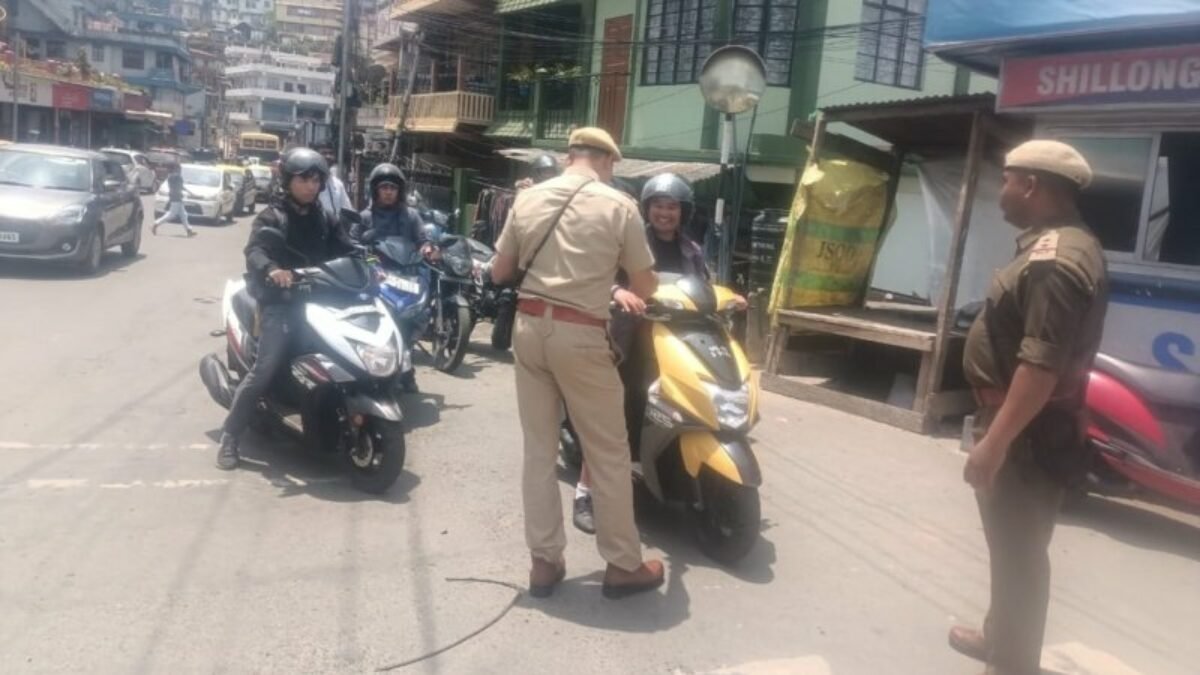
Shillong one-way traffic layout measures officially came into effect after local authorities introduced a revised route management system aimed at easing congestion across several of the city’s busiest roads and commercial zones. Meanwhile, traffic police officials and urban administrators stated that the updated circulation plan seeks to improve vehicle movement, reduce travel delays, and strengthen overall traffic discipline within Meghalaya’s capital. The implementation immediately attracted widespread public attention because Shillong has experienced increasing traffic pressure due to rapid urban growth, rising vehicle numbers, and limited road expansion capacity. Additionally, civic authorities reportedly intensified monitoring and public awareness campaigns to ensure smooth adaptation to the revised system.
The development emerged as multiple northeastern cities continue exploring new traffic management strategies to address urban mobility challenges. Furthermore, transportation experts observed that Shillong’s narrow hill roads and expanding population frequently create operational strain during peak travel hours.
Guwahati Infrastructure Push Nears Major Launch
Sikkim Rainfall Disrupts Key Highway Connectivity
Authorities Roll Out Revised Traffic Movement Plan
Traffic management authorities formally implemented the new circulation framework across key stretches of Shillong. Shillong one-way traffic layout discussions therefore quickly became a major focus among commuters, businesses, and local residents.
Meanwhile, officials explained that the revised system includes designated one-way corridors, modified vehicle entry points, and adjusted movement timings across congested urban intersections. Additionally, traffic personnel reportedly increased deployment in affected areas to guide commuters and reduce confusion during the transition phase.
Urban administration representatives emphasized that smoother traffic flow remains essential for improving commuter convenience and reducing unnecessary congestion within commercial districts. Furthermore, authorities indicated that the revised layout followed extensive traffic assessments and road usage studies.
Earlier, Shillong repeatedly experienced severe traffic bottlenecks during office hours, school timings, and tourist seasons. Consequently, the latest intervention generated cautious optimism regarding possible improvement in daily travel conditions.
At the same time, officials acknowledged that initial public adjustment may require time as drivers adapt to the modified routes.
Congestion Reduction Remains Primary Objective
The revised road arrangement primarily targets chronic congestion affecting central Shillong and nearby commercial areas. Shillong one-way traffic layout changes therefore focused heavily on improving urban mobility efficiency.
Meanwhile, transport officials stated that unregulated vehicle movement and roadside parking frequently slowed traffic across major intersections and narrow hill roads. Additionally, authorities observed that increasing private vehicle ownership placed substantial pressure on Shillong’s existing road infrastructure.
Traffic management experts explained that one-way systems often improve flow efficiency by reducing intersection conflicts and unnecessary vehicle stoppages. Furthermore, controlled directional movement may help minimize travel delays during peak traffic periods.
Several urban planning researchers noted that hill cities with limited road expansion potential increasingly depend on smarter traffic regulation instead of large-scale roadway widening. Consequently, route optimization and disciplined circulation systems gained policy importance within Shillong’s mobility planning framework.
However, some commuters expressed concern regarding possible confusion and longer alternate travel routes during the initial implementation stage.
Traffic Police Intensify Monitoring and Public Guidance
Shillong Traffic Police reportedly strengthened enforcement and awareness operations following the rollout of the revised traffic arrangement. Shillong one-way traffic layout implementation therefore involved coordinated field-level monitoring across sensitive zones.
Meanwhile, officers deployed at major intersections assisted commuters by explaining diversion points, permitted routes, and restricted movement sections. Additionally, authorities used public announcements and digital advisories to communicate route updates to residents and transport operators.
Law enforcement officials emphasized that public cooperation remains essential for ensuring the effectiveness of the new system. Furthermore, traffic personnel continued monitoring congestion patterns to identify areas requiring additional adjustments or operational improvements.
Several governance experts observed that successful urban traffic reforms often depend on consistent enforcement and clear communication with citizens. Consequently, public awareness campaigns became an important component of the transition strategy.
At the same time, emergency response and essential service vehicles reportedly received priority movement provisions within the revised framework.
Businesses and Daily Commuters Assess Impact
The new traffic arrangement also influenced commercial activity and daily commuting patterns across Shillong’s central areas. Shillong one-way traffic layout measures therefore generated mixed reactions from businesses and regular travelers.
Meanwhile, shop owners and market operators stated that smoother traffic flow could potentially improve customer access if congestion decreases over time. Additionally, transport operators expressed hope that reduced vehicle gridlock may lower fuel consumption and commuting delays.
Economic analysts observed that traffic congestion frequently affects productivity, business efficiency, and urban commercial activity in growing cities. Furthermore, transportation delays often create indirect economic costs involving fuel wastage and reduced mobility.
Several civic observers also highlighted the importance of balancing commuter convenience with traffic discipline during urban transport reforms. Consequently, authorities continued evaluating public feedback regarding the revised circulation system.
However, some residents requested additional parking management measures and stronger regulation of roadside encroachment alongside the one-way implementation.
Urban Growth Continues Pressuring Shillong Infrastructure
The latest traffic reform highlighted broader infrastructure challenges associated with Shillong’s rapid urban expansion. Shillong one-way traffic layout planning therefore reflected increasing pressure on civic systems within Meghalaya’s capital city.
Meanwhile, urban development experts observed that rising population density, tourism growth, and commercial expansion steadily increased transportation demand across Shillong. Additionally, geographical limitations and hilly terrain restricted opportunities for major road widening projects.
Infrastructure researchers explained that many hill cities face unique mobility challenges because of narrow roads, limited land availability, and unplanned vehicle growth. Furthermore, balancing urban modernization with environmental preservation remains a significant policy challenge in ecologically sensitive regions.
Several transport planners emphasized that sustainable mobility solutions may require integrated public transport systems, parking reforms, and pedestrian-friendly infrastructure. Consequently, traffic management reforms increasingly became part of broader urban planning discussions.
At the same time, environmental groups encouraged authorities to prioritize eco-friendly mobility strategies reducing excessive vehicle dependency.
Authorities Expected to Review System Performance
Officials indicated that the revised traffic arrangement may undergo periodic assessment based on operational outcomes and public response. Shillong one-way traffic layout performance therefore will likely remain under continuous administrative review.
Meanwhile, traffic authorities reportedly planned to analyze congestion trends, commuter movement patterns, and road efficiency indicators during the coming weeks. Additionally, adjustments may be introduced if specific routes continue experiencing operational difficulties or public inconvenience.
Urban mobility experts noted that adaptive traffic systems frequently require phased modifications to achieve long-term efficiency improvements. Furthermore, data-driven planning and real-time traffic monitoring increasingly influence modern urban transport management strategies.
Several policy analysts emphasized that successful congestion management depends on sustained coordination between traffic enforcement, civic planning, and public participation. Consequently, authorities remained focused on balancing enforcement with commuter convenience during the transition period.
At the same time, residents across Shillong continued closely monitoring the practical impact of the newly introduced route system.
Conclusion
Shillong one-way traffic layout measures officially came into force as authorities introduced a revised circulation system aimed at reducing congestion and improving vehicle movement across key parts of the city. Meanwhile, traffic police and civic administrators intensified monitoring and public guidance efforts to ensure smooth implementation during the transition phase. Experts highlighted that Shillong’s growing population, limited road infrastructure, and increasing vehicle numbers continue creating major urban mobility challenges. Ultimately, observers believe the long-term effectiveness of the new system may depend on public cooperation, consistent enforcement, and broader transportation planning reforms.
FAQs
Why did Shillong introduce a new one-way traffic system?
Authorities implemented the system to reduce congestion and improve urban traffic flow.
What changes are included in the revised layout?
The plan includes designated one-way routes, diversions, and modified vehicle movement systems.
Who is managing the new traffic arrangement?
Shillong Traffic Police and civic authorities are overseeing implementation and monitoring.
Could the new system reduce traffic congestion?
Officials believe smoother directional movement may reduce bottlenecks and travel delays.
Why does Shillong face heavy traffic problems?
Rapid urban growth, rising vehicle numbers, and narrow hill roads contribute to congestion.
Will authorities review the traffic system later?
Yes, officials indicated that operational performance and public feedback will be reviewed regularly.