

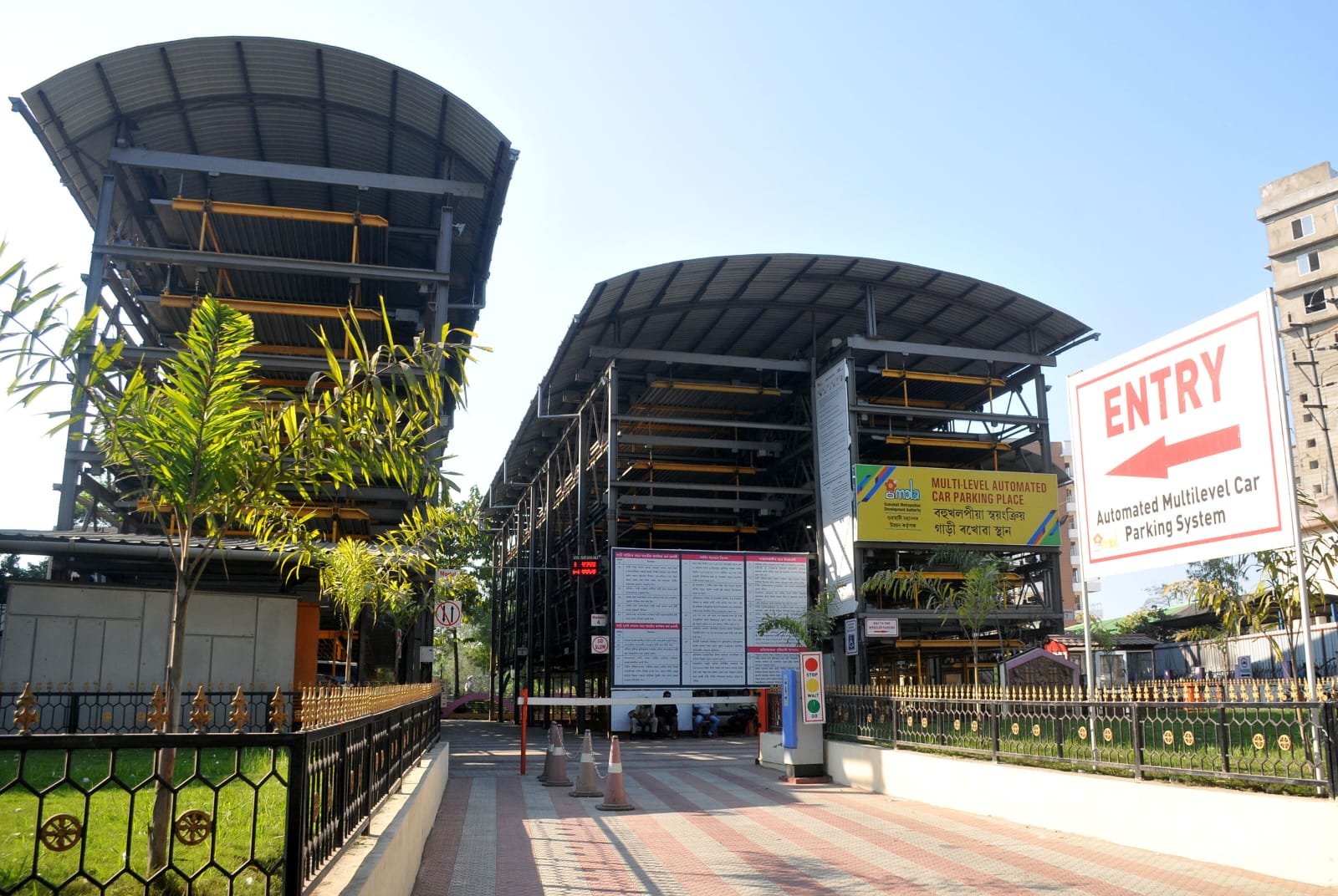
Guwahati smart city projects entered a major development phase after authorities confirmed that new multi-level parking facilities and flyover infrastructure are set for inauguration in Assam’s largest urban center. Meanwhile, government officials stated that the projects aim to reduce traffic congestion, improve urban mobility, and strengthen civic infrastructure under the broader Smart City modernization framework. The announcement immediately attracted public attention because Guwahati continues facing increasing transportation pressure amid rapid population growth and commercial expansion. Additionally, civic agencies reportedly accelerated final inspections and operational preparations ahead of the formal launch ceremonies.
The development emerged as urban infrastructure modernization remains a major policy priority across rapidly expanding Indian cities. Furthermore, planning experts observed that Guwahati’s strategic position as Northeast India’s commercial gateway makes transportation efficiency critical for long-term regional growth.
Tripura Rubber Sector Gets Major Subsidy Boost
Manipur Peace Dialogue Gains Fresh Administrative Focus
Authorities Prepare for Infrastructure Inauguration
State and city authorities confirmed that multiple urban infrastructure projects are approaching operational readiness. Guwahati smart city projects therefore became a major focus of administrative and civic discussion across Assam.
Meanwhile, officials explained that the upcoming inauguration includes new multi-level parking complexes and flyovers designed to improve vehicle movement in congested urban corridors. Additionally, civic planners stated that the projects form part of broader efforts to modernize transportation systems and reduce traffic bottlenecks across key commercial areas.
Urban development representatives emphasized that improving mobility remains essential for supporting economic activity and public convenience within the growing city. Furthermore, authorities reportedly conducted final technical inspections, traffic assessments, and safety evaluations before public opening.
Earlier, Guwahati experienced increasing traffic congestion because of rising vehicle numbers and expanding urbanization. Consequently, the latest infrastructure launch generated optimism regarding potential improvement in commuting conditions.
At the same time, residents and transport operators closely monitored expectations surrounding the practical impact of the new facilities.
Multi-Level Parking Facilities Aim to Ease Congestion
Officials stated that the new parking infrastructure may significantly reduce roadside vehicle congestion in busy commercial zones. Guwahati smart city projects therefore targeted one of the city’s most persistent urban management challenges.
Meanwhile, civic authorities explained that organized parking systems could improve traffic flow by reducing unauthorized roadside parking and vehicle crowding. Additionally, planners highlighted the importance of efficient parking infrastructure for supporting business districts and public accessibility.
Urban transport experts observed that rapidly growing cities increasingly require structured parking management to maintain mobility and reduce traffic disruption. Furthermore, multi-level parking systems may improve land utilization in densely populated urban areas.
Several infrastructure analysts noted that parking shortages frequently worsen congestion and commuter delays in expanding metropolitan centers. Consequently, integrated parking solutions became an important component of modern urban planning strategies.
However, transport observers emphasized that public cooperation and effective traffic regulation remain necessary for long-term congestion management success.
New Flyovers Expected to Improve Urban Mobility
The upcoming flyover projects are expected to strengthen connectivity across major traffic corridors within Guwahati. Guwahati smart city projects therefore may significantly influence daily commuting patterns and transportation efficiency.
Meanwhile, authorities stated that the flyovers were designed to reduce travel delays and improve vehicle movement across heavily congested intersections. Additionally, infrastructure departments indicated that smoother traffic flow could lower fuel wastage and reduce travel time during peak hours.
Traffic management specialists observed that flyover infrastructure often improves urban mobility when integrated with broader transportation planning measures. Furthermore, reduced intersection congestion may support emergency vehicle access and public transport reliability.
Several urban planning experts highlighted that transportation modernization remains critical for cities experiencing rapid commercial and demographic growth. Consequently, the new infrastructure projects gained strategic importance for Guwahati’s future urban expansion.
At the same time, commuters expressed hope regarding potential improvement in daily traffic conditions after project inauguration.
Smart City Mission Continues Urban Modernization
The latest projects form part of broader urban transformation efforts under the Smart City development framework. Guwahati smart city projects therefore reflected continuing emphasis on infrastructure modernization and technology-driven urban planning.
Meanwhile, officials explained that the Smart City initiative focuses on mobility improvement, civic efficiency, public infrastructure, and sustainable urban management systems. Additionally, authorities highlighted ongoing investment involving roads, drainage, digital systems, and public utility upgrades across the city.
Urban governance experts observed that Smart City programs increasingly prioritize integrated planning approaches balancing infrastructure expansion with sustainability and public convenience. Furthermore, modern urban systems often require coordination between transportation, environmental management, and digital administration.
Several development analysts noted that Guwahati’s growing regional importance increased pressure for faster modernization and infrastructure resilience. Consequently, city authorities continued prioritizing long-term urban planning and investment initiatives.
However, civic groups also stressed the need for pedestrian-friendly planning and stronger public transportation integration alongside flyover construction.
Business and Commercial Activity Expected to Benefit
Economic observers indicated that improved transportation infrastructure could strengthen commercial efficiency within Guwahati. Guwahati smart city projects therefore may influence broader economic activity and urban business operations.
Meanwhile, local business associations stated that reduced congestion and improved accessibility could support retail movement, logistics operations, and customer mobility across commercial hubs. Additionally, transport efficiency may improve supply chain movement within one of Northeast India’s busiest trading centers.
Economic experts observed that urban infrastructure quality directly affects investment attractiveness, productivity, and commercial competitiveness in growing cities. Furthermore, smoother mobility often contributes to tourism activity and service sector expansion.
Several market analysts emphasized that Guwahati’s role as a regional gateway city makes efficient transportation infrastructure strategically important for Northeast India’s economic integration. Consequently, infrastructure upgrades attracted strong attention from trade and industry stakeholders.
At the same time, small business owners hoped reduced traffic congestion would improve customer accessibility and local commercial activity.
Public Expectations Focus on Long-Term Traffic Relief
Residents and commuters expressed cautious optimism regarding the long-term impact of the infrastructure expansion. Guwahati smart city projects therefore generated wider discussion about sustainable traffic management and urban growth planning.
Meanwhile, many commuters stated that congestion, parking shortages, and travel delays remained major daily challenges across key parts of the city. Additionally, citizens emphasized the importance of maintaining infrastructure quality and operational efficiency after project inauguration.
Transport policy experts noted that infrastructure expansion alone may not completely solve urban congestion without complementary traffic regulation and public transport development. Furthermore, integrated planning involving road systems, pedestrian infrastructure, and mass transit remains essential for sustainable mobility improvement.
Several civic organizations also encouraged authorities to strengthen maintenance systems and public awareness regarding traffic discipline. Consequently, expectations surrounding the projects extended beyond symbolic inauguration toward long-term operational effectiveness.
At the same time, infrastructure authorities continued preparing final arrangements ahead of the official launch.
Conclusion
Guwahati smart city projects reached a major milestone after authorities confirmed the upcoming inauguration of new multi-level parking facilities and flyovers across the city. Meanwhile, officials emphasized that the infrastructure expansion aims to improve urban mobility, reduce congestion, and strengthen transportation efficiency in Assam’s largest metropolitan center. Experts highlighted the strategic importance of modern infrastructure for supporting Guwahati’s rapid economic and urban growth. Ultimately, observers believe the long-term success of the projects may depend on effective traffic management, maintenance, and integrated urban planning strategies.
FAQs
What projects are being inaugurated in Guwahati?
Authorities are launching new multi-level parking facilities and flyover infrastructure projects.
Why are Guwahati smart city projects important?
The projects aim to reduce traffic congestion and improve urban mobility.
How could multi-level parking help the city?
Organized parking systems may reduce roadside congestion and improve traffic flow.
What benefits may the flyovers provide?
The flyovers are expected to reduce travel delays and improve connectivity across busy intersections.
Are the projects linked to the Smart City Mission?
Yes, the infrastructure developments are part of broader urban modernization efforts.
Could businesses benefit from the projects?
Improved mobility and accessibility may support commercial activity and economic growth.