

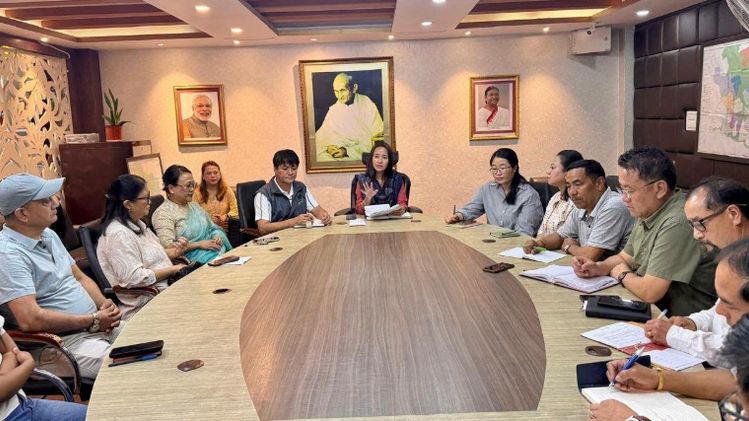
The Namchi district administration in Sikkim has initiated comprehensive relief and restoration measures in the flood-affected Lingi–Paiyong area following heavy rainfall that triggered flash floods, landslides, and extensive damage to public infrastructure. The administration has directed all concerned departments to undertake immediate relief operations, restore essential services, and assess the extent of the damage to ensure that affected residents receive timely assistance.
The move comes as authorities continue to monitor the situation across vulnerable areas of the district, where persistent monsoon rains have disrupted transportation, damaged roads, affected agricultural land, and temporarily isolated several localities. Officials have emphasised that protecting lives, restoring connectivity, and supporting affected families remain the highest priorities during the ongoing recovery efforts.
Disaster response teams, engineers, healthcare workers, and local officials have been deployed to coordinate emergency measures and accelerate restoration work in the affected region.
Heavy Rain Triggers Flooding in Lingi–Paiyong
Continuous rainfall over the past several days led to a sudden rise in water levels in local streams and rivers, causing flash floods and triggering landslides in parts of the Lingi–Paiyong area. Overflowing water damaged roads, footpaths, drainage systems, and public utilities while affecting nearby residential areas and agricultural fields.
The difficult terrain and intense rainfall complicated rescue and assessment operations, with officials reporting disruptions to transportation and communication in some locations. While water levels have gradually begun receding, authorities continue to monitor weather conditions as additional rainfall remains possible during the active monsoon season.
Local residents have been advised to remain alert and avoid travelling through vulnerable areas until conditions stabilise.
Administration Launches Relief Operations
The Namchi district administration responded swiftly by directing multiple government departments to initiate relief measures for affected communities. Emergency teams were mobilised to assess immediate requirements and distribute food, drinking water, medicines, blankets, and other essential supplies to families impacted by the floods.
Temporary assistance has been extended to households facing displacement or damage to their homes. Officials have also ensured that emergency services remain available to respond quickly to any new incidents arising from continuing rainfall.
The administration has instructed all field-level officers to maintain close coordination with village authorities to identify vulnerable families requiring immediate support.
Restoration of Essential Services Underway
Alongside relief operations, priority has been given to restoring essential public services that were disrupted by the floods. Departments responsible for roads, electricity, drinking water, telecommunications, and public infrastructure have begun repair work in affected areas.
Road clearance teams equipped with heavy machinery are removing debris deposited by landslides and flash floods to reopen blocked routes as quickly as possible. Engineers are also inspecting damaged bridges, culverts, retaining walls, and drainage systems to determine the extent of repairs required.
Power restoration teams are working to reconnect electricity supply wherever infrastructure has been affected, while water supply departments are repairing damaged pipelines and ensuring the availability of safe drinking water.
Officials have stated that restoration work will continue on a priority basis until all essential services are fully operational.
Damage Assessment in Progress
Government officials have begun conducting detailed surveys to assess the impact of the floods on public infrastructure, private property, agriculture, and community assets. These assessments will form the basis for rehabilitation planning and financial assistance to eligible beneficiaries.
Teams are documenting damage to residential buildings, roads, schools, healthcare facilities, irrigation systems, and farmland. Agricultural officers are also evaluating crop losses and the impact on local livelihoods to determine appropriate support measures for affected farmers.
The administration has assured residents that all damage reports will be carefully verified to facilitate timely rehabilitation and recovery assistance.
Public Safety Remains the Top Priority
The district administration has urged residents to remain cautious as the possibility of fresh landslides continues due to saturated hill slopes and intermittent rainfall. People living in vulnerable areas have been advised to avoid unnecessary travel, particularly during periods of heavy rain.
Authorities have instructed local officials to continuously monitor rivers, streams, and landslide-prone locations while maintaining communication with disaster management agencies. Emergency response teams remain on standby to respond promptly if the situation deteriorates.
Public advisories have also encouraged residents to report blocked roads, damaged infrastructure, rising water levels, or signs of fresh landslides to local authorities without delay.
Community Support Strengthens Relief Efforts
Local communities have played an important role in supporting relief and restoration activities. Volunteers, village committees, youth organisations, and community leaders have assisted government agencies in distributing relief materials, clearing debris, and helping affected families.
Community participation has also facilitated the identification of vulnerable households requiring immediate assistance, including elderly residents, children, and persons with disabilities. Such cooperation has enabled authorities to deliver aid more efficiently while strengthening coordination at the grassroots level.
Officials acknowledged that the active involvement of local residents has significantly contributed to the effectiveness of emergency response efforts.
Long-Term Focus on Disaster Resilience
The recent flooding has once again highlighted the vulnerability of mountainous regions such as Sikkim to extreme weather events during the monsoon season. Experts have emphasised the importance of strengthening climate-resilient infrastructure, improving drainage systems, stabilising hill slopes, and enhancing early warning mechanisms.
The district administration is expected to incorporate lessons from the current disaster into future planning to minimise the impact of similar events. Investments in resilient roads, better river management, improved emergency preparedness, and community awareness programmes will play an important role in reducing future risks.
Officials also stressed the need for sustainable land-use planning and regular maintenance of public infrastructure in landslide-prone areas.
Government Committed to Rehabilitation
The Namchi administration has reaffirmed its commitment to ensuring that all affected residents receive necessary assistance throughout the recovery process. Relief measures will continue alongside rehabilitation initiatives aimed at restoring livelihoods, repairing infrastructure, and helping communities return to normal life.
Departments have been instructed to work in close coordination to expedite restoration projects while maintaining transparency and efficiency in the distribution of relief and rehabilitation support. Authorities also plan to monitor the progress of recovery work through regular field inspections.
The administration has assured the public that no effort will be spared in rebuilding damaged infrastructure and supporting families affected by the floods.
Recovery Efforts Offer Hope for Flood-Hit Communities
The relief and restoration measures initiated by the Namchi district administration mark an important step towards helping the flood-affected communities of Lingi–Paiyong recover from the recent disaster. While challenges remain due to damaged infrastructure and continuing monsoon conditions, coordinated action by government departments, disaster response agencies, and local communities has laid the foundation for a gradual return to normalcy.
As restoration work progresses, the focus will remain on ensuring public safety, rebuilding essential infrastructure, restoring livelihoods, and strengthening disaster preparedness for the future. The administration’s proactive response reflects its commitment to protecting vulnerable communities while building greater resilience against the increasing challenges posed by extreme weather events in the Himalayan region.