

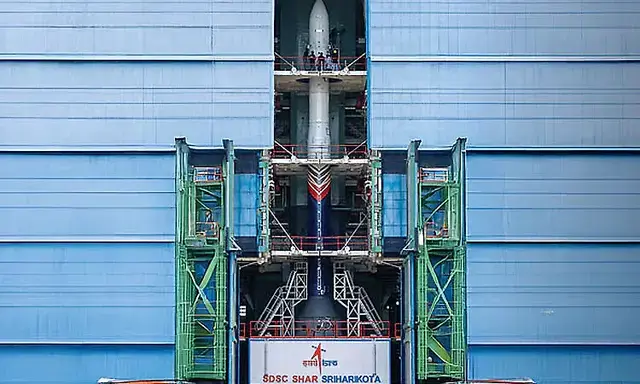
Skyroot Aerospace has officially announced the launch window for Vikram-1, India’s first privately developed orbital launch vehicle, marking a significant milestone in the country’s rapidly expanding private space sector. The announcement represents a major step forward for India’s commercial space ambitions, highlighting the growing role of private enterprises in advancing space technology, satellite launch capabilities, and innovation.
The upcoming mission is expected to demonstrate the capabilities of Vikram-1, a launch vehicle designed to place satellites into orbit and support the growing demand for affordable and reliable space launch services. The mission also reflects India’s evolving space ecosystem following reforms that opened the sector to greater private participation.
Industry experts have described the announcement as a landmark moment that could strengthen India’s position in the global commercial launch market while encouraging innovation, investment, and technological advancement in the country’s space industry.
Vikram-1 Marks a Historic Milestone
Vikram-1 is poised to become India’s first privately developed orbital launch vehicle, representing years of research, engineering, and technological development by Skyroot Aerospace. Named in honour of the late Dr. Vikram Sarabhai, the father of India’s space programme, the rocket symbolises the next phase of India’s journey in space exploration and commercial launch services.
The launch vehicle has been developed to carry small satellites into low Earth orbit, addressing the increasing demand from commercial operators, research organisations, and government agencies.
Officials said the mission would demonstrate the reliability, efficiency, and technological capabilities of India’s emerging private space industry.
The announcement of the launch window signals that the project has entered its final stages of preparation before liftoff.
Launch Window Announced After Extensive Preparations
Skyroot Aerospace announced the launch window following months of rigorous testing, system validation, and mission readiness activities. Engineers have been conducting comprehensive evaluations of the rocket’s propulsion systems, structural integrity, avionics, guidance mechanisms, and ground support infrastructure.
The company stated that the final launch date within the announced window will depend on technical readiness, weather conditions, and operational clearances.
Mission teams continue to monitor every aspect of the launch campaign to ensure safety and mission success.
Officials emphasised that meticulous preparation remains essential for achieving a successful orbital mission, particularly for a first-of-its-kind private launch vehicle.
Strengthening India’s Private Space Ecosystem
The Vikram-1 mission represents the remarkable growth of India’s private space sector following policy reforms that encouraged greater participation by private companies.
Over the past few years, startups and technology firms have increasingly contributed to rocket development, satellite manufacturing, launch services, and space-based applications.
The government’s decision to promote private participation has created new opportunities for innovation, entrepreneurship, research, and international collaboration.
Industry experts believe that successful private orbital launches will strengthen India’s competitiveness in the rapidly expanding global space economy.
The Vikram-1 mission is expected to become an important milestone in demonstrating the capabilities of Indian private enterprises.
Designed for Small Satellite Launches
Vikram-1 has been designed primarily to serve the growing market for small satellite launches. Demand for launching small satellites has increased significantly worldwide due to the rapid expansion of communication services, Earth observation, scientific research, navigation, and commercial space applications.
The rocket is expected to offer customers dedicated launch services with greater flexibility, shorter waiting periods, and competitive pricing.
Dedicated launch vehicles for small satellites enable operators to place spacecraft into their desired orbits more efficiently compared to rideshare missions.
The growing global demand presents significant commercial opportunities for Indian launch providers.
Indigenous Technology at the Core
One of the defining features of Vikram-1 is its emphasis on indigenous engineering and technological innovation. The launch vehicle incorporates advanced propulsion systems, lightweight composite materials, modern avionics, and precision guidance technologies developed within India.
The project highlights the increasing capability of Indian engineers and scientists to design and manufacture sophisticated aerospace systems.
Officials believe that strengthening indigenous technology development contributes to greater self-reliance while reducing dependence on imported technologies.
The mission also supports India’s broader vision of becoming a global hub for advanced manufacturing and high-technology industries.
Boost to India’s Commercial Space Ambitions
The successful launch of Vikram-1 is expected to significantly strengthen India’s commercial space capabilities by expanding launch capacity for domestic and international customers.
The global satellite industry continues to grow rapidly, creating increasing demand for cost-effective launch solutions capable of delivering small payloads into orbit.
India has already earned international recognition through its cost-efficient government-led space missions, and private launch providers are expected to complement these achievements by serving commercial markets.
Officials believe that expanding commercial launch services will attract greater investment while creating employment opportunities across the aerospace sector.
The mission also reflects India’s growing role in the global space economy.
Encouraging Innovation and Startup Growth
The progress made by Skyroot Aerospace has become an inspiration for India’s growing startup ecosystem. The success of private space companies demonstrates how innovation-driven enterprises can contribute to advanced technology sectors traditionally dominated by government agencies.
The emergence of private launch vehicle manufacturers is encouraging greater investment in research, engineering, artificial intelligence, advanced materials, robotics, and satellite technologies.
Educational institutions, research organisations, and entrepreneurs are increasingly collaborating to develop new technologies supporting India’s expanding space ecosystem.
Industry observers believe such developments will further strengthen India’s innovation-driven economy.
Collaboration Across the Space Sector
The development of Vikram-1 reflects close collaboration between private industry, government institutions, regulatory authorities, and technical experts.
Supportive policy reforms, infrastructure access, testing facilities, and regulatory guidance have helped create an enabling environment for private space companies.
The mission demonstrates how public-private partnerships can accelerate technological progress while expanding national capabilities in strategic sectors.
Officials expect continued collaboration to further strengthen India’s position as an emerging global leader in commercial space activities.
The success of Vikram-1 could encourage additional private investment in future launch vehicles, satellite systems, and deep-space technologies.
A New Era for India’s Space Industry
The announcement of the launch window for Vikram-1 marks a defining moment in the evolution of India’s space programme. As the country’s first privately developed orbital launch vehicle prepares for its maiden mission, it symbolises the remarkable progress achieved through innovation, entrepreneurship, and technological excellence.
If successful, the mission is expected to open new opportunities for India’s commercial space industry, strengthen global confidence in indigenous launch capabilities, and inspire the next generation of scientists, engineers, and entrepreneurs. With Vikram-1 poised to make history, India’s private space sector stands on the threshold of a new era, one that promises greater participation in the global space economy and reinforces the nation’s growing stature as a leading spacefaring nation.