

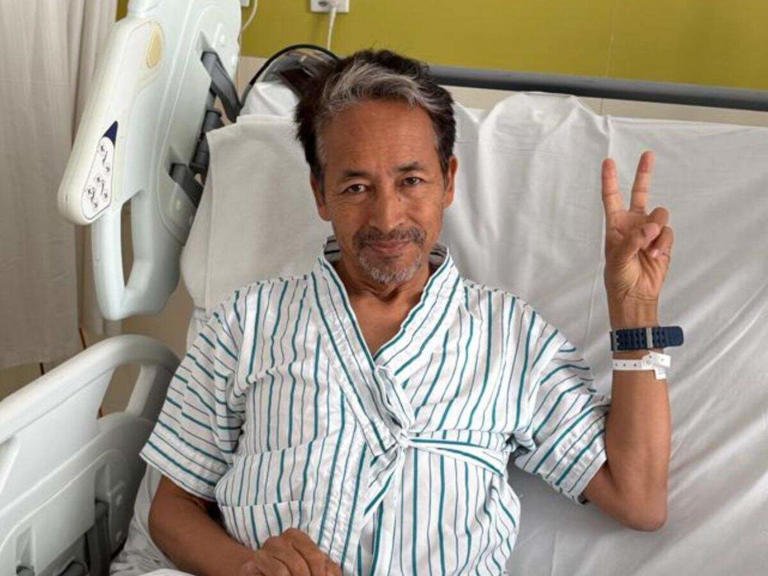
Social activist and engineer Sonam Wangchuk, widely known for his work on sustainable development and advocacy for Ladakh, has emerged as one of the most influential faces of India’s recent Gen Z-led protest movement. At 59, Wangchuk became a rallying figure for students demanding accountability over alleged examination paper leaks, with his 26-day hunger strike drawing nationwide attention and amplifying calls for reforms in the country’s education system.
The protests, largely driven by young people and student groups, eventually culminated in the resignation of Union Education Minister Dharmendra Pradhan. While student organisations spearheaded the movement, Wangchuk’s decision to undertake an indefinite fast transformed him into a symbol of peaceful protest and moral resistance.
Veteran Activist Becomes Face of a Youth Movement
Although Sonam Wangchuk has spent decades campaigning on environmental conservation, education, and the rights of people in Ladakh, his recent role marked a significant expansion of his public profile.
Known internationally for promoting innovative educational practices and sustainable technologies in the Himalayan region, Wangchuk joined the students’ movement after allegations of examination irregularities sparked widespread anger among millions of aspirants across India.
His participation gave the movement additional visibility and attracted support from people beyond the student community.
The 26-Day Hunger Strike
Wangchuk began an indefinite hunger strike in solidarity with protesting students, insisting that the movement remain peaceful and democratic.
Despite deteriorating health, he continued his fast for 26 days, repeatedly stating that his objective was not political confrontation but ensuring accountability and protecting the future of students. His prolonged fast drew widespread attention from civil society, political leaders, and ordinary citizens across the country.
His health became a growing concern after he was hospitalised during the protest, but the incident further intensified public support for the movement.
Mobilising India’s Generation Z
The protest movement was largely driven by Generation Z, many of whom viewed examination integrity as central to their educational and professional futures.
Wangchuk’s support helped bridge generational divides, with his peaceful approach resonating strongly among young protesters demanding greater transparency and accountability.
Student-led demonstrations, social media campaigns, and nationwide solidarity events gradually transformed what began as protests over examination issues into a broader movement highlighting concerns over education governance.
Government Engagement and End of Fast
As the protests gained momentum, the Central government initiated discussions with protest representatives.
According to Wangchuk, he agreed to end his hunger strike after receiving written assurances that no punitive action would be taken against protesters and that discussions on examination reforms and related issues would continue. He later described the developments as a victory for democratic engagement rather than for any individual.
Shortly afterwards, Education Minister Dharmendra Pradhan resigned, and protest leaders announced the withdrawal of their agitation following government assurances on several key demands.
Beyond the Protest
Long before becoming associated with the recent student movement, Sonam Wangchuk had earned recognition for his contributions to education, innovation, and environmental sustainability in Ladakh.
He has consistently advocated for educational reforms that encourage practical learning, local innovation, and environmentally sustainable development. His work has also focused on preserving the fragile Himalayan ecosystem while improving educational opportunities in remote regions.
These long-standing efforts contributed to the credibility he enjoyed among many young protesters during the recent demonstrations.
Mixed Political Reactions
Wangchuk’s involvement in the movement attracted both praise and criticism.
Supporters described him as a principled activist who used peaceful democratic methods to amplify students’ concerns. Many credited his hunger strike with keeping national attention focused on examination reforms.
However, political reactions remained divided, with some supporters of the government questioning his role, while opposition leaders praised his commitment to peaceful protest.
A Symbol of Peaceful Democratic Protest
Throughout the agitation, Wangchuk repeatedly maintained that non-violent protest remained the most effective means of achieving meaningful change.
Even after ending his fast, he emphasized that dialogue, accountability, and institutional reforms should remain the focus rather than political confrontation.
His approach drew comparisons with earlier traditions of peaceful civil protest, reinforcing his image as a moral voice within the broader movement.
Lasting Impact
The events surrounding the Gen Z-led protests have placed Sonam Wangchuk at the centre of one of India’s most significant youth movements in recent years. While students remained the driving force behind the demonstrations, Wangchuk’s 26-day hunger strike helped sustain public attention and strengthened calls for reforms in the country’s examination system.
As discussions on education policy continue, his role is likely to remain a significant part of the broader conversation on accountability, student welfare, and democratic participation. Whether viewed as an activist, educator, or public campaigner, Wangchuk’s involvement has reinforced the influence that peaceful civic action can have in shaping national debate.