

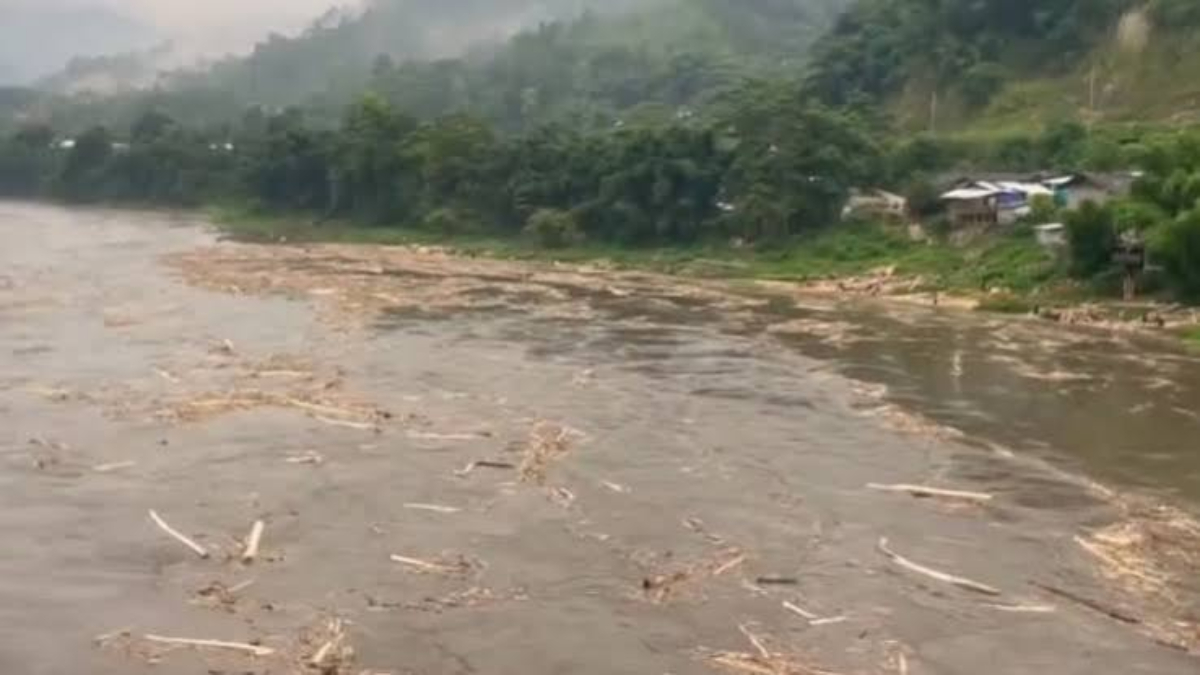
Subansiri river levels rose unusually in Arunachal Pradesh’s Upper Subansiri district on August 15, with a strong current carrying timber, branches and other debris downstream despite no rainfall being reported locally. The sudden rise has raised concern among residents and prompted authorities and disaster-management teams to monitor the situation closely.
Subansiri river rises despite no local rain
The unusual development was reported from Upper Subansiri after residents noticed the river flowing at a significantly higher and more forceful level than expected. The absence of reported rainfall in the area has added to concerns over what may have caused the sudden change in water conditions.
A video from the area showed large quantities of timber, branches and other debris being carried downstream by the strong current. The material was seen accumulating along parts of the riverbank, providing a visible indication of the force of the water.
Locals also reportedly spotted and collected timber believed to have originated from across the international border with China. However, the reported origin of the timber has not been independently established, and the reason for the sudden increase in water flow remains a matter of concern.
Timber and debris raise safety concerns
The presence of large timber pieces in the Subansiri river has increased the potential danger for people living close to the waterway. Floating logs and branches can become hazardous projectiles in a fast-moving current and can also damage structures along riverbanks.
The accumulation of debris along the banks is another concern. A sudden increase in water force can weaken already vulnerable stretches of riverbank, particularly in mountainous terrain where communities and roads may be located close to rivers.
Residents have been advised to remain alert and avoid approaching the swollen waterway. Authorities have also urged people not to attempt to cross the river while the current remains strong.
Why Upper Subansiri is closely linked to the river
The Subansiri river is central to the geography of Upper Subansiri district. According to the district administration, the river meanders through the entire district, which is characterised by mountainous and rugged terrain. The district extends across a large area of more than 7,000 square kilometres, with high mountain ranges in its northern parts.
The river is also one of the major waterways of the wider Brahmaputra basin. A scientific study describes the Subansiri as the largest tributary of the Brahmaputra, originating in the Tibet region before flowing through Arunachal Pradesh and Assam. The river eventually joins the Brahmaputra in Assam.
Because of this mountainous setting, changes in upstream conditions can have implications for downstream stretches. The current episode has therefore drawn attention even though no rainfall was reported locally in Upper Subansiri.
Authorities monitoring the situation
Officials and disaster-management teams are monitoring the Subansiri river and taking precautionary measures, according to the report. The immediate priority is to prevent casualties and protect communities and property located near the river.
The unusually strong flow means residents need to exercise caution until water conditions return to normal. Authorities have specifically warned people against going close to the river or attempting crossings, given the possibility of unpredictable currents and floating debris.
The incident also highlights the challenges of monitoring rivers in Arunachal Pradesh’s remote and rugged terrain. Sudden changes in river conditions can be difficult to assess quickly, making local observations and timely warnings particularly important.
A situation requiring continued vigilance
The latest development involving the Subansiri river has not been accompanied by a confirmed explanation for the sudden swelling. The presence of timber and other debris, combined with the unusually strong flow, has nevertheless heightened concern in Upper Subansiri.
For communities living along the river, the immediate message remains one of caution. Residents are being encouraged to stay away from the water, monitor official advisories and avoid risky activity near riverbanks while authorities continue assessing the situation.
The episode underscores the need for close observation of river levels and surrounding terrain in Arunachal Pradesh, especially when unusual changes occur without corresponding local rainfall. Continued monitoring will be important to determine whether the water level stabilises and whether further debris reaches downstream areas.
Tura Youth Delegate: Meghalaya Student Arrives in Australia for Commonwealth Youth Parliament