

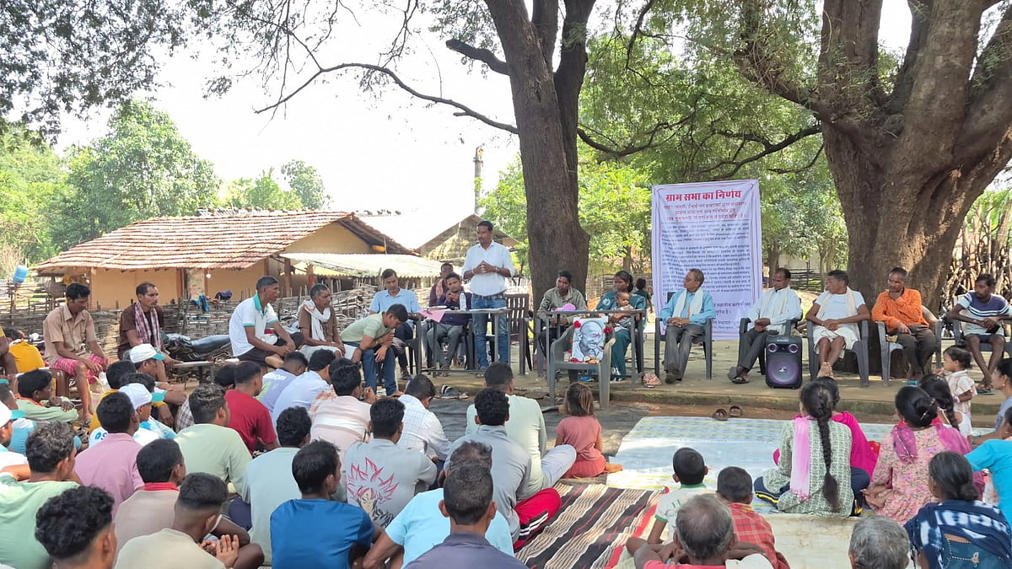
A Gram Sabha in Chhattisgarh’s Sukma district has reportedly passed a resolution restricting the activities of Christian missionaries in the village and denying land for the construction of churches and Christian burial grounds.
The resolution has brought renewed attention to the debate over religious activities, tribal customs and land rights in parts of southern Chhattisgarh.
According to reports, the Gram Sabha cited the protection of traditional practices and the preservation of local customs while adopting the decision. The resolution reportedly applies to activities associated with religious conversion and the establishment of new Christian institutions.
Land Denied for Churches and Burial Grounds
One of the key decisions reportedly taken by the Gram Sabha concerns the allocation of land for churches and Christian burial grounds.
The village body has decided not to provide land for the construction of churches or for separate burial sites for Christians. The decision has been presented by its supporters as an attempt to protect customary land-use practices and the traditional character of the village.
The issue of burial grounds can be particularly sensitive in tribal areas, where community land and traditional practices often play an important role in village life.
Missionary Activities Face Restrictions
The Gram Sabha has also reportedly resolved to prevent Christian missionaries from carrying out religious activities in the village.
The move comes amid continuing debates in parts of Chhattisgarh over religious conversion among tribal communities. Some local groups have raised concerns about alleged conversion activities, while Christian organisations have maintained that religious freedom and the rights of individuals to practise their faith must be protected.
The reported resolution reflects the position of the village body and does not by itself establish that any allegation of illegal conversion has taken place.
Focus on Tribal Customs
According to reports, the Gram Sabha’s decision was linked to the preservation of indigenous traditions and customary practices.
Sukma is part of Bastar, a region where tribal communities have maintained distinctive cultural traditions over generations. Local village institutions often play an important role in managing community resources and maintaining customary practices.
Supporters of the resolution have argued that religious activities should not undermine traditional beliefs and community institutions.
At the same time, questions can arise over the extent to which village-level decisions can restrict individual constitutional rights, including freedom of religion.
Constitutional Rights Remain Important
India’s Constitution guarantees freedom of conscience and the right to freely profess, practise and propagate religion, subject to public order, morality and health.
Therefore, while Gram Sabhas have powers concerning local governance and community matters, restrictions affecting individual religious rights must operate within the constitutional and legal framework.
The precise legal status and enforceability of the reported resolution would depend on the circumstances, applicable state laws and the nature of the decisions adopted by the Gram Sabha.
Conversion Debate in Chhattisgarh
Religious conversion has become a politically and socially sensitive issue in several tribal areas of Chhattisgarh.
Some tribal organisations and local groups have alleged that conversions can lead to changes in traditional customs, festivals and community practices. Christian groups, on the other hand, have often rejected allegations of coercive conversion and emphasised the right of individuals to choose their faith.
The latest development in Sukma has therefore brought these competing concerns back into public discussion.
Importance of Gram Sabha in Tribal Areas
Gram Sabhas have a significant role in the governance of Scheduled Areas, particularly under laws and constitutional provisions designed to protect tribal communities and their customary rights.
They can participate in decisions involving community resources, development projects and local governance.
In tribal regions such as Bastar, these institutions are closely connected with community decision-making. However, their resolutions must remain consistent with higher laws and constitutional protections.
The Sukma decision therefore raises questions not only about local customs but also about the balance between collective community decisions and individual rights.
Debate Over Religious Freedom and Customary Rights
The reported Sukma Gram Sabha resolution highlights a complex intersection of religious freedom, tribal identity, customary practices and community land.
While supporters view the move as an effort to protect indigenous traditions, concerns can arise if restrictions prevent individuals from exercising constitutionally protected religious freedoms.
The development is likely to remain a subject of discussion as authorities, community representatives and religious organisations consider the legal and social implications of the decision.
For now, the resolution reflects the position adopted by the concerned Gram Sabha, while the broader question of how such local decisions interact with constitutional rights will depend on the applicable legal framework and any subsequent administrative or judicial scrutiny.