

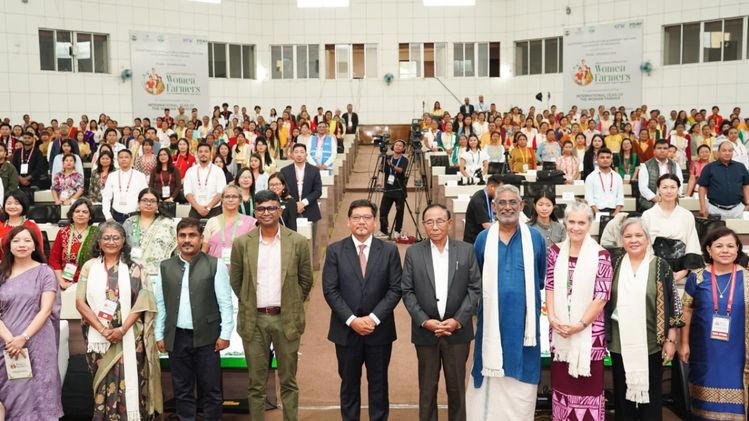
Meghalaya Chief Minister Conrad K. Sangma has said that Telangana’s state-of-the-art Integrated Command and Control Centre (ICCC) can serve as an ideal model for Meghalaya as the state seeks to strengthen smart governance, improve emergency response systems, and enhance the delivery of public services through technology. During his visit to the advanced facility in Hyderabad, the Chief Minister observed how digital technologies, real-time monitoring, and integrated administrative systems are transforming urban management and governance.
Sangma stated that Meghalaya can benefit significantly by adopting similar technology-driven governance models that improve coordination among various government departments while ensuring faster and more efficient public service delivery. He noted that integrated command centres have become an essential part of modern governance by enabling authorities to monitor critical infrastructure, coordinate emergency responses, manage traffic, and improve citizen safety through a unified digital platform.
The visit reflects Meghalaya’s continued emphasis on digital transformation, innovation, and the adoption of modern governance practices that improve administrative efficiency while enhancing the quality of life for citizens.
Studying Telangana’s Smart Governance Model
The Telangana Integrated Command and Control Centre is regarded as one of India’s most advanced urban governance facilities. Designed to integrate multiple government departments through a centralized digital platform, the centre enables authorities to monitor and manage various public services in real time.
During his visit, Chief Minister Sangma reviewed the technological infrastructure supporting the facility, including advanced surveillance systems, emergency communication networks, traffic monitoring, disaster management tools, and digital coordination platforms.
He observed that the integration of multiple public agencies into a single command centre significantly improves decision-making by providing officials with immediate access to real-time information during routine operations as well as emergencies.
According to the Chief Minister, such institutional integration represents an important direction for future governance reforms in Meghalaya.
Improving Public Safety Through Technology
One of the primary objectives of Integrated Command and Control Centres is strengthening public safety through coordinated monitoring and rapid response mechanisms.
The Telangana facility integrates police services, fire departments, disaster response agencies, municipal authorities, healthcare services, and emergency communication systems into one centralized platform.
The Chief Minister noted that such coordination allows authorities to respond more quickly to accidents, law and order situations, natural disasters, and other emergencies.
By reducing response times and improving communication among departments, integrated command centres contribute significantly to safer cities and more efficient emergency management.
Meghalaya aims to study these best practices while developing solutions suited to its own geographical and administrative requirements.
Enhancing Disaster Preparedness
Meghalaya frequently experiences heavy rainfall, landslides, flash floods, and other natural disasters that require rapid coordination among multiple government agencies.
Chief Minister Sangma emphasized that integrated command centres can strengthen disaster preparedness through continuous monitoring, early warning systems, and coordinated emergency response operations.
Real-time information enables authorities to deploy rescue personnel, medical teams, relief materials, and disaster response equipment more effectively.
Officials believe that adopting similar technology in Meghalaya would improve resilience during emergencies while minimizing risks to life and property.
Better disaster management systems also enhance public confidence in government preparedness during crises.
Strengthening Inter-Departmental Coordination
Modern governance increasingly depends on efficient coordination among different government departments.
The Integrated Command and Control Centre demonstrates how police, municipal authorities, transportation departments, healthcare institutions, emergency responders, and disaster management agencies can function through a unified digital platform.
Chief Minister Sangma observed that eliminating communication gaps between departments improves administrative efficiency and enables quicker implementation of government decisions.
He noted that Meghalaya could benefit from greater institutional integration, particularly in areas requiring coordinated public service delivery.
Improved collaboration among departments also contributes to more effective governance and better utilization of public resources.
Leveraging Digital Technologies
The Chief Minister highlighted the growing importance of digital technologies in transforming governance.
Integrated command centres utilize artificial intelligence, data analytics, Geographic Information Systems (GIS), video surveillance, digital communication networks, and cloud-based information management systems to improve decision-making.
These technologies provide government officials with accurate, real-time information that supports efficient planning and resource deployment.
Sangma stated that Meghalaya’s digital transformation strategy would continue to prioritize technology that improves governance while making public services more transparent, accessible, and responsive.
Digital innovation remains an important pillar of the state’s long-term development vision.
Supporting Smart Urban Development
As Meghalaya’s urban centres continue to expand, effective city management has become increasingly important.
Integrated command centres support urban governance by monitoring traffic flow, managing public utilities, supervising municipal infrastructure, and coordinating emergency services through centralized digital systems.
The Chief Minister said that such technologies can improve transportation management, reduce congestion, strengthen civic administration, and enhance overall urban planning.
Smart governance solutions also contribute to more sustainable urban development by improving resource management and reducing operational inefficiencies.
Officials believe that digital infrastructure will become increasingly important as Meghalaya’s cities continue to grow.
Building Institutional Capacity
Successful implementation of technology-based governance requires skilled personnel and strong institutional capacity.
Chief Minister Sangma emphasized that investment in advanced infrastructure must be accompanied by continuous training of government officials, police personnel, technical staff, and disaster management teams.
Capacity-building programmes ensure that personnel can effectively operate sophisticated digital systems while responding efficiently to evolving governance challenges.
The government also recognizes the importance of cybersecurity, data protection, and regular technological upgrades in maintaining reliable command and control infrastructure.
Building institutional expertise will remain an important priority as Meghalaya expands its digital governance initiatives.
Advancing Meghalaya’s Digital Governance Vision
The visit to Telangana aligns with Meghalaya’s broader efforts to modernize governance through digital transformation and innovation.
The state has already introduced several e-governance initiatives aimed at improving service delivery, digital administration, and citizen access to government services.
Officials believe that integrated command centres represent the next stage in creating a connected governance ecosystem capable of delivering efficient, transparent, and citizen-centric public administration.
Future initiatives are expected to focus on strengthening digital infrastructure, expanding smart governance platforms, and integrating emerging technologies into public administration.
These efforts support Meghalaya’s long-term vision of creating a modern, technology-enabled government.
Looking Ahead
The Chief Minister indicated that Meghalaya will continue studying successful governance models from other states while adapting them to local conditions and administrative requirements.
Future planning will focus on identifying technologies that improve emergency response, strengthen urban management, enhance public safety, and promote better coordination among government departments.
Officials also emphasized that smart governance should remain people-centric, ensuring that technological innovation directly benefits citizens through faster services, greater transparency, and improved public welfare.
The lessons learned from Telangana’s Integrated Command and Control Centre are expected to inform Meghalaya’s future digital governance initiatives.
Conclusion
Chief Minister Conrad K. Sangma’s observation that Telangana’s Integrated Command and Control Centre can serve as a model for Meghalaya reflects the state’s commitment to adopting innovative governance solutions that improve public administration through technology. By studying successful digital governance systems, Meghalaya aims to strengthen emergency response, enhance public safety, improve inter-departmental coordination, and deliver more efficient public services.
As the state advances its digital transformation agenda, integrated command and control systems have the potential to become a cornerstone of modern governance, supporting sustainable urban development, disaster resilience, and responsive administration. Through strategic investment in technology, institutional capacity, and innovation, Meghalaya is working toward building a smarter, safer, and more connected future for its citizens.