

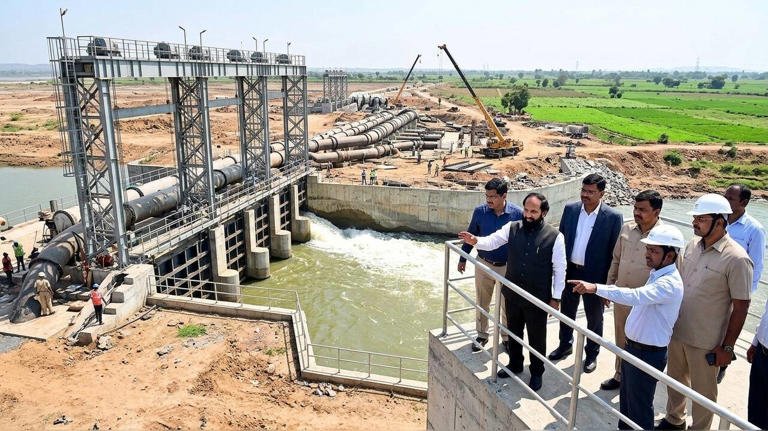
The Telangana government has set a 2027 deadline for completing the Devadula lift irrigation project, underlining its renewed focus on strengthening irrigation infrastructure and extending water access to agricultural areas.
The project, which aims to lift water from the Godavari River and supply it to drought-prone regions, remains one of Telangana’s important irrigation initiatives. The government now plans to accelerate the remaining work and ensure that the project becomes fully operational within the revised timeline.
The Devadula lift irrigation project has faced delays over the years because of technical, financial and administrative challenges. The Telangana government has now signalled that it wants to bring the long-pending project to completion by 2027.
Once completed, the project is expected to improve irrigation facilities and provide a more reliable water supply to farmers in the beneficiary regions.
Telangana sets 2027 target for Devadula project
The Telangana government has announced a clear deadline for the completion of the Devadula lift irrigation project.
The government aims to finish the remaining works by 2027 and make the project fully functional.
The decision reflects the state’s effort to speed up major infrastructure projects that have remained incomplete for several years.
Irrigation Minister N Uttam Kumar Reddy has stressed the importance of completing pending works within a defined timeframe.
The government has been reviewing irrigation projects across Telangana and examining the progress of individual components.
The Devadula project has emerged as a major priority because of its importance to agriculture and water availability.
Officials will now focus on completing the pending infrastructure and addressing obstacles that could affect the project’s schedule.
The 2027 target is expected to provide a clear roadmap for departments and agencies involved in the project.
Devadula project aims to lift water from Godavari
The Devadula lift irrigation project is designed to utilise water from the Godavari River.
Unlike gravity-based irrigation systems, lift irrigation projects use pumping infrastructure to move water from a lower elevation to higher areas.
The water can then reach regions that may not otherwise have access to a reliable irrigation source.
The project holds particular importance for areas that face recurring water shortages.
Farmers in such regions often depend heavily on rainfall.
Irregular monsoons can affect agricultural production and create uncertainty for rural households.
A functioning irrigation network can reduce this dependence by providing water during crucial stages of cultivation.
The Telangana government hopes that the completion of the project will improve agricultural conditions in the beneficiary areas.
Long-pending project faces renewed push
The Devadula lift irrigation project has been under development for several years.
Like many large irrigation projects, it involves multiple stages and extensive infrastructure.
The project requires pumping stations, pipelines, canals and distribution networks.
Each component must function together for the system to deliver water effectively.
Delays in one part of the project can affect the progress of other sections.
Financial requirements and technical challenges have also contributed to difficulties over the years.
The Telangana government now wants to address the remaining issues and bring the project closer to completion.
Officials are expected to monitor progress more closely as the 2027 deadline approaches.
The revised timeline will also increase pressure on implementing agencies to maintain the pace of construction.
Devadula lift irrigation project to support farmers
The main objective of the Devadula lift irrigation project is to improve water availability for agriculture.
Reliable irrigation can help farmers plan their crops with greater confidence.
It can also reduce dependence on unpredictable rainfall.
Agricultural productivity may improve when farmers have access to water at critical stages of cultivation.
A stable water supply can also support crop diversification.
Farmers may gain the ability to grow crops that require more regular irrigation.
This could improve agricultural income in some beneficiary areas.
However, the actual benefits will depend on the completion of the entire distribution system.
Water must reach farms through an effective network.
The government will therefore need to ensure that the project does not remain limited to major pumping infrastructure.
Government focuses on completing pending works
The Telangana government has indicated that it will focus on completing the pending components of the project.
A large lift irrigation system requires coordination between several departments and agencies.
Engineering teams must manage construction and installation work.
Authorities also need to address land-related issues and other administrative requirements.
Regular reviews could help identify delays at an early stage.
The government may need to make quick decisions when technical or financial problems emerge.
Meeting the 2027 deadline will depend on the effective coordination of all these efforts.
The project will also require adequate funding throughout the remaining construction period.
A shortage of funds could affect the pace of work.
The state will therefore need to maintain financial support while monitoring expenditure.
Energy requirements remain a major challenge
Lift irrigation projects require significant amounts of electricity because they use pumps to move water.
Energy consumption can become a major operational cost.
The Devadula project will require reliable power infrastructure to operate effectively.
The Telangana government will need to consider both construction and long-term operating costs.
A project may be physically complete but still face challenges if power supply remains inadequate.
Energy efficiency will therefore remain an important factor.
Modern pumping technology could help reduce operational costs.
However, such equipment also requires proper maintenance.
The long-term success of the project will depend on the government’s ability to manage these recurring requirements.
Irrigation expansion can strengthen rural economy
Improved irrigation can have a wider impact on rural communities.
Agriculture remains an important source of employment and income in Telangana.
A reliable water supply can support farmers and related economic activities.
Higher agricultural production may also increase demand for transportation, storage and processing.
Local markets could benefit from greater economic activity.
Rural employment opportunities may expand when agriculture becomes more stable.
The Devadula project could therefore contribute to broader development in the beneficiary regions.
However, infrastructure alone will not guarantee these outcomes.
Farmers may also need access to markets, credit and agricultural support services.
A coordinated approach could help maximise the benefits of improved irrigation.
Telangana reviews major irrigation projects
The Devadula project is part of Telangana’s wider irrigation infrastructure network.
The state government has been reviewing several major projects and examining their financial and technical status.
The government has sought to identify pending works and determine realistic completion schedules.
The 2027 deadline for Devadula signals an attempt to establish accountability.
A fixed target can help authorities measure progress and identify delays.
However, large infrastructure projects often face unexpected challenges.
Weather conditions, land issues and technical problems can affect construction schedules.
The government will need to maintain regular oversight to keep the project on track.
Completion could improve water security
Water security remains a major concern for agricultural communities.
Climate variability can make rainfall less predictable.
Extended dry periods can affect crops and household incomes.
Irrigation infrastructure can provide an additional source of stability.
The Devadula lift irrigation project could strengthen water availability in areas covered by its network.
The project may also help farmers manage periods of low rainfall.
However, authorities will need to ensure sustainable water management.
Large-scale water projects must balance agricultural demand with environmental requirements.
The government will therefore need to monitor water availability and use carefully.
Effective management can help ensure that the benefits continue over the long term.
2027 deadline puts focus on implementation
The Telangana government’s 2027 target has placed renewed attention on the implementation of the Devadula lift irrigation project.
The remaining period will be crucial for completing unfinished infrastructure.
Officials will need to maintain construction schedules and address problems quickly.
The government will also need to ensure that funds remain available.
Transparency and regular monitoring could play an important role.
A large project requires clear coordination between policymakers, engineers and implementing agencies.
The success of the deadline will ultimately depend on progress on the ground.
Farmers and communities in the beneficiary areas will closely watch the development.
For many, the project’s completion could bring a significant change to local agricultural conditions.
Telangana aims to complete Devadula project by 2027
The Telangana government’s decision to set a 2027 deadline for the Devadula lift irrigation project marks a renewed push to complete one of the state’s major irrigation initiatives.
The project aims to lift water from the Godavari and supply it to agricultural areas that need more reliable irrigation.
The government now faces the task of completing pending works and ensuring that the infrastructure operates effectively.
The project could support farmers, improve water security and contribute to rural economic development.
At the same time, authorities will need to manage the project’s financial, technical and energy requirements.
The 2027 deadline provides a clear target.
Its success, however, will depend on consistent implementation and effective monitoring.
If Telangana completes the Devadula lift irrigation project within the proposed timeframe, it could provide a major boost to irrigation infrastructure and agricultural development across the beneficiary regions.