

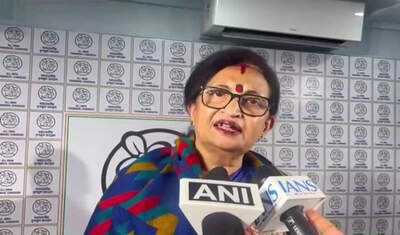
The Trinamool Congress (TMC) suffered a fresh organisational setback on Saturday after West Bengal unit president Chandrima Bhattacharya resigned from all her party positions amid an ongoing leadership crisis. The resignation comes at a time when the party is grappling with internal divisions and political uncertainty following recent developments within the organisation.
Bhattacharya, who had been appointed as the state president after the party’s electoral setback earlier this year, reportedly stepped down from every organisational responsibility, including her role as the West Bengal unit chief, authorised signatory to the party’s bank accounts, and the party’s representative before the Election Commission of India.
Her resignation is being viewed as another significant challenge for the Mamata Banerjee-led party as it attempts to stabilise its organisation and address internal dissent.
Resignation Deepens Organisational Crisis
Bhattacharya’s exit has intensified the organisational challenges confronting the Trinamool Congress in West Bengal. The party has witnessed growing internal turbulence in recent weeks, with reports of factional disagreements and leadership disputes attracting considerable political attention.
Political observers believe the resignation comes at a crucial juncture when the party has been trying to reorganise its structure following its Assembly election defeat. The departure of the state president is expected to trigger further discussions within the organisation regarding future leadership and organisational strategy.
While the party leadership has yet to announce a successor, the resignation has added to speculation over possible changes within the state’s organisational setup.
Chandrima Bhattacharya Had Recently Taken Charge
Bhattacharya had assumed charge as the West Bengal unit president only recently as part of the party’s efforts to strengthen its organisational framework after the Assembly elections. She was considered a trusted leader within the Trinamool Congress and was entrusted with the responsibility of rebuilding the party’s grassroots structure.
Apart from serving as the state president, she also held several important organisational responsibilities connected with the party’s administrative functioning.
Her decision to resign from all posts simultaneously has therefore attracted considerable political attention and is being viewed as a major organisational development.
Party leaders have not publicly elaborated on the specific reasons behind her resignation.
Internal Divisions Continue to Surface
The resignation comes against the backdrop of an increasingly visible internal rift within the Trinamool Congress. Over the past few weeks, the party has witnessed growing factionalism, with a rebel group publicly challenging the existing leadership structure.
The internal dispute has resulted in competing claims over organisational authority and intensified political uncertainty within the party. Reports of disagreements among senior leaders have further highlighted the depth of the ongoing crisis.
Political analysts note that such organisational disputes often require swift leadership intervention to prevent long-term damage to party cohesion and electoral preparedness.
The latest resignation is expected to increase pressure on the party leadership to restore organisational unity.
Rebel Faction Adds to Political Challenges
Bhattacharya’s resignation follows a series of dramatic developments involving a rebel faction within the Trinamool Congress. The dissident group has challenged the party leadership and taken several organisational steps that have intensified the internal conflict.
The faction has reportedly sought recognition of its claims through constitutional and legal processes while publicly asserting its position within the organisation. These developments have contributed to an atmosphere of uncertainty regarding the party’s internal functioning.
The ongoing confrontation has become one of the most significant organisational challenges faced by the Trinamool Congress in recent years.
Party loyalists and rebel leaders continue to maintain differing positions regarding the future direction of the organisation.
Leadership Faces Task of Rebuilding Organisation
With the resignation of the state president, the Trinamool Congress leadership is expected to focus on restoring organisational stability and strengthening the party’s structure across West Bengal.
Political observers believe the appointment of a new state president will become an immediate priority as the party works to address internal differences and rebuild confidence among its workers.
Senior leaders are likely to hold consultations regarding organisational restructuring, leadership appointments, and strategies aimed at reinforcing the party’s grassroots network.
Maintaining unity among district units and elected representatives will remain essential as the organisation seeks to overcome its current challenges.
Political Implications for West Bengal
The latest development is expected to have important political implications in West Bengal, where the Trinamool Congress remains one of the state’s principal political forces.
Opposition parties are likely to use the resignation to question the party’s internal stability, while the Trinamool leadership will seek to reassure workers and supporters regarding its organisational strength.
Analysts note that internal organisational cohesion often plays a critical role in preparing political parties for future electoral contests and governance responsibilities.
How the party manages the present leadership transition may significantly influence its political strategy in the coming months.
Party Yet to Announce Next Course of Action
Following Chandrima Bhattacharya’s resignation, the Trinamool Congress is expected to initiate discussions regarding the appointment of new organisational leadership and the future structure of its West Bengal unit.
At the time of writing, the party had not officially announced who would assume the responsibilities of state president or whether any broader organisational changes would accompany the leadership transition.
The resignation marks another important chapter in the ongoing developments within the Trinamool Congress, underscoring the challenges associated with maintaining organisational unity during periods of political transition. As the party works to address internal differences and strengthen its leadership structure, attention will remain focused on the steps taken to restore stability and prepare for future political challenges in West Bengal.