

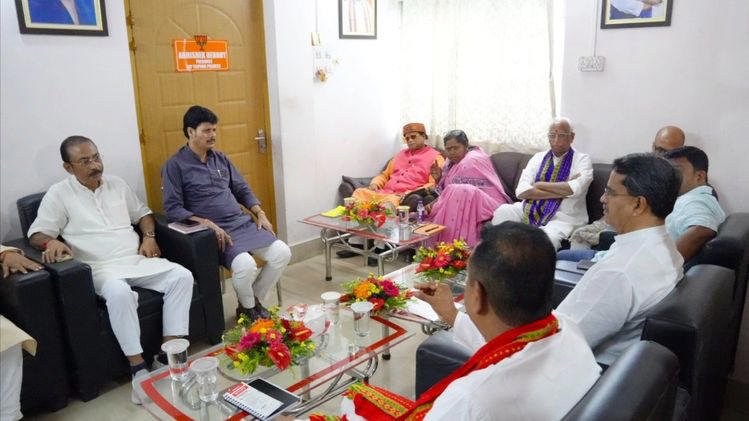
The Tripura unit of the Bharatiya Janata Party (BJP) held its first core committee meeting under the leadership of its newly appointed state president, focusing on preparations for upcoming village committee elections and measures aimed at strengthening the party’s organizational structure.
The meeting brought together senior party leaders, office-bearers, and key organizational figures to discuss political strategies, grassroots outreach, and future plans for expanding the party’s presence across the state. Party leaders reviewed current political developments and assessed the organization’s preparedness for upcoming electoral challenges.
The gathering marked an important milestone for the state unit as it begins a new phase under fresh leadership. Officials emphasized the need to maintain strong coordination between party workers and leadership while ensuring effective implementation of organizational goals.
The discussions reflected the party’s focus on consolidating its support base and strengthening its grassroots network in both urban and rural areas of Tripura.
Village Committee Polls Take Center Stage
One of the primary issues discussed during the meeting was the upcoming village committee elections. Party leaders reviewed strategies aimed at ensuring effective participation and strong performance in the polls.
Village committee elections hold significant importance in Tripura’s political landscape because they provide a platform for grassroots governance and local representation. Political parties often view these elections as an opportunity to strengthen their connection with local communities and expand their organizational influence.
Leaders discussed candidate selection, campaign planning, voter outreach, and coordination among party workers. They emphasized the need to engage directly with residents and communicate the party’s development agenda effectively.
Officials noted that local elections play an important role in shaping future political dynamics. Strong performance at the grassroots level often helps parties build momentum and strengthen their organizational foundations.
The meeting highlighted the importance of maintaining close contact with voters and addressing local concerns through active engagement and community outreach.
Focus on Grassroots Organizational Strengthening
A major theme of the meeting was the need to strengthen the party’s organizational framework across all levels. Leaders emphasized that a strong grassroots structure remains essential for long-term political success.
The party plans to enhance coordination between district, mandal, booth, and village-level units. Strengthening communication channels and ensuring active participation from workers were among the key issues discussed.
Officials stressed that effective organizations depend on dedicated workers and strong local leadership. The party intends to focus on identifying emerging leaders and encouraging greater participation from youth and women.
The meeting also reviewed ongoing membership drives and efforts to expand the party’s reach in different regions of the state. Leaders expressed confidence that a stronger organizational network would improve the party’s ability to connect with people and address their concerns.
The emphasis on grassroots strengthening reflects a broader strategy of building sustainable political structures capable of supporting future campaigns and governance initiatives.
New President Outlines Organizational Priorities
The newly appointed state president used the meeting to outline his vision for the party’s future direction. He emphasized the importance of unity, discipline, and collective effort in achieving organizational objectives.
The president called upon party workers to remain committed to public service and maintain regular interaction with citizens. He stressed that the party’s strength lies in its ability to connect directly with people and respond to their needs.
Leaders discussed methods to improve organizational efficiency and enhance coordination among various units. The president encouraged members to focus on both political activities and social outreach initiatives.
According to party officials, the leadership aims to create a dynamic and responsive organization capable of adapting to changing political circumstances while remaining rooted in grassroots engagement.
The meeting served as an opportunity to communicate priorities and establish a roadmap for future activities under the new leadership.
Strengthening Booth-Level Presence
The core committee emphasized the importance of booth-level organization as a foundation for electoral success. Party leaders noted that effective booth management often plays a decisive role during elections.
Discussions focused on strengthening booth committees, improving voter engagement, and ensuring regular interaction with local communities. Leaders highlighted the need for continuous outreach rather than limiting activities to election periods.
The party plans to enhance training programmes for grassroots workers and provide organizational support where required. Officials believe that strong booth-level networks can help improve communication and strengthen public trust.
Booth committees are often responsible for conveying local issues to higher levels of the organization while helping implement party programmes at the grassroots level.
The leadership stressed that active booth structures remain essential for maintaining organizational vitality and ensuring effective voter mobilization.
Expanding Outreach Among Youth and Women
The meeting also focused on increasing participation among youth and women. Leaders emphasized that these groups represent important segments of society and can contribute significantly to organizational growth.
The party intends to strengthen youth and women’s wings while encouraging greater involvement in political and social activities. Officials believe that broader participation can bring new ideas and energy into the organization.
Youth engagement remains a priority as younger generations increasingly shape political discourse and public policy discussions. Party leaders discussed programmes aimed at attracting young volunteers and future leaders.
Women’s participation was also identified as a key area of focus. Leaders highlighted the importance of ensuring meaningful representation and creating opportunities for women to assume leadership roles within the organization.
Expanding participation among diverse groups aligns with broader efforts to build an inclusive and representative political structure.
Preparing for Future Political Challenges
Beyond village committee elections, the core committee reviewed the broader political landscape and discussed preparations for future electoral contests. Leaders emphasized the importance of long-term planning and sustained organizational development.
Officials noted that successful political organizations require continuous engagement with citizens, strong communication strategies, and effective leadership structures. The meeting explored ways to improve coordination and enhance responsiveness to public concerns.
The party aims to strengthen its ability to address issues affecting different sections of society while promoting its development agenda. Leaders stressed the importance of remaining connected to grassroots realities and understanding local priorities.
The discussions reflected a proactive approach to organizational management and political preparation. Rather than focusing solely on immediate electoral challenges, the leadership emphasized long-term capacity building.
Such planning is viewed as essential for maintaining organizational momentum and ensuring continued growth.
Importance of Grassroots Democracy
Village committee elections and grassroots political engagement play a significant role in strengthening democratic processes. Local governance institutions often serve as the first point of contact between citizens and public administration.
Party leaders noted that active participation in local elections helps strengthen democratic institutions and encourages community involvement in governance. Political organizations often use these opportunities to better understand local issues and identify development priorities.
The meeting underscored the importance of grassroots democracy and citizen participation in shaping public policy outcomes. Leaders emphasized the need to support local governance structures and promote constructive engagement with communities.
Officials believe that strong grassroots institutions contribute to better governance and more responsive public administration.
The discussions highlighted the interconnected nature of organizational development, electoral participation, and democratic engagement.
Building a Stronger Organization for the Future
The first core committee meeting under Tripura BJP’s new president marked an important step in defining the party’s organizational priorities and political strategy. By focusing on village committee elections and grassroots strengthening, the leadership signaled its commitment to building a more robust and effective organization.
The discussions emphasized the importance of unity, discipline, community engagement, and organizational expansion. Leaders expressed confidence that these efforts would strengthen the party’s presence across the state and improve its ability to serve the public.
As preparations for village committee polls continue, the party aims to deepen its grassroots connections and enhance participation at all levels. The focus on booth committees, youth involvement, women’s participation, and leadership development reflects a comprehensive approach to organizational growth.
Moving forward, the outcomes of these initiatives will play an important role in shaping the party’s political trajectory in Tripura. The meeting laid the foundation for a new phase of organizational activity under the leadership of the newly appointed state president, with an emphasis on strengthening structures and preparing for future challenges.