

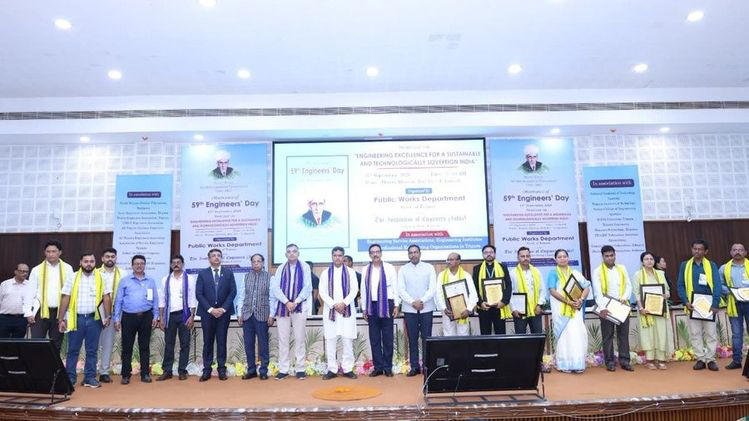
Tripura Chief Minister Manik Saha attended the 59th Engineers Day celebration in Agartala, highlighting the important role of engineers in the state’s development. The event brought together engineering professionals and officials to recognise their contribution to infrastructure and public services.
The celebration provided an opportunity to acknowledge the work of engineers across different sectors. Their expertise supports the planning and execution of roads, buildings, bridges, water systems and other essential infrastructure.
The Chief Minister also emphasised the need for professional excellence and innovation as Tripura continues to pursue development goals.
Tripura CM Joins Engineers Day Celebration
Chief Minister Manik Saha attended the Engineers Day programme in Agartala. The event marked the 59th edition of the annual celebration.
Engineers Day is observed in India to honour the contributions of engineers and remember the legacy of Sir Mokshagundam Visvesvaraya. His contributions to engineering and nation-building continue to inspire professionals across the country.
The celebration in Agartala recognised the importance of engineering in Tripura’s progress. It also brought attention to the responsibilities of engineers in building modern and resilient infrastructure.
Engineers Play Key Role In Development
Engineers have a direct role in many of the projects that shape everyday life. From transportation networks to water supply systems, their work supports essential public infrastructure.
In a state like Tripura, infrastructure development also faces geographical and logistical challenges. Engineers must design projects that can meet local conditions while ensuring safety and long-term durability.
The Chief Minister’s participation highlighted the importance of their contribution to the state’s development agenda.
Focus On Infrastructure Growth
Tripura has been working to improve infrastructure across urban and rural areas. Roads, bridges, government buildings and public facilities remain important parts of the state’s development plans.
Engineers are involved at every stage of these projects. They prepare designs, supervise construction and help ensure that infrastructure meets technical standards.
Quality engineering can also reduce maintenance costs and improve the lifespan of public assets. This makes professional expertise important for both new projects and existing infrastructure.
Technology And Innovation Are Important
Modern engineering is increasingly linked to technology and innovation. Digital tools can improve project planning, monitoring and construction management.
Engineers can use new technologies to make infrastructure more efficient and sustainable. These approaches can also help authorities manage resources more effectively.
For Tripura, adopting modern engineering practices can support faster and better development. It can also help the state respond to changing needs and environmental challenges.
Engineers And Public Service
Many engineers in Tripura work directly with government departments and public agencies. Their responsibilities often extend beyond technical work.
They help translate government policies into physical projects. Their decisions can influence the safety, quality and accessibility of public infrastructure.
Engineers must therefore combine technical knowledge with a strong sense of public responsibility. Effective planning can ensure that development projects benefit communities across the state.
Need For Sustainable Infrastructure
Infrastructure development must also consider long-term sustainability. Projects should meet present needs without creating unnecessary environmental or financial burdens.
Engineers can contribute by adopting efficient designs and sustainable construction methods. Better resource management can also improve the resilience of infrastructure.
Climate-related challenges make this approach increasingly important. Infrastructure must be able to withstand extreme weather and changing environmental conditions.
Supporting Young Engineers
The Engineers Day celebration also provides an opportunity to encourage young professionals. New engineers will play an important role in shaping Tripura’s future infrastructure.
They will need strong technical skills as well as knowledge of emerging technologies. Continuous learning can help them adapt to changes in the engineering sector.
Innovation and practical experience can further strengthen their contribution to public projects.
Engineering And Economic Development
Engineering has a wider impact on the economy. Better roads and connectivity can support trade, tourism and investment.
Reliable infrastructure can also make it easier for businesses to operate. Improved public facilities can raise the overall quality of life for residents.
Engineers therefore contribute not only to construction but also to broader economic development. Their work creates the physical foundation needed for growth.
Recognising Professional Contributions
Engineers Day gives governments and communities a chance to recognise the professionals who often work behind the scenes. Their contribution may not always receive public attention, even though it affects everyday life.
From designing a bridge to improving a water supply network, engineering decisions can have a lasting impact. Recognising this work can encourage greater professional commitment.
The celebration in Agartala reinforced the importance of engineering expertise in Tripura’s development journey.
Looking Ahead
Tripura Chief Minister Manik Saha’s participation in the 59th Engineers Day celebration in Agartala highlighted the central role of engineering professionals in the state’s progress.
As Tripura continues to expand its infrastructure, engineers will remain essential to delivering safe, efficient and sustainable projects. Their ability to embrace technology and innovation will also shape future development.
The Engineers Day celebration served as both a recognition of their contribution and a reminder of the responsibility they carry in building a stronger and more modern Tripura.