

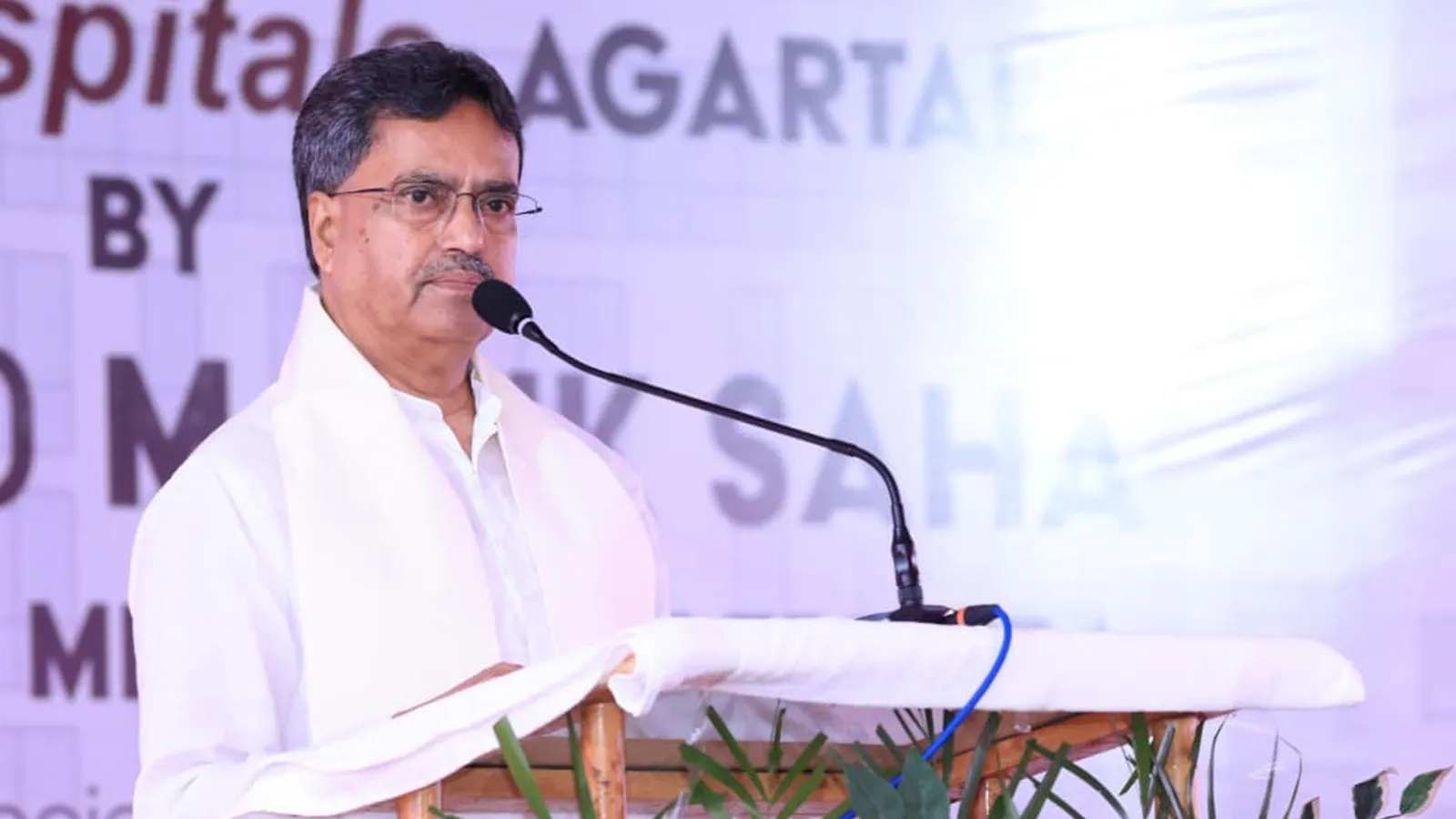
The Tripura Healthcare Reforms Criticism debate intensified after Chief Minister Manik Saha criticized the CPI(M) over its remarks on the state’s healthcare reforms. Moreover, the Chief Minister defended the government’s initiatives, highlighting measures aimed at improving healthcare infrastructure, expanding medical services, and enhancing patient care across Tripura. Consequently, the exchange has brought renewed attention to healthcare policies and political discourse surrounding the sector.
Nagaland Records 51% Rainfall Deficit, Raising Agricultural Concerns
Sikkim Reviews UNNATI Scheme and PMEGP Rollout for Rural Youth Employment
Tripura Healthcare Reforms Criticism Sparks Political Debate
The Tripura Healthcare Reforms Criticism gained momentum after Chief Minister Manik Saha responded to the CPI(M)’s criticism of the state’s healthcare initiatives. Furthermore, the Chief Minister asserted that the government has implemented several reforms to strengthen medical services and improve healthcare accessibility.
Healthcare remains a key area of public policy, often generating debate among political parties. Consequently, differing views on reforms contribute to discussions on governance and service delivery.
Moreover, public statements from political leaders highlight competing perspectives on healthcare performance. Therefore, the issue has attracted widespread public interest.
Additionally, political debate plays an important role in democratic accountability. Thus, healthcare policies continue to receive close public scrutiny.
Chief Minister Highlights Healthcare Initiatives
The Tripura Healthcare Reforms Criticism prompted the Chief Minister to outline the government’s efforts to modernize the healthcare system. Furthermore, he cited initiatives focused on improving hospital infrastructure, strengthening medical education, expanding diagnostic services, and increasing access to healthcare facilities.
Investment in healthcare infrastructure supports better medical services and patient outcomes. Consequently, governments continue prioritizing improvements in hospitals and healthcare institutions.
Moreover, expanding healthcare facilities helps improve access for residents across urban and rural areas. Therefore, infrastructure development remains a significant policy objective.
Similarly, strengthening healthcare systems contributes to long-term public welfare. Additionally, modern medical facilities enhance service quality.
Opposition Raises Concerns Over Government Policies
The Tripura Healthcare Reforms Criticism also reflects the opposition’s scrutiny of government healthcare policies. Furthermore, political parties continue to present differing assessments regarding the effectiveness and implementation of reforms.
Democratic systems encourage public debate on policy matters. Consequently, opposition parties often evaluate government initiatives through legislative discussions and public statements.
Moreover, constructive policy discussions can contribute to improved governance. Therefore, public engagement remains important in evaluating healthcare programmes.
Similarly, transparent communication helps citizens understand policy priorities. Additionally, informed debate strengthens democratic institutions.
Healthcare Development Remains a Key Priority
The Tripura Healthcare Reforms Criticism underscores the importance of continued investment in healthcare services, infrastructure, and public health programmes. Furthermore, strengthening medical facilities and expanding access to quality healthcare remain long-term objectives for improving health outcomes.
Healthcare reforms require sustained planning, investment, and institutional coordination. Consequently, governments regularly introduce initiatives aimed at improving service delivery.
Moreover, collaboration among healthcare professionals, policymakers, and public institutions supports better implementation. Therefore, continued efforts remain essential for strengthening the healthcare system.
Similarly, innovation and capacity-building improve the efficiency of healthcare services. Additionally, accessible healthcare contributes to overall social and economic development.
Conclusion
The Tripura Healthcare Reforms Criticism has generated political discussion following Chief Minister Manik Saha’s response to CPI(M)’s criticism of the state’s healthcare reforms. Moreover, the Chief Minister defended the government’s initiatives while emphasizing ongoing efforts to improve healthcare infrastructure and public health services.
Furthermore, continued investment in medical facilities, transparent policy implementation, and constructive public dialogue will remain essential for strengthening Tripura’s healthcare system. Consequently, the Tripura Healthcare Reforms Criticism highlights the continuing importance of healthcare as a central issue in public policy and governance.
FAQs
1. Why did Chief Minister Manik Saha criticize the CPI(M)?
He responded to the CPI(M)’s criticism of the state’s healthcare reforms and defended the government’s healthcare initiatives.
2. What healthcare reforms were highlighted?
The Chief Minister referred to efforts involving hospital infrastructure, medical education, healthcare accessibility, and improved medical services.
3. Why is healthcare reform an important issue?
Healthcare reforms aim to improve medical infrastructure, expand access to quality healthcare, and strengthen public health services.
4. What role does political debate play in healthcare policy?
Political discussions allow different viewpoints on healthcare policies while promoting democratic accountability and public engagement.
5. Why is the Tripura Healthcare Reforms Criticism significant?
It highlights ongoing discussions surrounding healthcare policy, governance, and the state’s efforts to improve medical services for its citizens.