

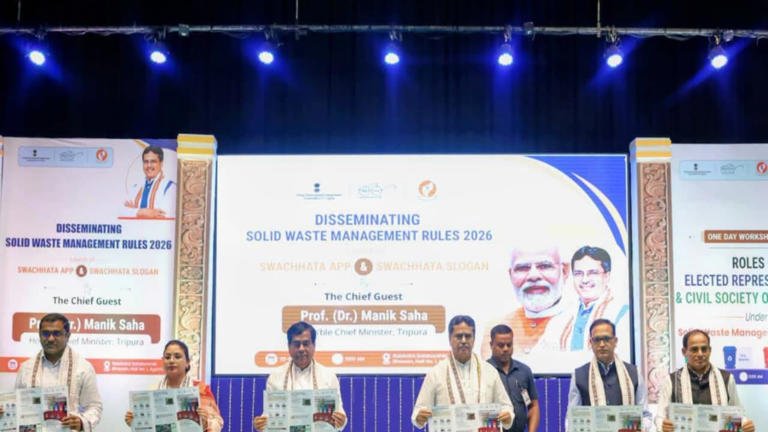
Tripura Chief Minister Manik Saha has issued a strong warning against the illegal dumping of waste, stating that individuals and organizations found violating waste disposal regulations will face fines and legal action. The Chief Minister’s remarks come amid growing concerns over environmental cleanliness, public health, and the need for responsible waste management practices across the state.
Addressing officials and members of the public during a cleanliness and environmental awareness initiative, the Chief Minister emphasized that maintaining a clean and healthy environment is a collective responsibility. He stressed that indiscriminate dumping of waste not only damages the environment but also poses serious risks to public health and urban infrastructure.
The warning signals the government’s determination to strengthen waste management systems and ensure greater compliance with environmental regulations. Authorities have indicated that stricter monitoring and enforcement measures will be implemented to curb illegal disposal practices and promote cleaner surroundings throughout Tripura.
Government Adopts Firm Stance on Waste Disposal
The Chief Minister stated that the administration will not tolerate irresponsible waste disposal practices that negatively affect communities and ecosystems. He emphasized that maintaining cleanliness is essential for improving quality of life and creating a healthier environment for future generations.
According to officials, local bodies and relevant departments have been instructed to identify areas where illegal dumping frequently occurs and take appropriate action against violators. The government intends to strengthen enforcement mechanisms to ensure that waste disposal rules are followed consistently.
The Chief Minister stressed that environmental protection cannot be achieved through government action alone and requires active participation from citizens, businesses, and community organizations.
Importance of Proper Waste Management
Waste management has become an increasingly important issue as urbanization and population growth place greater pressure on municipal services and natural resources. Improper disposal of waste can lead to pollution of water bodies, soil degradation, air contamination, and the spread of diseases.
The Chief Minister highlighted that effective waste management is critical for protecting public health and preserving environmental quality. He urged citizens to adopt responsible practices such as waste segregation, recycling, and proper disposal through authorized systems.
Officials noted that sustainable waste management contributes not only to cleaner cities and towns but also to broader environmental and developmental goals.
Protecting Public Health
A major concern associated with illegal dumping is its impact on public health. Accumulated waste can become a breeding ground for disease-carrying insects and rodents, increasing the risk of infections and other health problems.
The Chief Minister pointed out that improper waste disposal often affects vulnerable populations the most, particularly in densely populated areas. Maintaining clean surroundings is therefore essential for preventing health hazards and ensuring community well-being.
Authorities are working to improve sanitation infrastructure and encourage greater awareness regarding the relationship between cleanliness and public health. The government believes that preventive measures and responsible behavior can significantly reduce environmental and health-related risks.
Environmental Consequences of Illegal Dumping
The environmental consequences of indiscriminate waste disposal extend beyond immediate visual pollution. Plastic waste, construction debris, and other forms of improperly discarded material can damage ecosystems and disrupt natural processes.
The Chief Minister emphasized that environmental conservation must remain a priority for all citizens. He noted that protecting rivers, forests, and public spaces from pollution is essential for preserving biodiversity and maintaining ecological balance.
Officials warned that continued neglect of waste management responsibilities could have long-term consequences for environmental sustainability and natural resource conservation.
Strengthening Enforcement Measures
To address the issue more effectively, the government plans to strengthen enforcement mechanisms and increase monitoring of waste disposal activities. Local authorities have been directed to identify offenders and take appropriate legal action where necessary.
Officials stated that fines and penalties will serve as deterrents against irresponsible behavior and encourage greater compliance with waste management regulations. In cases involving repeated violations or serious environmental damage, legal proceedings may also be initiated.
The administration believes that stricter enforcement, combined with public awareness efforts, will help create a culture of accountability and environmental responsibility.
Role of Local Bodies and Communities
Municipal authorities and local governance institutions play a crucial role in maintaining cleanliness and ensuring effective waste management. The Chief Minister called upon urban local bodies and village-level institutions to actively participate in monitoring waste disposal practices and implementing sanitation initiatives.
Community involvement was highlighted as another key component of successful waste management. Residents’ associations, youth groups, educational institutions, and civil society organizations can contribute significantly by promoting awareness and encouraging responsible behavior.
Officials emphasized that collaborative efforts between government agencies and communities are essential for achieving lasting improvements in environmental cleanliness.
Promoting Awareness and Behavioral Change
While enforcement measures are important, the Chief Minister stressed that long-term success depends on changing public attitudes toward waste disposal. Awareness campaigns are being conducted to educate citizens about proper waste management practices and the consequences of environmental negligence.
Schools, colleges, and community organizations are expected to play a vital role in spreading awareness and encouraging environmentally responsible behavior. Educational initiatives focusing on waste segregation, recycling, and sustainability are being promoted across the state.
Authorities believe that fostering a sense of environmental responsibility among citizens can help reduce waste-related problems and support broader cleanliness goals.
Supporting the Vision of a Cleaner Tripura
The government’s focus on waste management aligns with its broader vision of creating cleaner, healthier, and more sustainable communities. Environmental cleanliness has become an important component of urban development and public welfare strategies across the state.
The Chief Minister noted that maintaining clean surroundings enhances not only public health but also the overall attractiveness and livability of cities and towns. Cleaner environments can support tourism, improve civic pride, and contribute to better quality of life.
Officials stated that ongoing investments in sanitation infrastructure, waste collection systems, and awareness campaigns will continue to support these objectives.
Looking Ahead
Chief Minister Manik Saha’s warning regarding fines and legal action for illegal waste dumping reflects the Tripura government’s commitment to environmental protection and public health. By adopting a firm stance on waste management, the administration aims to address a growing challenge that affects communities across the state.
The emphasis on stricter enforcement, community participation, and public awareness highlights a comprehensive approach to tackling waste-related issues. Authorities believe that a combination of accountability and education can help create lasting behavioral change and improve environmental outcomes.
As Tripura continues its efforts to strengthen sanitation systems and promote sustainable practices, the government’s message is clear: maintaining cleanliness is a shared responsibility, and those who violate waste disposal regulations will face consequences. Through collective action and responsible behavior, the state aims to build a cleaner, healthier, and more environmentally sustainable future for all its residents.