

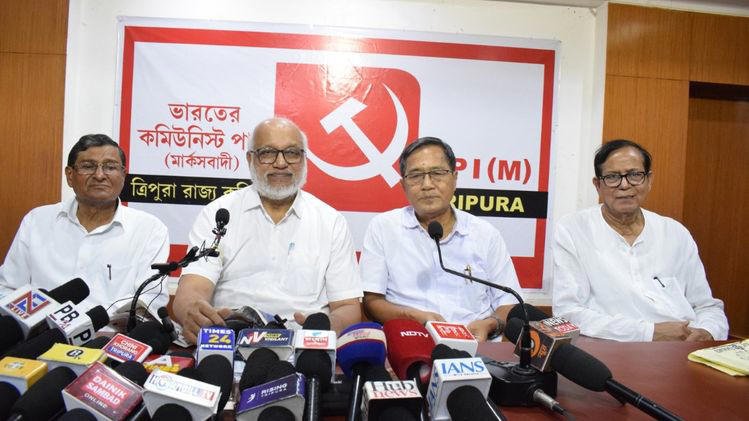
The Communist Party of India (Marxist) [CPI(M)] has announced a statewide agitation in Tripura, citing concerns over alleged corruption, rising unemployment, and what it described as growing public dissatisfaction with the functioning of the government. The party has also alleged that the Special Intensive Revision (SIR) of electoral rolls is being used as a political tool to help the Bharatiya Janata Party (BJP) retain power, a charge that has added a new dimension to the state’s political discourse.
The announcement was made during a party programme where senior CPI(M) leaders outlined plans for a series of demonstrations, public meetings, awareness campaigns, and protests across Tripura. The agitation is expected to focus on issues affecting daily life, including employment opportunities, governance, welfare implementation, and transparency in public administration.
Party leaders stated that the campaign aims to highlight what they described as the concerns of ordinary citizens and to mobilize public opinion around issues that they believe require urgent attention. The proposed agitation is likely to intensify political activity in the state in the coming weeks.
Corruption Allegations Form Major Part of Campaign
One of the key issues raised by the CPI(M) is the allegation of corruption in various sectors. Party leaders claimed that concerns regarding transparency and accountability have become major issues among sections of the population.
The opposition argued that public resources must be utilized efficiently and that government institutions should function in a transparent manner. According to party representatives, allegations related to financial irregularities and administrative shortcomings have contributed to public dissatisfaction.
CPI(M) leaders said the proposed agitation would seek greater accountability in governance and demand stronger oversight mechanisms. They emphasized that transparency remains an essential component of democratic administration and should be upheld at all levels.
The party has indicated that it will use public meetings and awareness programmes to present its views on governance and administrative functioning during the course of the agitation.
Unemployment Emerges as Central Issue
Employment generation has emerged as another major theme of the statewide campaign. CPI(M) leaders argued that job creation remains one of the most pressing concerns facing the state’s youth and working-age population.
The party claimed that many young people continue to face challenges in securing stable employment opportunities despite possessing educational qualifications and professional skills. According to opposition leaders, addressing unemployment should be a priority for policymakers.
Party representatives stated that the agitation would draw attention to demands related to recruitment, employment generation, skill development, and economic opportunities. They argued that sustainable job creation is essential for long-term social and economic progress.
The CPI(M) also called for policies aimed at strengthening sectors capable of generating employment, including agriculture, small industries, tourism, and public services. Leaders stressed that economic development must translate into meaningful opportunities for young people across the state.
SIR Allegation Sparks Political Debate
A significant aspect of the CPI(M)’s campaign is its allegation regarding the Special Intensive Revision (SIR) of electoral rolls. Party leaders claimed that the exercise is being used in a manner that could influence the political landscape and benefit the ruling BJP.
According to the CPI(M), electoral processes must remain transparent, impartial, and free from political considerations. Party representatives argued that voter list revisions should be conducted strictly in accordance with established guidelines and democratic principles.
The allegation has triggered political discussion within the state, with opposition leaders demanding greater transparency regarding the implementation of the exercise. CPI(M) leaders stated that they intend to raise awareness about the issue as part of their broader campaign.
The ruling party has consistently maintained confidence in electoral processes and democratic institutions, while election-related activities continue under the supervision of constitutional authorities.
Statewide Agitation to Cover Multiple Districts
The CPI(M) has announced plans to organize programmes across all districts of Tripura. These activities are expected to include rallies, demonstrations, public meetings, door-to-door campaigns, and interactions with various sections of society.
Party leaders stated that the objective is to reach citizens in both urban and rural areas and gather feedback regarding local concerns. The campaign will reportedly focus on issues such as employment, public services, infrastructure, governance, and welfare delivery.
The statewide nature of the agitation reflects the party’s effort to build a broad-based political movement around issues it believes are affecting residents across the state. Local party units have been instructed to coordinate activities and engage with community members at the grassroots level.
Officials from the party indicated that the programme would continue over an extended period and involve participation from workers, youth organizations, women’s groups, and other affiliated bodies.
Political Activity Intensifies in Tripura
The announcement comes at a time when political activity is increasing in Tripura. Both ruling and opposition parties have been actively engaging with voters through public programmes, outreach campaigns, and organizational activities.
Political observers note that issues such as employment, governance, infrastructure development, and social welfare continue to shape public discussions in the state. Opposition parties often use statewide campaigns to highlight concerns and present alternative viewpoints on policy matters.
The CPI(M)’s decision to launch a mass agitation is being viewed as part of its broader strategy to strengthen its political presence and expand public engagement. The campaign is expected to provide a platform for the party to communicate its positions on key issues and mobilize supporters.
Analysts believe that such movements can influence political discourse by drawing attention to governance-related concerns and encouraging debate on policy priorities.
Focus on Public Outreach
Party leaders emphasized that public outreach will remain a central component of the agitation. They stated that direct interaction with citizens would help identify local concerns and ensure that issues raised during the campaign reflect public sentiment.
The CPI(M) plans to engage with students, unemployed youth, farmers, workers, and other social groups during the course of the agitation. Leaders believe that broad participation is essential for highlighting the challenges faced by different sections of society.
Public meetings and awareness campaigns are expected to focus on explaining the party’s position on governance, employment, and electoral issues. The opposition hopes that sustained outreach efforts will help build support for its demands and strengthen grassroots engagement.
Political campaigns centered on public interaction often play an important role in shaping perceptions and influencing policy debates within democratic systems.
Governance and Development Remain Key Themes
While corruption and employment issues form the core of the agitation, the campaign is also expected to address broader questions of governance and development. CPI(M) leaders argued that economic growth should be accompanied by transparency, accountability, and equitable opportunities.
The party has called for stronger implementation of welfare programmes, improved public services, and policies aimed at supporting vulnerable sections of society. It also emphasized the need for development initiatives that create long-term economic benefits.
Government representatives, meanwhile, have highlighted various development programmes and welfare initiatives undertaken in recent years. Political debates surrounding governance and development are likely to remain central to public discussions as the agitation progresses.
Opposition Seeks to Build Momentum
The statewide agitation marks a significant political initiative by the CPI(M) in Tripura. By focusing on issues such as corruption, unemployment, governance, and electoral processes, the party aims to build momentum and strengthen its engagement with voters across the state.
The campaign is expected to generate extensive political discussion and encourage debate on issues affecting governance and public policy. Through rallies, meetings, and awareness programmes, the opposition intends to present its perspective on the challenges facing Tripura.
As political activity continues to intensify, the statewide agitation is likely to become an important feature of the state’s political landscape. Whether it succeeds in expanding public support or influencing policy discussions will depend on how effectively the party connects its message with the concerns and aspirations of the people.
For now, the announcement signals the beginning of a major opposition campaign that is set to shape political discourse in Tripura in the coming months.