

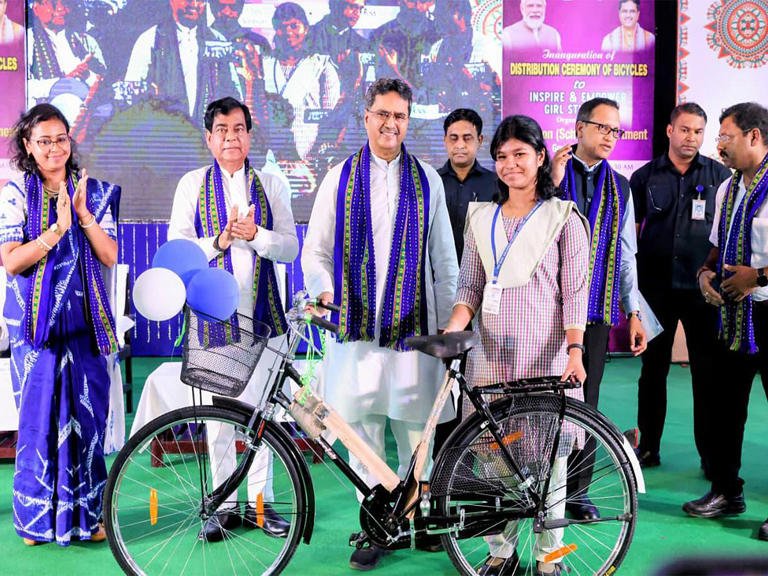
The Tripura government has distributed 41,800 bicycles to Class IX students across the state. The programme is designed to make commuting to school easier, particularly for students living in rural and remote areas, while encouraging regular attendance and reducing dropout rates.
The distribution drive forms part of the state’s broader efforts to improve educational access and create a supportive environment for students. By addressing transportation challenges that often hinder school attendance, the government hopes to ensure that more children continue their education and complete their academic journey.
Officials have described the initiative as a significant investment in the future of Tripura’s youth, emphasizing that access to education remains one of the government’s top priorities.
Major Push to Improve School Attendance
The bicycle distribution programme targets Class IX students studying in government and government-aided schools across the state. Authorities believe that transportation difficulties remain one of the major factors affecting attendance, particularly in geographically challenging regions where students often travel long distances to reach school.
Providing bicycles is expected to reduce travel time and make daily commuting more convenient for students. Easier access to schools can contribute significantly to improving attendance rates and ensuring that students remain engaged with their education.
Education officials noted that many students in rural areas face logistical challenges that can discourage regular attendance. The initiative seeks to address these barriers directly.
Supporting Students in Rural and Remote Areas
Tripura has a significant rural population, and many educational institutions serve students from villages and remote settlements. For some students, reaching school involves walking several kilometers every day, often under difficult weather conditions.
The bicycle distribution programme is particularly beneficial for these students, offering a practical and affordable mode of transportation. Improved mobility can help students reach school more comfortably and on time, reducing fatigue and enabling them to focus better on their studies.
Officials believe that the initiative will have a positive impact on educational participation, especially among students residing in underserved regions.
Government’s Focus on Educational Accessibility
The distribution of bicycles reflects the government’s broader commitment to making education accessible to all sections of society. Over the years, various schemes have been introduced to reduce obstacles that prevent children from attending school regularly.
These efforts include providing free textbooks, uniforms, scholarships, midday meals, and infrastructure improvements. The bicycle programme complements these initiatives by addressing transportation-related challenges that can affect enrollment and attendance.
Education experts often emphasize that improving access is one of the most effective ways to enhance educational outcomes and ensure equal opportunities for students.
Reducing Dropout Rates Through Incentive-Based Support
One of the key objectives of the initiative is to reduce dropout rates among secondary school students. Studies have shown that transportation difficulties can contribute to students leaving school, particularly as they progress to higher classes where institutions may be located farther from home.
By making travel easier and more affordable, the government aims to encourage students to continue their education and complete their secondary schooling. Officials have pointed to previous education support programmes that have contributed to improved retention and enrollment figures.
The bicycle distribution scheme is expected to strengthen these gains by providing tangible support to students and their families.
Empowering Students Through Mobility
Beyond improving attendance, bicycles offer students greater mobility and independence. For many young people, particularly those in rural areas, access to reliable transportation can have a transformative impact on daily life.
Students can use bicycles not only for commuting to school but also for participating in extracurricular activities, accessing libraries, attending coaching classes, and engaging in community programmes. Enhanced mobility can contribute to broader educational and personal development opportunities.
Experts note that such initiatives often have long-term benefits by encouraging self-confidence, responsibility, and active participation in learning.
Positive Impact on Educational Outcomes
Improved attendance is closely linked to better academic performance. Students who attend school regularly are more likely to remain engaged with classroom activities, complete assignments, and perform well in examinations.
Education authorities expect the bicycle distribution programme to contribute to improved learning outcomes by reducing absenteeism and ensuring greater consistency in attendance. Regular participation in classroom instruction remains one of the most important factors influencing academic success.
The initiative aligns with broader efforts to improve the quality of education and strengthen student achievement across the state.
Government Continues Investment in Education
The bicycle programme is part of a series of educational initiatives undertaken by the Tripura government in recent years. Investments have been made in school infrastructure, digital learning facilities, teacher training, and student welfare programmes aimed at enhancing the overall education system.
Authorities have focused on creating a supportive learning environment that encourages enrollment, retention, and academic excellence. Efforts to modernize schools and improve access to resources have been accompanied by targeted interventions designed to assist students from economically disadvantaged backgrounds.
Officials maintain that education remains a cornerstone of the state’s long-term development strategy.
Community and Parental Support
Parents and local communities have welcomed the bicycle distribution initiative, viewing it as a practical measure that addresses a real challenge faced by many students. For families with limited financial resources, the provision of bicycles can significantly reduce transportation expenses and ease the burden of ensuring children reach school regularly.
Community leaders have also praised the programme for its potential to improve educational participation and create better opportunities for young people. Strong community support is often considered essential for the success of education-related initiatives.
The involvement of parents and local stakeholders is expected to further strengthen the impact of the programme.
Long-Term Benefits for Society
Educational support programmes such as bicycle distribution schemes can generate benefits that extend far beyond individual students. Improved school attendance contributes to higher literacy rates, better educational attainment, and increased opportunities for future employment.
A well-educated population is essential for economic growth, social development, and innovation. By helping students remain in school and complete their education, the government is investing in the state’s future workforce and leadership.
Experts note that interventions that improve access to education often produce lasting positive outcomes for communities and society as a whole.
A Significant Step Towards Educational Inclusion
The distribution of 41,800 bicycles to Class IX students marks a significant step in Tripura’s efforts to strengthen educational inclusion and accessibility. By addressing transportation challenges and encouraging regular attendance, the initiative aims to create a more supportive learning environment for students across the state.
As the government continues to focus on improving educational infrastructure, reducing dropout rates, and expanding opportunities for young people, programmes like this demonstrate the importance of practical, student-centered interventions. The bicycle distribution scheme not only supports immediate educational goals but also contributes to the broader vision of building a more educated, skilled, and empowered generation.
With thousands of students now equipped with a reliable means of transportation, Tripura is taking another important step toward ensuring that every child has the opportunity to access quality education and achieve their full potential.