

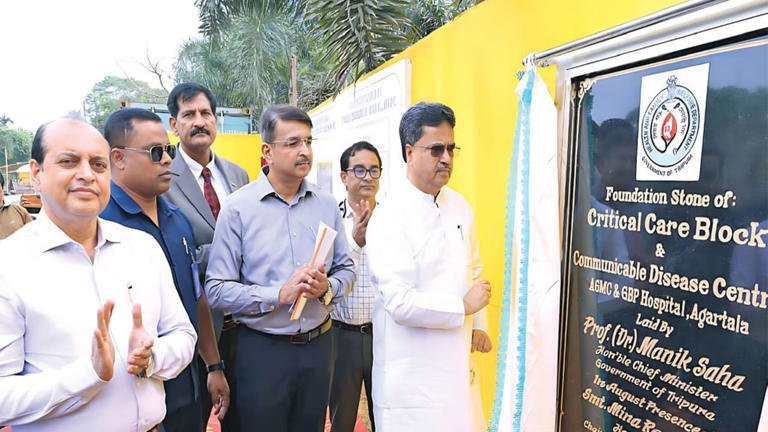
Tripura’s healthcare system is undergoing significant changes as the state government continues to introduce initiatives aimed at improving medical infrastructure, expanding access to treatment and strengthening healthcare services for people across urban and rural areas.
The focus of these efforts has been on making quality healthcare more accessible while reducing the need for patients to travel outside the state for specialised treatment. From strengthening hospitals and medical institutions to improving diagnostic facilities and expanding public health services, Tripura is seeking to build a more capable and inclusive healthcare system.
For a geographically diverse state with many remote and rural communities, ensuring access to timely medical care remains a major challenge. Distance, connectivity and the availability of specialist doctors can often affect the quality and speed of treatment.
The government’s recent initiatives are aimed at addressing these gaps and bringing healthcare services closer to people.
Strengthening Healthcare Infrastructure Across the State
Improving healthcare infrastructure has emerged as a major focus area in Tripura’s development strategy.
The state government has been working to upgrade hospitals, health centres and medical facilities to improve their capacity to provide treatment.
Stronger infrastructure can help hospitals handle a larger number of patients and offer a wider range of medical services. The availability of modern equipment and better facilities can also reduce the pressure on major hospitals.
Healthcare centres at the district and local levels play an important role in providing early treatment and preventing smaller health issues from becoming serious medical emergencies.
By strengthening these facilities, the government aims to ensure that people can access basic and essential healthcare closer to their homes.
Focus on Reducing Dependence on Treatment Outside Tripura
One of the important goals of healthcare development in Tripura is to reduce the dependence on hospitals outside the state.
In the past, many patients requiring highly specialised treatment often had to travel to larger cities for advanced medical procedures.
Travelling outside the state can place a significant financial and emotional burden on patients and their families. It can also delay treatment, particularly in emergency situations.
The expansion of specialised medical facilities within Tripura could help address this problem.
Improving the capacity of major hospitals and introducing advanced treatment services can enable more patients to receive care within the state.
The development of stronger medical institutions can also create opportunities for doctors and healthcare professionals to work and specialise in Tripura.
Medical Education and Availability of Healthcare Professionals
A strong healthcare system depends not only on buildings and equipment but also on trained doctors, nurses and other medical professionals.
The expansion of medical education and training facilities is therefore an important part of strengthening Tripura’s healthcare sector.
Medical colleges and training institutions can help create a larger pool of healthcare professionals.
Over time, this can improve the availability of doctors and specialists within the state.
However, attracting and retaining healthcare professionals, particularly in remote areas, remains an important challenge.
The government will need to ensure that healthcare workers receive adequate infrastructure, professional support and opportunities for career development.
A stronger medical education system can support the long-term development of Tripura’s healthcare network.
Technology Plays a Growing Role in Healthcare
Technology is increasingly becoming an important part of healthcare delivery.
Digital health records, telemedicine and online consultation services can help improve access to doctors, particularly for people living in remote areas.
For Tripura, where distance can create barriers to specialised medical care, technology has the potential to connect patients with doctors and specialists without requiring long-distance travel.
Telemedicine can also help local healthcare centres receive expert guidance when dealing with complicated cases.
The use of digital systems can improve the management of patient information and strengthen coordination between different healthcare facilities.
As digital infrastructure expands, technology-based healthcare services could become an increasingly important part of Tripura’s health system.
Expanding Preventive and Public Healthcare
A strong healthcare system must focus not only on treating illness but also on preventing it.
Public health programmes play an important role in creating awareness about nutrition, sanitation, maternal health, child health and the prevention of communicable diseases.
Strengthening primary healthcare facilities can help identify health problems at an early stage.
Early diagnosis and treatment can reduce the burden on major hospitals and improve health outcomes.
Government health initiatives are also expected to focus on vaccination, maternal and child healthcare and awareness campaigns.
For remote communities, outreach programmes can be particularly important in ensuring that essential healthcare services reach people who may not regularly visit hospitals.
Improving Access for Rural and Remote Communities
Ensuring equal access to healthcare remains one of the most important challenges for Tripura.
People living in urban areas may have relatively easier access to major hospitals, while rural and remote communities can face difficulties related to distance and transportation.
The strengthening of primary health centres, community health centres and district hospitals can help reduce this gap.
Mobile medical units and telemedicine services can also play an important role in reaching communities located far from major healthcare institutions.
The success of healthcare reforms will depend on whether the benefits reach people across all sections of society.
A truly inclusive healthcare system must ensure that geographical location does not become a barrier to receiving timely and quality medical treatment.
Government Schemes and Affordable Healthcare
Government-supported health schemes can help reduce the financial burden of medical treatment.
Healthcare costs can become a major concern for families, especially when hospitalisation or specialised procedures are required.
By improving access to affordable treatment and providing financial assistance through health schemes, the government can help protect families from high out-of-pocket medical expenses.
The effectiveness of such schemes, however, depends on awareness and implementation.
People must know about the benefits available to them and understand how they can access healthcare services.
Clear communication and efficient coordination between hospitals and government agencies can make healthcare schemes more effective.
Challenges That Still Need Attention
While Tripura’s healthcare sector is moving towards greater development, several challenges remain.
The availability of specialist doctors, access to advanced treatment in remote areas and the need for continuous investment in infrastructure will continue to require attention.
Healthcare facilities also need regular maintenance and adequate supplies of medicines and equipment.
The government will need to focus on ensuring that new initiatives are sustainable over the long term.
Infrastructure development must be supported by sufficient staffing, training and efficient management.
The growing use of technology will also require reliable internet connectivity and digital literacy among healthcare workers and patients.
A Stronger Foundation for the Future
The transformative initiatives being introduced across Tripura reflect an effort to build a healthcare system that is stronger, more accessible and better prepared for future challenges.
The focus on infrastructure, specialised treatment, medical education, technology and preventive healthcare could help create a more comprehensive healthcare network.
The long-term goal is likely to be ensuring that people do not have to travel far from home to receive essential or advanced treatment.
A stronger healthcare system can also contribute to the state’s overall economic and social development. Healthy communities are better able to participate in education, employment and economic activities.
Transforming Healthcare Through Continued Investment
Tripura’s healthcare transformation is a continuing process rather than a single initiative.
The state has taken steps towards improving hospitals, expanding medical facilities and making healthcare services more accessible. Continued investment and effective implementation will be essential to maintain this momentum.
The real measure of success will be whether patients experience better access, shorter waiting times, improved treatment and reduced financial pressure.
As Tripura continues to strengthen its health infrastructure and expand healthcare services, the focus will remain on ensuring that modern and quality treatment reaches people across the state.
With sustained policy support, investment in medical infrastructure and greater use of technology, Tripura has the potential to build a healthcare system that is more responsive to the needs of its people and better equipped to meet future health challenges.