

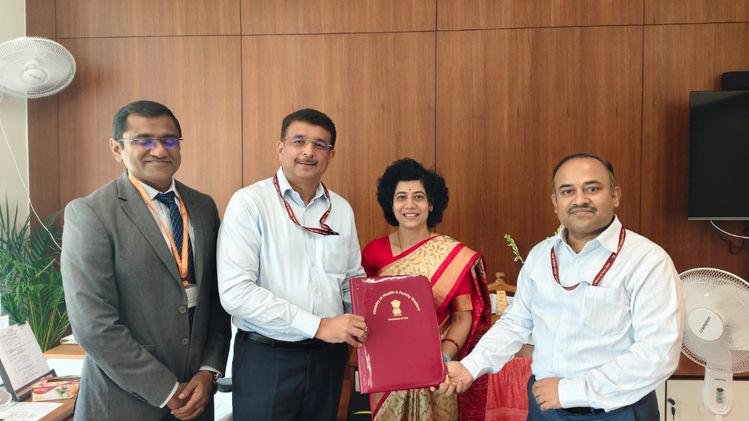
Tripura is set to witness a major upgrade in its public healthcare infrastructure as the state has been selected to receive advanced AI-powered X-ray machines, Magnetic Resonance Imaging (MRI) units, and mammography systems under a new healthcare initiative launched by the Central government. The move is expected to significantly improve diagnostic services across the state while making quality healthcare more accessible to patients, particularly those in remote and underserved regions.
The initiative forms part of the Centre’s broader strategy to modernise healthcare facilities across India through the integration of advanced medical technologies and artificial intelligence. By equipping government hospitals with state-of-the-art diagnostic equipment, the programme aims to enhance disease detection, reduce waiting times, and improve the overall efficiency of healthcare delivery.
Health officials believe that the introduction of these modern diagnostic systems will strengthen Tripura’s healthcare ecosystem, benefiting thousands of patients who rely on government hospitals for affordable medical treatment.
Major Boost for Tripura’s Healthcare Infrastructure
The allocation of AI-powered diagnostic equipment marks another significant milestone in Tripura’s efforts to strengthen its healthcare services. Government hospitals in the state have witnessed steady improvements in infrastructure over the past few years, with investments in medical colleges, district hospitals, specialised treatment facilities, and digital healthcare initiatives.
The addition of advanced X-ray machines equipped with artificial intelligence capabilities, modern MRI units, and mammography systems is expected to bridge critical gaps in diagnostic services.
Medical experts note that timely and accurate diagnosis plays a crucial role in successful treatment outcomes. The availability of advanced imaging equipment within the state will reduce dependence on referrals to hospitals outside Tripura, allowing patients to receive quicker diagnoses and begin treatment earlier.
The initiative is also expected to improve healthcare accessibility for residents living in rural and interior areas who often face difficulties in accessing specialised diagnostic facilities.
AI-Powered X-Ray Machines to Enhance Diagnostic Accuracy
One of the key components of the initiative is the deployment of AI-enabled X-ray machines capable of assisting doctors in interpreting medical images more efficiently.
Artificial intelligence technology can help identify abnormalities such as lung infections, fractures, tuberculosis, pneumonia, and several other conditions by analysing X-ray images with remarkable speed and accuracy. While final clinical decisions will continue to rest with qualified medical professionals, AI serves as an important decision-support tool that helps minimise diagnostic errors and prioritise urgent cases.
The technology is particularly valuable in government hospitals where radiologists often manage large volumes of patients every day.
By reducing reporting times and improving diagnostic precision, AI-powered X-ray systems are expected to contribute to faster treatment decisions and improved patient care.
MRI Units to Strengthen Advanced Medical Services
The introduction of additional MRI units will significantly enhance Tripura’s capacity to diagnose complex medical conditions.
MRI technology provides highly detailed images of internal organs, soft tissues, nerves, joints, and the brain without exposing patients to ionising radiation. It is widely used in diagnosing neurological disorders, spinal injuries, tumours, musculoskeletal conditions, cardiovascular diseases, and various other medical complications.
Currently, access to MRI facilities can be limited due to high demand and the availability of equipment. The installation of new MRI units in government healthcare institutions is expected to reduce waiting periods and improve access to specialised diagnostic services.
Patients who previously had to travel long distances for advanced imaging may now receive these services closer to home, reducing both treatment delays and financial burdens.
Mammography Systems to Strengthen Women’s Healthcare
The inclusion of modern mammography systems reflects the Centre’s growing emphasis on preventive healthcare and early detection of breast cancer.
Breast cancer remains one of the leading cancers affecting women in India, and early diagnosis significantly improves treatment success rates.
Mammography is considered one of the most effective screening methods for detecting breast abnormalities at an early stage, often before symptoms become noticeable.
Healthcare professionals believe that increasing the availability of mammography services in government hospitals will encourage more women to undergo timely screening, particularly those from economically weaker sections who may otherwise have limited access to such facilities.
The initiative is expected to strengthen women’s healthcare services while supporting national efforts to improve cancer screening and early diagnosis.
Supporting Digital and Technology-Driven Healthcare
The deployment of AI-enabled diagnostic systems aligns with the government’s broader vision of integrating technology into public healthcare.
Digital healthcare solutions are increasingly being adopted across India to improve efficiency, strengthen patient management systems, support medical professionals, and enhance healthcare accessibility.
Artificial intelligence has emerged as an important tool in assisting healthcare providers by improving image interpretation, identifying high-risk cases, reducing reporting delays, and enabling better resource management.
Officials believe that combining AI technology with skilled medical professionals can significantly improve diagnostic capabilities without replacing clinical expertise.
The initiative demonstrates how advanced technologies can complement traditional healthcare practices to deliver better outcomes for patients.
Benefits for Patients Across Tripura
The introduction of advanced diagnostic equipment is expected to bring multiple benefits for patients throughout the state.
Faster diagnostic services will enable doctors to initiate treatment more quickly, reducing complications associated with delayed diagnosis. Improved imaging quality will also support more accurate clinical decision-making across a wide range of medical specialties.
Patients are likely to experience shorter waiting periods for diagnostic tests, reducing congestion at major healthcare institutions and improving overall hospital efficiency.
The availability of sophisticated diagnostic facilities within government hospitals will also reduce out-of-pocket expenses for many families who currently seek services from private healthcare providers or travel to neighbouring states.
Overall, the initiative is expected to enhance patient satisfaction while improving healthcare outcomes across Tripura.
Building Capacity Through Training and Infrastructure
Introducing advanced medical equipment also requires skilled healthcare professionals capable of operating and maintaining these sophisticated systems.
Health authorities are expected to ensure that radiologists, technicians, biomedical engineers, and other healthcare personnel receive appropriate training to maximise the benefits of the new technology.
Regular maintenance, calibration, and quality assurance protocols will also be essential for ensuring the long-term reliability and accuracy of the diagnostic equipment.
Officials believe that strengthening human resources alongside technological investments will be critical to achieving sustainable improvements in healthcare delivery.
The initiative therefore focuses not only on infrastructure development but also on building institutional capacity for future healthcare challenges.
Centre and State Working Together for Better Healthcare
The programme reflects the collaborative approach between the Central and Tripura governments in strengthening public health infrastructure.
Over recent years, the state has received support for expanding medical education, upgrading district hospitals, improving emergency care services, increasing specialist availability, and promoting digital health initiatives.
The latest allocation of AI-powered diagnostic equipment complements these ongoing efforts by providing hospitals with modern technologies capable of addressing evolving healthcare needs.
Officials have expressed confidence that continued cooperation between the Centre and the state will further improve healthcare accessibility, quality, and affordability for citizens across Tripura.
A Significant Step Towards Modern Healthcare
The decision to provide Tripura with AI-powered X-ray machines, MRI units, and mammography systems marks a transformative step in the state’s healthcare journey. By embracing advanced diagnostic technologies, the initiative aims to deliver faster, more accurate, and patient-centred medical services while strengthening the overall efficiency of public healthcare institutions.
As these systems become operational, patients across Tripura are expected to benefit from improved diagnostic capabilities, earlier disease detection, and greater access to specialised medical services. The initiative also reinforces the government’s commitment to leveraging innovation and technology to build a stronger, more resilient healthcare system.
With sustained investments in infrastructure, skilled manpower, and digital healthcare solutions, Tripura is steadily advancing towards a modern healthcare ecosystem capable of meeting the growing medical needs of its population while ensuring quality care remains accessible to all.