


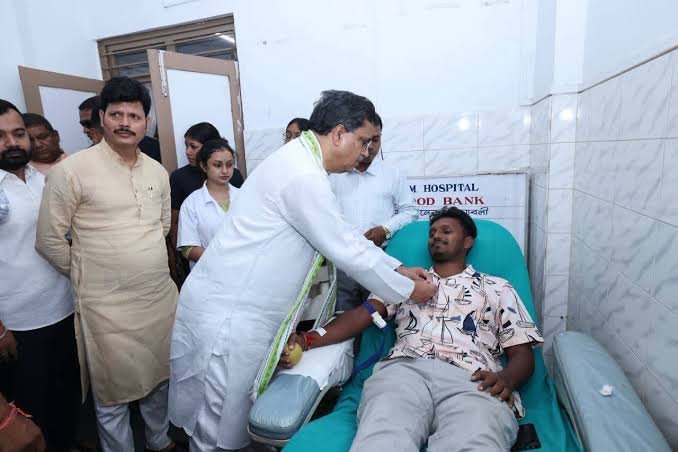
The Tripura voluntary blood donation movement received a fresh push from Chief Minister Manik Saha, who urged young people to participate more actively in blood donation programmes across the state. Saha made the appeal on September 11 while inaugurating a blood donation camp at the Netaji Subhas Regional Coaching Centre (NSRCC) in Agartala. The camp was organised by the Tripura Sports Council.
The Chief Minister described voluntary blood donation as a sign of humanity and said blood donation programmes had increasingly become part of Tripura’s social culture. Moreover, he called for greater participation from the younger generation and linked social welfare activities with efforts to build a healthier and drug-free society.
Loktak Lake Fishermen Schemes: Manipur Expands Support for Sustainable Floating Livelihoods
Tripura Voluntary Blood Donation Movement Gets Youth-Focused Appeal
Chief Minister Manik Saha’s latest appeal places young people at the centre of the Tripura voluntary blood donation campaign. Speaking at the NSRCC programme, he said the younger generation should come forward in greater numbers to strengthen the movement across the state.
Saha said blood donation programmes have become part of Tripura’s social culture. Therefore, he encouraged more people to participate rather than treating blood donation as an occasional activity. His remarks also reflected his broader emphasis on community organisations and youth groups taking part in social welfare programmes.
The Chief Minister connected voluntary blood donation with the broader values of humanity and social responsibility. Consequently, his message focused not only on maintaining blood supplies but also on encouraging young people to participate in activities that directly benefit other members of society.
The appeal comes after several similar statements from Saha during blood donation programmes throughout 2026. In July, he urged young people to participate actively in voluntary blood donation while inaugurating a camp organised by the Tripura Working Journalists Association at Agartala Press Club. He also called on social organisations to organise more camps.
In August, Saha again highlighted blood donation at community programmes in Agartala. He urged clubs and social organisations to organise additional camps and encouraged young people to participate in constructive activities.
NSRCC Camp Connects Sports and Social Service
The latest programme at NSRCC combined sports-related activities with a social welfare initiative. The Tripura Sports Council organised the blood donation camp, while Saha also unveiled marble statues of Netaji Subhas Chandra Bose and Swami Vivekananda at the venue.
Saha highlighted the ideals associated with both national figures, particularly their emphasis on patriotism and humanity. He said their values could guide society towards a more constructive direction.
Furthermore, the Chief Minister connected participation in sports and social welfare activities with the development of young people. He argued that greater youth involvement in such programmes could contribute to efforts to build a new and drug-free Tripura.
The sports component of the programme also reflected the government’s continuing effort to promote athletics and physical activity among young people. Saha said sports could contribute to socio-economic development and stressed the importance of both physical and mental strength for athletes.
He also pointed to Tripura sportspersons who have represented the state at national and international levels. Among those present at the event were Youth Affairs and Sports Department Secretary Tapas Roy, Agartala Municipal Corporation Mayor and MLA Dipak Majumdar, Padma Shri awardee Dipa Karmakar and Youth Affairs and Sports Department Director L. Darlong.
Thus, the NSRCC event brought together sport, youth participation and community service around a common public message. The blood donation camp provided the immediate social service component, while the Chief Minister used the occasion to encourage continued participation from youth and social organisations.
Government Focuses on Maintaining Blood Supplies
The latest Tripura voluntary blood donation appeal also reflects the government’s continuing focus on maintaining adequate blood supplies. Saha has repeatedly argued that voluntary donation should become a stronger part of social service in the state.
In May 2026, while inaugurating a voluntary blood donation camp organised by the Health and Family Welfare Department, Saha said there was no substitute for blood and stressed the need to prevent premature loss of life because of shortages. At that programme, he said the state had collected 44,309 units of blood during the 2025–26 financial year up to that point.
The Chief Minister also said the government was working to ensure adequate reserves in blood banks. He referred to improvements in hospital infrastructure and healthcare facilities while emphasising the importance of maintaining blood availability.
Earlier, in August 2025, the state government similarly highlighted the role of voluntary blood donation. An official Directorate of Information and Cultural Affairs release quoted Saha as saying that wider participation from people across society could help prevent shortages. The government also encouraged clubs and organisations to create a healthy competitive environment around blood donation camps.
The repeated emphasis suggests that authorities view community-based donation as an important component of maintaining blood availability. Moreover, involving clubs, youth groups and social organisations can expand the reach of awareness campaigns beyond hospitals and government institutions.
At the same time, blood donation programmes require appropriate medical supervision and screening. The Chief Minister previously noted that modern collection procedures and health checks are used during donation camps, including checks of parameters such as blood pressure and blood sugar.
These measures can help organisers maintain proper procedures and reassure potential donors about the safety of the donation process.
Clubs and Youth Groups Seen as Social Partners
The latest appeal also builds on the state’s broader effort to encourage clubs and youth organisations to take up social responsibilities. Saha has repeatedly said that clubs can strengthen their public credibility through activities such as blood donation, clothing distribution and tree plantation.
In August, the Chief Minister said clubs could increase their acceptability among residents by undertaking social activities. He also highlighted changes in club culture and the growing involvement of women in community programmes.
Similarly, while attending blood donation camps in Agartala earlier in August, Saha urged clubs and social organisations to organise more programmes. He said blood donation could save lives and encouraged wider community participation.
The approach places local organisations in an important position within the state’s social welfare network. Consequently, regular blood donation camps could become easier to organise when clubs, youth groups, sports bodies and other community organisations work with health authorities.
The Chief Minister’s latest statement therefore goes beyond a single camp. By asking young people to strengthen the movement, he is seeking broader and more sustained participation. If local organisations continue organising camps regularly, the campaign could become a recurring part of community activity across different districts.
However, the success of such a movement will ultimately depend on continued participation and effective coordination with health authorities. Regular donation campaigns need appropriate collection, testing, storage and distribution systems so that donated blood reaches patients when required.
Voluntary Donation Linked to Wider Social Responsibility
The Tripura voluntary blood donation campaign has increasingly become part of a wider message about social responsibility. Saha has described blood donation as an expression of humanity while encouraging young people to participate in sports and other constructive activities.
This broader approach gives community organisations multiple avenues for youth engagement. Sports, cultural programmes and social welfare activities can provide constructive platforms for young people while also encouraging them to contribute to society.
Furthermore, Saha has repeatedly connected youth participation with efforts to build a drug-free Tripura. At the NSRCC event, he said greater youth involvement in sports and social welfare activities could accelerate that objective.
The message also reflects the government’s emphasis on organised community participation. Rather than relying exclusively on government-run programmes, authorities have encouraged clubs and social organisations to conduct blood donation camps and other welfare initiatives.
Such participation can be particularly valuable because local organisations often have direct connections with residents. They can therefore help spread information about donation camps and encourage eligible community members to participate.
The latest NSRCC event consequently represents another step in a continuing campaign rather than an isolated announcement. Previous camps in Agartala and other parts of Tripura show that the Chief Minister has repeatedly used public events to encourage voluntary donation.
Conclusion
The Tripura voluntary blood donation movement has received another strong appeal from Chief Minister Manik Saha, who urged young people to participate more actively in blood donation programmes across the state. Speaking at the NSRCC in Agartala on September 11, Saha described voluntary blood donation as a sign of humanity and said such programmes had become part of Tripura’s social culture.
The event, organised by the Tripura Sports Council, also connected blood donation with sports, youth participation and social welfare. Moreover, Saha linked greater involvement in such activities with the broader objective of building a drug-free Tripura.
The Chief Minister’s repeated appeals throughout 2026 show continued government emphasis on voluntary blood donation. Earlier programmes also saw calls for clubs, social organisations and young people to organise and participate in donation camps.
The immediate challenge will be to turn these appeals into sustained participation across the state. Regular community camps, proper medical procedures and effective coordination with blood banks will remain important for maintaining reliable blood supplies.
FAQs
What did Manik Saha say about voluntary blood donation?
Chief Minister Manik Saha said voluntary blood donation is a sign of humanity and urged young people to participate in greater numbers to strengthen the movement across Tripura.
Where did Saha make the latest appeal?
He made the appeal at the Netaji Subhas Regional Coaching Centre in Agartala on September 11, 2026, while inaugurating a blood donation camp organised by the Tripura Sports Council.
Why is youth participation important in the Tripura voluntary blood donation movement?
Saha believes greater youth involvement can strengthen blood donation activities while encouraging young people to participate in constructive social welfare programmes.
Have clubs and social organisations also been encouraged to organise blood donation camps?
Yes. Saha has repeatedly called on clubs and social organisations to organise more blood donation programmes and contribute to community welfare.
What other activities did Saha connect with youth welfare?
At the NSRCC programme, Saha highlighted sports and social welfare activities and said stronger youth participation in such areas could contribute to efforts to build a drug-free Tripura.