


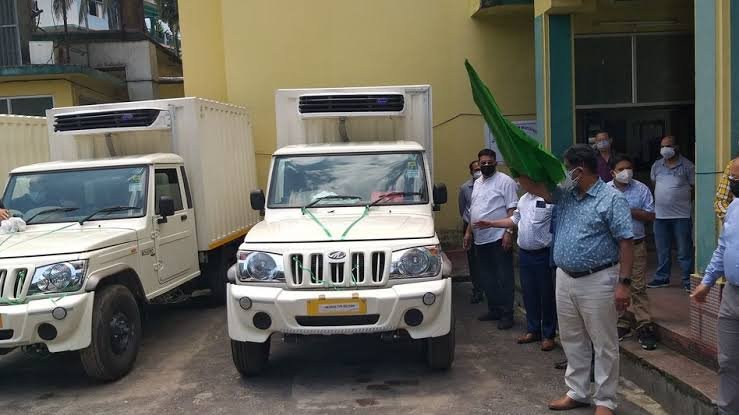
Gangtok organic logistics grid is gaining importance as Sikkim strengthens cold-chain and transportation support for farmers and organic producers. The state has already deployed refrigerated vehicles to help transport perishable farm produce, while the Agriculture Department continues to expand value-chain infrastructure under the Mission Organic Value Chain Development for North Eastern Region. These measures aim to reduce post-harvest losses and improve market access for producers.
The latest logistics efforts build on Sikkim’s long-running strategy of combining organic agriculture with better collection, storage, transportation and marketing facilities. Moreover, the state’s difficult terrain makes reliable transportation especially important for fruits, vegetables and other perishable products.
Loktak Lake Fishermen Schemes: Manipur Expands Support for Sustainable Floating Livelihoods
Gangtok Organic Logistics Grid Supports Perishable Produce
Sikkim’s Agriculture Department identifies refrigerated transport as part of the infrastructure supported under the Mission Organic Value Chain Development for North Eastern Region. The scheme provides subsidy support for refrigerated transport vehicles, cold storage and other facilities needed to connect organic producers with markets.
The department’s current infrastructure listings also include a refrigerator van operated by the Sikkim State Cooperative Supply and Marketing Federation, or SIMFED. The department additionally lists pack-house and storage facilities among the state’s agricultural marketing infrastructure.
Such facilities can play an important role for products that require controlled temperatures during transportation. Therefore, refrigerated vehicles can help maintain product quality between collection points and markets.
Sikkim’s geography adds another layer to the challenge. Farmers often operate in hilly areas, while major markets and distribution centres remain concentrated in larger towns. Consequently, efficient logistics can become an important part of the farm-to-market chain.
The state’s Agriculture Department also identifies value addition and post-harvest management among its priorities for strengthening sustainable agriculture.
Refrigerated Vans Strengthen Farmer Market Access
Sikkim has used refrigerated vehicles for agricultural transportation for several years. In April 2020, the Department of Horticulture distributed four refrigerated vans to self-help groups and SIMFED for transporting farmers’ produce. The vehicles were intended to collect produce from farming clusters and support marketing across districts.
At that time, the government stated that each refrigerated vehicle provided to the participating organisations had a storage capacity of around 1,300 kilograms. The initiative formed part of a wider effort to strengthen marketing of farmers’ produce.
Earlier agricultural initiatives also included vehicles for transporting certified organic produce under the Paramparagat Krishi Vikas Yojana. A Sikkim government publication reported that nine such vehicles were flagged off for organic farming clusters, with farmers able to use them for transporting produce to markets at a nominal charge.
Therefore, the state’s current logistics approach builds on an established model rather than starting from scratch. Over time, transportation support has become part of Sikkim’s broader organic value-chain infrastructure.
Moreover, the availability of shared transportation can reduce the need for individual farmers or small producer groups to arrange separate vehicles for every market trip. This can make organised aggregation more practical.
Organic Value Chain Infrastructure Expands
The Gangtok organic logistics grid also fits into Sikkim’s wider value-chain development strategy. The Mission Organic Value Chain Development for North Eastern Region aims to connect organic growers with consumers while supporting infrastructure from production and certification through collection, processing and marketing.
Under the scheme, eligible infrastructure includes aggregation and grading units, integrated processing units, pack houses, transport vehicles, refrigerated vans and cold-storage facilities. Subsidy support varies according to the type of facility and implementing organisation.
Sikkim’s Agriculture Department identifies the Sikkim Organic Farming Development Agency as the state lead agency for implementing the mission. The department reports that the programme has supported thousands of beneficiaries and farmer producer organisations across different phases.
Furthermore, the department continues to focus on post-harvest management, farm mechanisation and value addition. These areas are important because producing organic crops is only one part of building a viable agricultural economy.
A reliable supply chain needs to move produce efficiently after harvest. Consequently, collection centres, pack houses, storage facilities and refrigerated vehicles can work together to improve the overall agricultural marketing system.
Gangtok Remains an Important Distribution Point
Gangtok has an important role in Sikkim’s agricultural logistics network because it connects producers and consumers within the state’s major urban market. The Agriculture Department operates from Krishi Bhawan at Tadong, while SIMFED and other agencies participate in agricultural marketing and distribution activities.
The department also identifies Rangpo as an important storage and wholesale location, with government godowns and other facilities available for agricultural distribution. A refrigerator van operated by SIMFED forms part of the listed infrastructure.
This network can help connect production areas with larger markets. Additionally, cold-chain facilities can provide greater flexibility when farmers need to transport perishable goods over longer distances.
The need for such infrastructure is particularly relevant in Sikkim because the state’s terrain limits the expansion of cultivated land and can make transportation more challenging. The government therefore emphasises sustainable production alongside modern agricultural technology and post-harvest management.
At the same time, improved logistics can complement efforts to increase farm productivity. If farmers can move more produce to markets while maintaining quality, value-chain efficiency can improve.
Sikkim Builds a Wider Organic Distribution Network
The logistics initiative forms part of a broader effort to strengthen Sikkim’s position as an organic farming state. The Agriculture Department says its programmes seek to improve productivity through organic crop management, irrigation, mechanisation, value addition and post-harvest management.
Recent developments also show continued investment in agricultural technology. In September 2026, the department issued an engagement notice for establishing a state-of-the-art organic food testing laboratory at Majhitar in Pakyong district.
Meanwhile, ICAR and the Sikkim government continue to promote integrated organic farming models. In September 2026, ICAR highlighted a model in Lingdong village, Dzongu, that combines crop diversification with dairy, fisheries, poultry and horticulture.
These developments show that agricultural policy in Sikkim increasingly covers the full production chain. Farmers need access not only to cultivation support but also to certification, collection, processing, transportation, testing and markets.
Therefore, refrigerated transportation can serve as one important link within a much larger system. Its effectiveness will depend on coordination between farmers, producer organisations, government departments, storage facilities and buyers.
Conclusion
The Gangtok organic logistics grid reflects Sikkim’s continuing efforts to strengthen the infrastructure connecting organic farmers with consumers and markets. Refrigerated vehicles, storage facilities and pack houses can help improve the handling of perishable agricultural produce while supporting the state’s wider organic value-chain strategy.
Sikkim has already used refrigerated vans through government departments, self-help groups and SIMFED, demonstrating the state’s longer-term focus on improving agricultural transportation.
However, transportation represents only one part of the agricultural value chain. Continued investment in collection, processing, testing, storage and market access will remain important for ensuring that farmers can gain greater value from organic production.
FAQs
What is the Gangtok organic logistics grid?
It refers to the network of transportation, storage and market-support infrastructure helping Sikkim’s organic farmers move agricultural produce from production areas toward consumers and markets.
Why are refrigerated vans important for Sikkim farmers?
Refrigerated vehicles can help maintain the quality of perishable agricultural produce during transportation, particularly when produce travels from remote farming areas to larger markets.
Does Sikkim provide subsidy support for refrigerated vehicles?
Yes. Under MOVCD-NER, the Agriculture Department lists subsidy support for refrigerated transport vehicles as part of organic value-chain infrastructure.
Which organisation operates a refrigerator van in Sikkim?
The Agriculture Department’s current infrastructure listing identifies a refrigerator van operated by SIMFED.
How does logistics support Sikkim’s organic agriculture?
Better transportation, storage and processing infrastructure can connect farmers with markets while supporting post-harvest management and value addition, which are key components of the state’s organic agriculture strategy.