

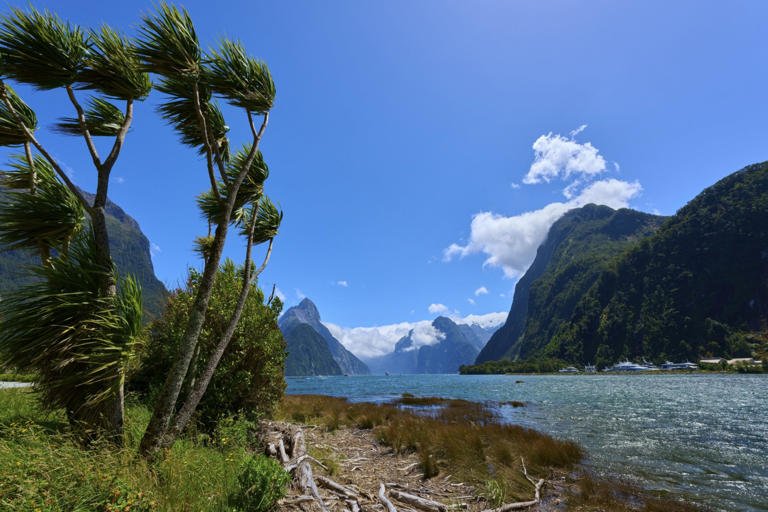
A powerful earthquake struck New Zealand’s South Island on Thursday, prompting authorities to issue an immediate tsunami warning and evacuation orders for several coastal areas. The quake, initially reported as having a magnitude of 6.3 before being revised to 5.9 by some monitoring agencies, occurred near the tourist town of Te Anau in the Fiordland region, sending strong tremors across southern parts of the country.
The earthquake was felt widely across Otago, Southland and Canterbury, with thousands of residents reporting strong shaking. Emergency authorities responded swiftly, warning coastal communities of the potential tsunami threat while assessing the impact of the seismic event.
Immediate Evacuation Orders Issued
Following the earthquake, New Zealand’s emergency management authorities urged people in vulnerable coastal areas to move immediately to higher ground.
Residents and visitors in areas stretching from Milford Sound to Puysegur Point were advised to evacuate beaches, harbours, marinas and low-lying coastal zones due to the possibility of dangerous tsunami waves and rapidly changing sea conditions. Officials stressed that people should not wait for visible signs of a tsunami before evacuating.
Emergency services also urged the public to avoid sightseeing along the coastline and instead follow official instructions until the threat had passed.
Authorities Monitor Tsunami Threat
New Zealand’s National Emergency Management Agency (NEMA) closely monitored sea-level data after the earthquake to determine whether tsunami waves had been generated.
While no significant tsunami activity was detected during the initial monitoring period, authorities warned that strong and unusual ocean currents could continue to pose risks even if large waves failed to materialise. As a result, people were advised to remain away from beaches, estuaries, rivers and coastal waters until official updates confirmed it was safe to return.
Officials emphasised that tsunami-related hazards can persist for several hours after a major earthquake.
Aftershocks Follow Main Quake
Several aftershocks were recorded following the initial earthquake, adding to concerns among residents and emergency responders.
The aftershocks, ranging between moderate magnitudes, were felt across parts of the South Island and prompted authorities to continue monitoring the region for any additional seismic activity. Experts noted that aftershocks are a normal occurrence following significant earthquakes and advised the public to remain prepared for further tremors.
No immediate reports of major structural damage or casualties were released as emergency assessments continued.
Infrastructure Inspections Underway
Authorities initiated inspections of critical infrastructure following the earthquake to ensure public safety.
Roads, bridges and other transport infrastructure in affected regions were examined for possible damage, while motorists were advised to drive cautiously due to the risk of rockfalls and debris, particularly in mountainous areas. Some bridges were temporarily closed as engineers carried out safety inspections before allowing normal traffic to resume.
Emergency management officials also warned people to stay alert around hillsides where landslides could occur following the strong ground shaking.
New Zealand’s High Earthquake Risk
New Zealand is one of the world’s most earthquake-prone countries because it lies along the Pacific Ring of Fire, where the Pacific and Australian tectonic plates interact.
The country experiences thousands of earthquakes each year, although only a small proportion cause significant damage. The latest earthquake has once again highlighted the importance of New Zealand’s emergency preparedness systems, including rapid tsunami alerts and evacuation protocols designed to protect coastal communities.
Experts continue to encourage residents to maintain emergency supplies and remain familiar with evacuation routes in the event of future seismic activity.
Tsunami Warning Later Downgraded
After continued monitoring of sea conditions, authorities later downgraded the tsunami warning to an advisory after detecting no significant tsunami waves.
However, officials maintained warnings regarding hazardous sea conditions, advising people to avoid entering the water because unusually strong currents could remain dangerous for several hours. Emergency agencies stated they would continue monitoring the situation and issue further updates if conditions changed.
Authorities Urge Continued Vigilance
Although the immediate tsunami threat eased, emergency officials urged residents and visitors to remain cautious as aftershocks and hazardous coastal conditions could continue.
The earthquake served as another reminder of New Zealand’s vulnerability to seismic events and the importance of responding quickly to official warnings. Authorities emphasised that immediate evacuation to higher ground remains the safest course of action whenever a strong coastal earthquake is followed by a tsunami alert. Emergency agencies continue to assess the impact of the quake while monitoring for further seismic activity and ensuring the safety of affected communities.