

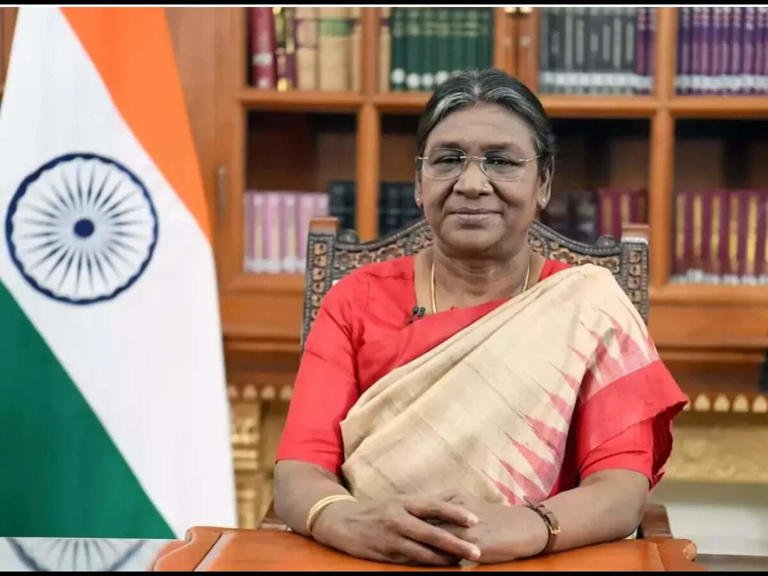
President Droupadi Murmu has emphasized the need for universities to create a harmonious balance between Indian culture, traditions, and modern education, stating that higher educational institutions must prepare students to meet contemporary global challenges while remaining rooted in the country’s rich civilizational heritage. Addressing an academic gathering, the President highlighted the vital role universities play in shaping future generations and fostering a holistic approach to education.
The President noted that education is not merely a tool for acquiring knowledge and professional skills but also a means of preserving cultural values, promoting ethical conduct, and nurturing responsible citizens. She stressed that institutions of higher learning must ensure that students develop a strong understanding of India’s traditions and cultural identity alongside scientific temper, innovation, and technological competence.
Her remarks come at a time when educational reforms and discussions on the future of higher education are gaining prominence across the country. The President’s message reflected a broader vision of creating an education system that combines the wisdom of India’s past with the opportunities of the future.
Education Beyond Academic Excellence
During her address, President Murmu emphasized that universities should strive to provide education that extends beyond academic achievement. While professional competence and technical expertise remain important, students should also be equipped with values, ethics, and a sense of social responsibility.
According to the President, higher education institutions have a duty to nurture individuals who are not only successful professionals but also responsible citizens committed to the welfare of society. She observed that education should contribute to the development of character and promote qualities such as integrity, compassion, and respect for diversity.
The President noted that India’s educational tradition has historically focused on the holistic development of individuals, combining intellectual growth with moral and spiritual enrichment.
Importance of Preserving Cultural Heritage
President Murmu highlighted India’s rich cultural heritage as one of the country’s greatest strengths. She stated that universities have an important role in preserving and promoting this heritage by encouraging students to engage with India’s history, literature, philosophy, arts, and traditional knowledge systems.
She emphasized that cultural awareness helps students develop a deeper understanding of their identity and strengthens their connection to the nation’s values and traditions. Such understanding, she noted, can contribute to greater confidence and a stronger sense of belonging.
The President encouraged educational institutions to create opportunities for students to explore and appreciate India’s diverse cultural traditions while fostering respect for different perspectives and communities.
Integrating Tradition with Modern Knowledge
A key theme of the President’s address was the need to integrate traditional wisdom with modern knowledge. She observed that India’s ancient knowledge systems contain valuable insights in areas such as philosophy, health, environment, mathematics, and social organization.
At the same time, she stressed the importance of embracing scientific research, technological advancement, and innovation. Universities, she said, should create learning environments where traditional knowledge and modern disciplines complement each other rather than exist in isolation.
By combining the strengths of both approaches, educational institutions can provide students with a broader and more balanced understanding of the world.
Role of Universities in Nation Building
President Murmu underscored the critical role universities play in nation-building. She noted that institutions of higher learning are not only centers of education but also hubs of research, innovation, and social transformation.
According to the President, universities have a responsibility to contribute to national development by producing skilled professionals, generating new knowledge, and addressing societal challenges. Their influence extends beyond campuses and shapes the future direction of the country.
She encouraged educational leaders and faculty members to remain committed to excellence while ensuring that education remains inclusive, accessible, and relevant to national priorities.
Encouraging Innovation and Research
The President emphasized that modern universities must foster a culture of innovation, creativity, and research. In an increasingly competitive and technology-driven world, students need opportunities to develop critical thinking and problem-solving skills.
She highlighted the importance of research in addressing contemporary challenges related to healthcare, environmental sustainability, agriculture, technology, and economic development. Universities, she noted, should actively encourage interdisciplinary collaboration and innovation.
At the same time, President Murmu stressed that technological progress should be guided by ethical considerations and societal needs. Innovation should ultimately contribute to human welfare and sustainable development.
Preparing Students for Global Opportunities
The President observed that higher education institutions must prepare students to compete and collaborate in a globalized world. As economies and societies become increasingly interconnected, graduates need skills that enable them to succeed in diverse professional and cultural environments.
She encouraged universities to adopt global best practices while maintaining a strong foundation in Indian values and traditions. According to the President, students who are grounded in their cultural identity while possessing modern skills are better equipped to navigate global opportunities.
Such an approach, she argued, can help create confident and capable individuals who contribute positively both within India and on international platforms.
Strengthening Ethical and Social Values
President Murmu emphasized that education should reinforce ethical values and social responsibility. Universities, she said, must create an environment that encourages honesty, discipline, empathy, and respect for others.
She noted that academic success alone is insufficient if it is not accompanied by ethical conduct and a commitment to the common good. Educational institutions should therefore focus on nurturing socially conscious individuals who are willing to contribute to community development and nation-building.
The President highlighted the importance of service-oriented learning and community engagement as tools for fostering civic responsibility among students.
Alignment with National Education Goals
The President’s remarks align with broader educational reforms aimed at transforming India’s higher education landscape. Policymakers have increasingly emphasized multidisciplinary learning, skill development, innovation, and the integration of Indian knowledge systems into education.
Officials believe that blending cultural heritage with modern education can help create a more holistic and relevant learning experience. Such an approach is expected to support national development goals while preserving the country’s unique identity.
President Murmu noted that educational institutions should actively participate in this transformation by embracing innovation and continuously adapting to emerging needs and opportunities.
Building Future-Ready Citizens
A central message of the President’s address was the need to prepare students for the future while ensuring that they remain connected to their roots. Universities must equip young people with the knowledge, skills, and values required to thrive in a rapidly changing world.
She stressed that future-ready citizens should possess technological competence, adaptability, and a spirit of innovation while also demonstrating respect for cultural traditions and ethical principles.
By combining modern education with India’s rich intellectual and cultural heritage, universities can help students become well-rounded individuals capable of addressing complex challenges and contributing meaningfully to society.
Looking Ahead
President Droupadi Murmu’s call for universities to blend Indian culture and tradition with modernity highlights an important vision for the future of higher education in India. Her remarks underscore the belief that educational institutions must serve as bridges between the nation’s rich past and its aspirations for the future.
The emphasis on cultural preservation, innovation, ethical values, and global readiness reflects a holistic approach to education that seeks to prepare students for both professional success and responsible citizenship. Universities are being encouraged to create learning environments that nurture intellectual curiosity while reinforcing cultural and moral foundations.
As India’s higher education sector continues to evolve, the President’s message serves as a reminder that true educational excellence lies in achieving a balance between tradition and progress. By embracing both heritage and modernity, universities can play a transformative role in shaping future generations and contributing to the nation’s development journey.