

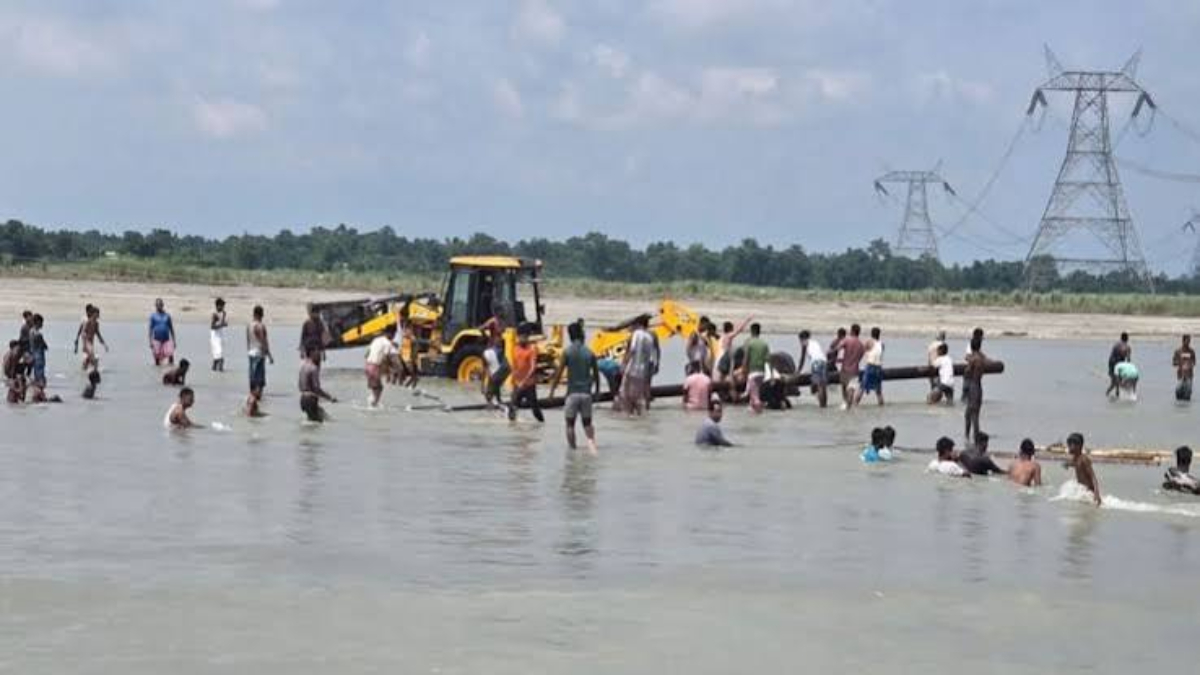
Assam floods continue to pose a serious challenge across the state, with six districts still reeling under the impact of widespread inundation. According to the latest report from the Assam State Disaster Management Authority (ASDMA), more than 4.45 lakh people remain affected, while the Dhansiri (South) River continues to flow above the danger level at Numaligarh in Golaghat district. Although authorities have reported no fresh fatalities in the last 24 hours, extensive damage to crops, infrastructure, and livelihoods continues to hamper normal life.
Assam floods continue to affect six districts
The latest ASDMA bulletin shows that six districts remain affected by the ongoing floods—Charaideo, Sivasagar, Jorhat, Golaghat, Nagaon, and Kamrup (Metropolitan). Floodwaters have submerged 631 villages spread across 21 revenue circles, disrupting transportation, education, and essential public services.
Among the worst-hit districts, Charaideo remains at the top, with around 1.88 lakh people affected. Sivasagar follows with approximately 1.44 lakh affected residents, while Jorhat has over 74,000 people impacted by the continuing deluge. The flood situation has improved marginally compared to previous days, but thousands of families are still struggling with waterlogged homes and damaged infrastructure.
Dhansiri (South) river remains above danger level
One of the major concerns continues to be the Dhansiri (South) River, which is flowing above the danger level at Numaligarh in Golaghat district. While no river has crossed its highest flood level, authorities remain on alert as continued rainfall in upstream catchment areas could worsen the situation.
Officials are closely monitoring river levels and weather forecasts while coordinating with district administrations to ensure timely evacuation if conditions deteriorate. Emergency response teams have also been instructed to remain prepared for any sudden rise in water levels.
Relief and rescue operations intensified
The state government, along with the National Disaster Response Force (NDRF), State Disaster Response Force (SDRF), civil defence personnel, and local administration, continues extensive rescue and relief operations across affected regions.
According to official data, 90 relief camps and 94 relief distribution centres are currently operational, providing shelter, food, drinking water, and medical assistance to nearly 28,700 displaced people. Around 67 rescue boats have been deployed to assist stranded residents in inaccessible areas.
Authorities are also supplying essential commodities, while health teams are conducting regular medical camps to prevent outbreaks of waterborne diseases in flood-affected communities.
Agriculture suffers heavy losses
The floods have dealt a severe blow to Assam’s agricultural sector. Official figures indicate that more than 37,139 hectares of cropland remain submerged, threatening the livelihoods of thousands of farmers during the crucial cultivation season.
Besides crop damage, thousands of livestock have also been affected, adding to the economic burden on rural households. Roads, embankments, bridges, and public infrastructure have sustained considerable damage in several districts, making transportation and relief delivery more challenging.
Overall flood situation shows slight improvement
While the Assam floods continue to impact lakhs of people, officials note that the overall situation has shown signs of gradual improvement compared to previous days. The number of affected people has reduced from over 5.24 lakh to around 4.45 lakh as floodwaters have slowly started receding in some areas. However, authorities caution that recovery remains fragile and dependent on weather conditions.
The cumulative death toll from this year’s floods remains at 68, with no fresh fatalities reported during the latest reporting period. Despite this positive development, displaced families continue to require sustained humanitarian support and rehabilitation assistance.
Authorities urge continued vigilance
The India Meteorological Department and disaster management authorities continue to monitor rainfall patterns closely as the monsoon season remains active across the region. Residents living in vulnerable riverbank areas have been advised to remain alert and follow evacuation instructions issued by local administrations.
Officials have also appealed to the public to avoid crossing submerged roads, stay away from overflowing rivers, and rely only on verified information from government agencies. Rescue teams remain on standby to respond swiftly to any emergency arising from changing weather conditions.
As Assam battles another challenging monsoon season, the focus remains on protecting lives, ensuring timely relief distribution, and accelerating recovery efforts for affected communities. With thousands still displaced and significant agricultural losses reported, coordinated efforts from government agencies, disaster response teams, and local communities will remain crucial until floodwaters fully recede.
Crucial Push: Mizoram ASF Disaster Status Demand Gains Momentum After NDMA Meeting