

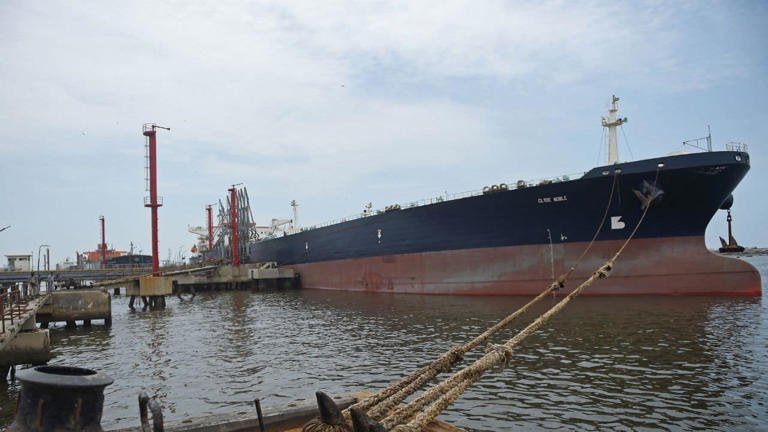
A possible waiver from the United States could help India absorb Russian crude oil shipments worth about $2.99 billion that are currently stranded at sea due to disruptions linked to the Gulf crisis. Officials and industry experts believe such a waiver may allow Indian refiners to proceed with purchases without facing sanctions-related complications.
The situation has drawn attention to global energy supply chains as geopolitical tensions affect shipping routes and oil trade.
Read More: Assam Hosts State-Level Viksit Bharat Youth Parliament
Key Facts
- Value of Oil: Approximately $2.99 billion
- Oil Source: Russia
- Issue: Oil shipments stranded at sea due to Gulf crisis
- Potential Solution: Possible US waiver for India
- Stakeholders: Indian refiners, global energy markets
- Impact: Could stabilize oil supply and energy prices
Russian oil shipments stranded amid Gulf tensions
Several shipments of Russian crude oil valued at nearly $2.99 billion are currently stranded at sea due to disruptions linked to the Gulf crisis. The situation has created uncertainty in global energy markets and raised concerns among oil importers.
Shipping disruptions, insurance complications, and geopolitical tensions have slowed the movement of these cargoes. As a result, tankers carrying Russian oil have remained at sea while traders and buyers wait for clarity.
India, one of the world’s largest importers of crude oil, could play an important role in absorbing these shipments.
Possible US waiver could ease trade concerns
Energy market analysts say a possible waiver from the United States could help India proceed with the purchase of the stranded Russian oil. Such a waiver may allow transactions without triggering sanctions-related restrictions.
Since the conflict involving Russia and Western countries began, energy trade has become increasingly complex. Financial restrictions and insurance requirements have created challenges for global oil shipments.
A waiver would provide clarity for Indian refiners and international shipping companies involved in the transactions.
India remains major buyer of Russian oil
India has emerged as one of the largest buyers of Russian crude oil in recent years. The country increased imports from Russia after discounted oil became available in global markets.
Indian refiners have benefited from competitive pricing while ensuring stable fuel supply for domestic consumption. These purchases have also helped maintain energy security in a volatile global market.
Experts say absorbing the stranded cargoes could help India maintain supply stability and reduce disruptions.
Impact of Gulf crisis on energy trade
The Gulf region remains one of the most important global hubs for oil transportation. Any instability in the region can affect shipping routes and supply chains.
The current crisis has raised concerns about tanker movements and maritime safety. Insurance costs and logistical challenges have increased due to the uncertainty.
These developments have affected the movement of oil shipments, including Russian crude currently waiting at sea.
Global oil markets closely watching situation
Energy markets around the world are closely monitoring the developments related to the stranded cargoes and potential US policy decisions.
If India absorbs the shipments, it could ease pressure on global oil supply chains. Analysts say this may also help stabilize prices in international markets.
However, uncertainty remains as geopolitical tensions continue to influence energy trade.
Indian refiners evaluating options
Indian refining companies are assessing the situation carefully before making decisions regarding the stranded shipments. Refiners must consider factors such as logistics, insurance, and payment mechanisms.
Government authorities and industry stakeholders are also monitoring developments related to the possible US waiver.
A favorable policy decision could allow Indian refiners to proceed with purchases while maintaining compliance with international regulations.
Importance of energy security for India
Energy security remains a critical priority for India as the country continues to experience strong economic growth and rising fuel demand.
Stable crude oil supply ensures that refineries can operate efficiently and produce fuels required for transportation, industry, and households.
India has therefore diversified its sources of oil imports to reduce risks related to geopolitical disruptions.
Broader geopolitical implications
The situation highlights the complex relationship between geopolitics and global energy markets. Decisions made by major powers often influence international trade flows.
The potential US waiver for India reflects the strategic importance of maintaining stable energy supplies in global markets.
Analysts say diplomatic discussions and policy decisions will play a key role in determining how the situation evolves.
Location context
India is the world’s third-largest consumer of crude oil and relies heavily on imports to meet its energy needs. Developments affecting global oil shipments therefore have a direct impact on the country’s energy strategy.
At the same time, the Gulf region remains a crucial transit route for global oil transportation. Any disruption in this region can affect energy markets worldwide.
FAQ
Why is Russian oil worth $2.99 billion stranded at sea?
The shipments are stranded due to disruptions linked to the Gulf crisis and complications in shipping and insurance.
How could the US waiver help India?
A waiver could allow Indian refiners to purchase the oil without facing sanctions-related restrictions.
Why does India import Russian oil?
India buys Russian oil because it offers competitive prices and helps maintain stable fuel supply.
What impact could this have on global oil markets?
If India absorbs the shipments, it may ease supply pressure and help stabilize global oil prices.
Read More: Tripura BJP Holds Core Committee Meet on Dharmanagar By-Poll, ADC Elections