

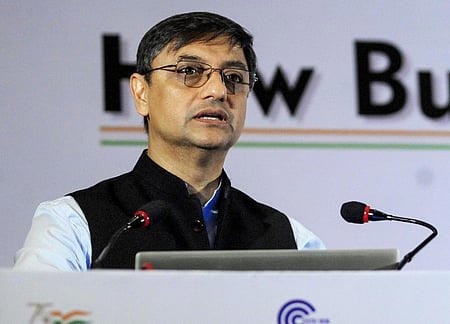
Economist and member of the Prime Minister’s Economic Advisory Council, Sanjeev Sanyal, has said that the vision of a Viksit Bharat (Developed India) cannot be realised without the transformation of Kolkata into a modern, globally competitive city. Emphasising the historic and economic significance of the eastern metropolis, Sanyal remarked that “Viksit Bharat needs a Viksit Kolkata,” calling for renewed attention to the city’s infrastructure, economy, innovation, and urban development.
He observed that Kolkata has historically played a central role in India’s economic, cultural, and intellectual growth. Revitalising the city, he said, would not only benefit West Bengal but also contribute significantly to the country’s broader aspirations of becoming a developed nation.
The remarks underline the growing focus on balanced regional development as India advances towards its long-term economic goals.
Kolkata’s Historic Role in Nation Building
Sanyal highlighted Kolkata’s unique place in India’s history, describing it as one of the country’s oldest metropolitan centres and a city that has made immense contributions to commerce, education, literature, science, and industry.
For decades, Kolkata served as a major commercial gateway to eastern and northeastern India while also emerging as a centre of intellectual thought, financial services, manufacturing, and cultural excellence.
According to Sanyal, the city’s historical strengths provide a solid foundation for future growth if supported by modern infrastructure, investment-friendly policies, and long-term urban planning.
He noted that restoring Kolkata’s economic dynamism would strengthen India’s overall growth trajectory.
Urban Development Central to Viksit Bharat Vision
Sanyal stressed that India’s ambition of becoming a developed nation depends heavily on the transformation of its major cities into globally competitive economic hubs. Well-planned urban centres generate employment, encourage innovation, attract investment, and improve the quality of life for residents.
He observed that cities like Kolkata possess enormous potential due to their skilled workforce, educational institutions, strategic location, and rich industrial heritage.
Modernising urban infrastructure, improving public services, strengthening transportation networks, and encouraging sustainable development are essential components of this transformation.
According to him, urban development must remain a key pillar of the Viksit Bharat vision.
Need for Infrastructure Modernisation
One of the key themes highlighted by Sanyal was the importance of infrastructure development. He noted that modern transport systems, efficient logistics, quality public utilities, digital connectivity, and sustainable urban planning are fundamental for enhancing competitiveness.
Improved infrastructure enables businesses to operate more efficiently while attracting domestic and international investment.
Sanyal emphasised that investments in roads, metro networks, ports, airports, water supply, sanitation, housing, and digital infrastructure can significantly improve economic productivity and quality of life.
He stated that infrastructure development creates a strong foundation for long-term economic expansion.
Economic Potential of Eastern India
The economist also highlighted Kolkata’s strategic position as the commercial gateway to eastern and northeastern India. Strengthening Kolkata’s economy, he said, would have positive spillover effects across neighbouring states by improving trade, logistics, industrial activity, and regional connectivity.
The city’s location offers significant opportunities for expanding commerce with neighbouring countries and enhancing India’s engagement with eastern markets.
Sanyal observed that eastern India possesses substantial untapped economic potential in manufacturing, logistics, services, technology, tourism, and exports.
Unlocking these opportunities requires coordinated investments and effective policy implementation.
Innovation and Entrepreneurship
Sanyal emphasised the importance of fostering innovation and entrepreneurship as drivers of economic growth. He noted that Kolkata has historically produced outstanding scholars, scientists, entrepreneurs, and innovators, making it well positioned to emerge as a leading centre for knowledge-based industries.
Strengthening start-up ecosystems, promoting research institutions, encouraging technology development, and supporting young entrepreneurs can contribute significantly to the city’s economic revival.
He observed that innovation-driven growth creates high-quality employment opportunities while improving productivity across multiple sectors.
The city’s educational and research institutions can play a crucial role in supporting this transformation.
Creating Employment Opportunities
A developed Kolkata, according to Sanyal, would generate substantial employment opportunities across industries including manufacturing, information technology, financial services, tourism, logistics, healthcare, education, and creative sectors.
Economic growth supported by infrastructure development and investment can create jobs while encouraging skilled professionals to remain in or return to the city.
He highlighted the importance of creating an enabling business environment that encourages private investment, industrial expansion, and entrepreneurship.
Employment generation remains central to achieving inclusive and sustainable development.
Sustainable Urban Growth
Sanyal also underlined the need for sustainable urban development that balances economic progress with environmental responsibility. He stressed the importance of preserving green spaces, improving public transport, enhancing waste management systems, promoting energy efficiency, and protecting water resources.
Sustainable cities, he said, are more resilient, attractive to investors, and capable of delivering better living standards for their residents.
The integration of smart technologies, digital governance, and environmentally responsible planning can help Kolkata address future urban challenges more effectively.
Such measures align closely with India’s broader sustainable development objectives.
Collective Effort Needed for Transformation
The economist observed that transforming Kolkata into a globally competitive city requires cooperation among governments, businesses, educational institutions, civil society organisations, and citizens.
Long-term planning, policy continuity, infrastructure investments, and public participation are essential for achieving sustainable urban development.
Sanyal stressed that every stakeholder has an important role to play in building a city capable of contributing meaningfully to India’s aspiration of becoming a developed nation.
He expressed confidence that Kolkata possesses the talent, heritage, and potential necessary to achieve this transformation.
A Developed Kolkata for a Developed India
Sanjeev Sanyal’s assertion that “Viksit Bharat needs a Viksit Kolkata” underscores the critical role the city can play in India’s long-term economic and developmental ambitions. By focusing on infrastructure modernisation, innovation, investment, employment generation, and sustainable urban planning, Kolkata has the potential to reclaim its position as one of India’s leading economic and cultural centres.
As India advances towards the goal of becoming a developed nation, balanced regional growth and the revitalisation of major metropolitan centres will remain essential. Sanyal’s vision highlights the importance of leveraging Kolkata’s historical strengths while embracing modern development strategies that promote economic competitiveness, inclusive growth, and improved quality of life. A stronger Kolkata, he suggested, would not only benefit West Bengal but also contribute significantly to the broader vision of a prosperous and developed India.