

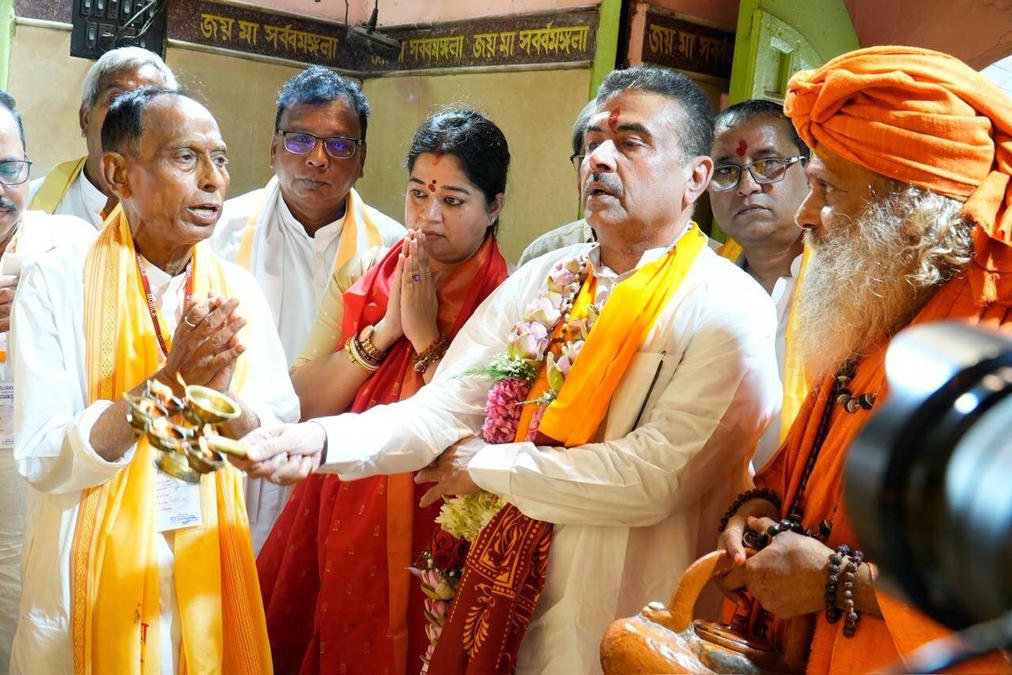
West Bengal Chief Minister Suvendu Adhikari has announced a series of measures aimed at supporting farmers across the state. The announcements include a Rs 2 per unit power subsidy for agricultural electricity and a minimum support price of Rs 2,700 per quintal for paddy.
Adhikari made the announcements during an administrative review meeting in East Burdwan on September 25. The measures are expected to provide financial relief to farmers by reducing irrigation costs and improving returns from paddy procurement.
Rs 2 Per Unit Power Subsidy for Farmers
Under the new measure, nearly four lakh farmers will receive a Rs 2 per unit subsidy on electricity used for agricultural purposes.
According to Adhikari, the subsidy could provide annual savings of around Rs 25,000 to Rs 30,000 for some farmers. The state government will allocate an additional Rs 300 crore from its budget for the scheme.
The subsidy is mainly aimed at reducing the cost of electricity used for irrigation. Therefore, it could provide support to farmers who depend on electric pumps for cultivation.
Paddy Procurement at Rs 2,700 Per Quintal
The Chief Minister also announced that the state government will procure paddy from farmers at Rs 2,700 per quintal.
The government plans to purchase the entire quantity of paddy that farmers want to sell. However, the announced rate specifically applies to farmers owning up to five acres of land, according to reports.
In addition, farmers selling 100 quintals of paddy will receive an extra incentive of Rs 20,000, according to the announcement.
Government Promises Direct Paddy Procurement
The government has also said that there will be no upper limit on the quantity of paddy it will procure.
Furthermore, Adhikari said the procurement process would not involve middlemen or agents. The government plans to purchase paddy directly from farmers.
This is particularly significant for farmers who depend on procurement channels after harvesting. Direct procurement could reduce their dependence on intermediaries during the selling process.
PM-Kisan Support to Rise to Rs 9,000
Along with the electricity subsidy and paddy procurement measures, Adhikari announced an increase in state support linked to PM-Kisan.
Farmers currently receive Rs 6,000 annually under the central PM-Kisan Samman Nidhi scheme. The state government will add Rs 3,000, taking the total annual assistance to Rs 9,000, according to the Chief Minister.
Meanwhile, the state government plans to reassess beneficiaries under the Krishak Bandhu scheme by September 30.
Special Package Planned for Potato Growers
The government also announced plans for potato farmers. Adhikari said a special package for potato growers would be announced before the next cultivation season.
He said the government would also provide subsidised fertilisers to potato growers. Farmers generally begin preparing their land in December, while cultivation starts in January.
Therefore, the proposed package is expected to be announced before the main cultivation period begins.
Measures Announced During East Burdwan Visit
The announcements came during Adhikari’s visit to East Burdwan, one of West Bengal’s major agricultural regions. The district is widely associated with paddy cultivation and is often described as the state’s rice bowl.
During the visit, the Chief Minister also reviewed development and administrative issues in the district. In addition, he spoke about measures related to employment, welfare schemes and infrastructure.
The farmer-focused announcements formed a major part of the visit. They covered electricity costs, crop procurement, direct financial assistance and support for potato cultivation.
Focus on Agricultural Support
The latest measures combine support for farm inputs with assistance linked to crop sales.
On one hand, the electricity subsidy aims to reduce irrigation costs. On the other hand, the higher paddy procurement price aims to provide farmers with a specified return for their produce.
Moreover, the additional PM-Kisan support would increase direct financial assistance to eligible farmers. Together, these measures form part of the state government’s announced approach to agricultural support.
The implementation of the schemes, including eligibility and procurement arrangements, will determine how farmers access the announced benefits.