

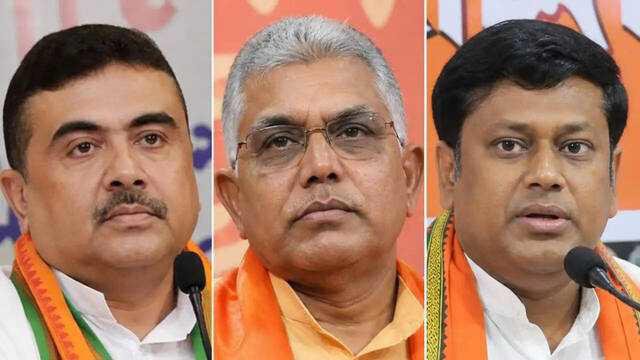
With the conclusion of the West Bengal elections, attention has swiftly shifted to one crucial question: who will be the next chief minister of the state? Political circles are abuzz with speculation as parties evaluate their positions and leadership choices.
The contest for the top post has gained momentum amid evolving political dynamics. While the results have shaped the immediate narrative, the leadership decision will play a defining role in determining the state’s governance trajectory.
Several names have emerged as key contenders, reflecting both continuity and potential change. As discussions intensify, the focus remains on experience, political influence, and public support.
Read More: Arunachal CM Highlights Tourism, Hydropower at ICPP Conference
Mamata Banerjee remains a central figure
Among the most prominent names is incumbent Chief Minister Mamata Banerjee. As the face of the Trinamool Congress, she continues to hold significant influence in the state’s political landscape.
Banerjee’s leadership has been a defining factor in West Bengal politics for years. Her supporters argue that her experience and connection with voters make her a strong candidate to continue in the role.
Moreover, her governance record and political strategy have played a crucial role in shaping the party’s identity. If the Trinamool Congress retains or strengthens its position, she is likely to remain the top choice for the chief minister’s post.
BJP explores leadership options in Bengal
On the other side, the Bharatiya Janata Party is also evaluating its leadership options. The party, led nationally by Narendra Modi and Amit Shah, has been working to expand its presence in West Bengal.
Several BJP leaders are being considered as potential contenders for the chief minister’s position. These include both experienced politicians and emerging faces within the party.
Party insiders suggest that the final decision will depend on multiple factors, including electoral performance, organisational strength, and leadership capabilities. The BJP’s approach reflects its broader strategy of balancing experience with fresh leadership.
Emerging leaders and regional dynamics
Apart from established figures, emerging leaders are also part of the conversation. Political observers note that new faces could bring a different perspective to governance and help parties connect with younger voters.
Regional dynamics are playing a crucial role in shaping the list of contenders. Leaders with strong local support and grassroots connections are seen as valuable assets. Their ability to address regional issues can significantly influence their chances.
Furthermore, parties are considering candidates who can effectively manage administrative responsibilities while maintaining political stability. This balance is essential for ensuring smooth governance.
Factors influencing the selection process
The choice of the next chief minister will depend on several key factors. First, electoral performance will play a decisive role. Parties are likely to favour candidates who have demonstrated strong support among voters.
Second, organisational strength is an important consideration. Leaders who can coordinate party efforts and maintain unity are often preferred. This is particularly relevant in a competitive political environment.
Third, governance experience is a critical factor. Candidates with a proven track record in administration are more likely to gain support. Additionally, public perception and credibility will influence the final decision.
These factors collectively shape the decision-making process within political parties.
Role of alliances and political strategy
Alliances and political strategy will also impact the selection of the next chief minister. In a state like West Bengal, where political competition is intense, strategic partnerships can play a significant role.
Parties may consider leaders who can effectively manage alliances and build consensus. This ability is crucial for ensuring stability, especially in a fragmented political scenario.
Moreover, leadership decisions are often aligned with long-term political goals. Parties aim to select candidates who can strengthen their position not just in the present but also in future elections.
Public expectations and governance priorities
Public expectations are another important aspect of the leadership debate. Voters are increasingly focusing on issues such as development, employment, and infrastructure. As a result, the next chief minister will need to address these priorities effectively.
There is also a growing emphasis on transparency and accountability. Citizens expect leaders to deliver on their promises and maintain high standards of governance. This shift in expectations is influencing political decisions.
Additionally, social welfare and economic growth remain key concerns. The chosen leader will be expected to balance these priorities while ensuring inclusive development.
Political analysts weigh in on possible outcomes
Political analysts believe that the race for the chief minister’s post reflects broader changes in West Bengal’s political landscape. They note that the state is witnessing increased competition and evolving voter behaviour.
Experts suggest that the final decision will depend on how parties interpret the election results. They emphasize that leadership choices often reflect both immediate needs and long-term strategies.
Moreover, analysts highlight the importance of adaptability. Leaders who can respond to changing political and social dynamics are more likely to succeed in the role.
Conclusion
The question of who will be the next chief minister of West Bengal remains at the centre of political discussions. With several contenders in the fray, the decision will have far-reaching implications for the state’s future.
While Mamata Banerjee continues to be a key figure, the BJP and other parties are also exploring their options. The selection process will be influenced by factors such as electoral performance, leadership capabilities, and public expectations.
As the situation unfolds, the focus will remain on how parties navigate this crucial decision. The next chief minister will play a pivotal role in shaping West Bengal’s political and developmental trajectory in the years to come.
Read More: Abhishek Banerjee Denied Entry to South Kolkata Counting Centre