

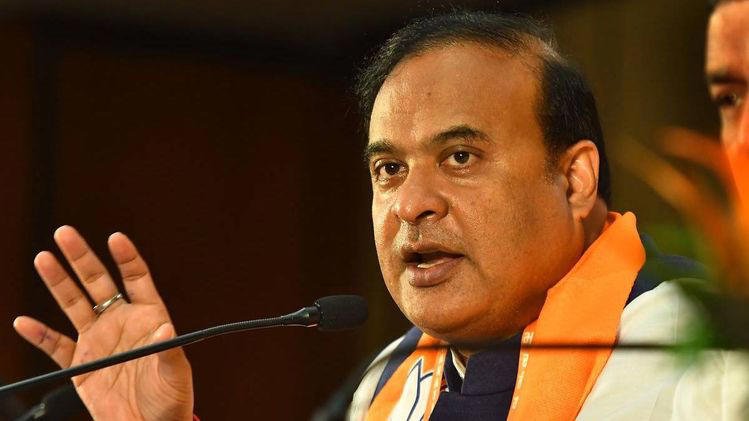
“Why would someone come to Assam to make semiconductors?” Assam Chief Minister Himanta Biswa Sarma raised and answered this question while responding to doubts about the state’s ability to attract high-tech manufacturing. The Chief Minister said such questions reflect outdated thinking and fail to recognise the rapid changes taking place in Assam’s industrial and infrastructure landscape.
Speaking on the issue, Sarma asserted that Assam is no longer on the margins of India’s industrial map. He said the state now offers policy clarity, improving infrastructure, and strategic advantages that make it suitable for advanced industries, including semiconductor manufacturing.
Read More: Exploring the Hidden Gems of Meghalaya: A Solo Traveler’s Guide
The Chief Minister added that India’s push to become self-reliant in electronics and chip production has opened opportunities for new regions. Assam, he said, is well-positioned to be part of this transformation.
Assam CM counters doubts on semiconductor potential
Addressing scepticism, Himanta Biswa Sarma said the assumption that semiconductors can only be manufactured in traditional industrial hubs needs to change. He noted that global supply chains are evolving, and companies now look for stable, well-supported locations.
The Chief Minister said Assam offers political stability, policy continuity, and strong administrative support. These factors, he added, matter as much as geography.
He also pointed out that semiconductor manufacturing today depends on ecosystems rather than legacy locations. Therefore, states that invest in infrastructure, skills, and governance can attract such industries.
Policy support key to Assam semiconductor manufacturing
Sarma highlighted that Assam has aligned its industrial policies with national priorities. He said the state is working closely with the Centre to attract investments in electronics and high-value manufacturing.
The Assam semiconductor manufacturing vision, he said, benefits from incentives under central schemes as well as state-level facilitation. Investors, he added, now receive single-window clearances and time-bound approvals.
The Chief Minister stressed that policy predictability builds investor confidence. Assam, he said, has ensured consistency in its industrial approach.
Strategic location offers long-term advantage
The Chief Minister said Assam’s strategic location adds to its appeal. Situated close to Southeast Asia, the state can emerge as a gateway for regional trade.
He noted that connectivity with neighbouring countries will improve further in the coming years. This development will support export-oriented industries, including electronics manufacturing.
Assam semiconductor manufacturing, Sarma said, can also benefit from regional integration initiatives. Improved connectivity reduces logistical challenges and opens new markets.
Infrastructure growth supports high-tech industry
Sarma said Assam has made major progress in infrastructure development. Road networks, power supply, and digital connectivity have improved significantly.
He added that uninterrupted power and water supply, critical for semiconductor units, remain a priority. Industrial parks and designated zones are being developed to meet these needs.
The Chief Minister said the state has focused on creating industry-ready infrastructure. Therefore, companies no longer face basic operational constraints.
Skilled workforce and education focus
Addressing concerns about skilled manpower, Sarma said Assam has a young and trainable workforce. The state, he said, is investing in technical education and skill development.
He noted that partnerships with educational institutions and industry players will support workforce training. Semiconductor manufacturing requires precision skills, and Assam plans to develop them locally.
The Chief Minister said human resource development remains central to Assam semiconductor manufacturing plans. Skill creation, he added, will go hand in hand with industrial growth.
Changing perception of Northeast industry
Sarma said doubts about Assam hosting advanced manufacturing stem from outdated perceptions of the Northeast. He argued that such views ignore recent progress.
The state, he said, has attracted investments in sectors like energy, logistics, and manufacturing. These successes demonstrate Assam’s growing industrial credibility.
Assam semiconductor manufacturing, he added, represents the next stage of this evolution. The state aims to move beyond resource-based industries toward technology-driven growth.
National vision supports regional diversification
The Chief Minister linked Assam’s ambitions with India’s broader semiconductor mission. He said national policy encourages diversification of manufacturing locations.
By expanding chip production beyond a few regions, India reduces risk and strengthens resilience. Assam’s participation, he said, supports this national objective.
Sarma added that balanced regional development remains essential for long-term economic stability. High-tech industries in the Northeast contribute to this balance.
Investor interest growing
According to the Chief Minister, investor interest in Assam is steadily increasing. Several companies, he said, have begun exploratory discussions.
While he did not share specific details, Sarma said the government remains in active engagement with potential investors. He stressed that serious interest reflects growing confidence.
Assam semiconductor manufacturing, he said, will not happen overnight. However, groundwork is already in place.
Long-term vision for Assam’s economy
Sarma said the state is planning for the next several decades, not just immediate gains. Semiconductor manufacturing, he added, fits into this long-term vision.
Such industries create high-quality jobs, support innovation, and strengthen the local economy. Assam, he said, wants to prepare its youth for future technologies.
The Chief Minister reiterated that Assam is ready to challenge conventional assumptions. He said the question should no longer be why someone would come to Assam to make semiconductors.
Instead, he said, the focus should be on how Assam can contribute to India’s technological future. With policy support, infrastructure growth, and strategic planning, Assam semiconductor manufacturing is no longer an improbable idea but an emerging possibility.
Read More: Tripura Launches Banana Waste Processing Facility