

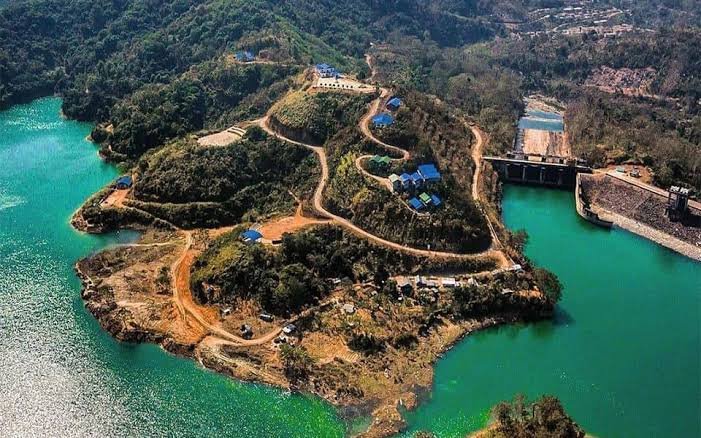
Wokha hydro project upgrades are increasingly focused on improving the reliability of Nagaland’s power infrastructure through better monitoring, protection and grid-management systems. The Doyang Hydroelectric Project in Wokha district remains the state’s major hydropower facility, with an installed capacity of 75 MW across three 25 MW generating units.
Recent power-system reviews, however, do not independently confirm that the Power Department has installed a new digital fault-check monitoring system specifically on the Doyang turbines. Available 2026 records instead show continuing work on protection systems and repeated fault investigations affecting the Sanis-Wokha transmission network.
Therefore, the latest developments are better understood as part of a wider push to improve fault detection, protection coordination and electricity reliability around Wokha rather than as a confirmed turbine-monitoring installation.
Pashchim Kanchanmala Cattle Theft Leaves Three Livestock Farmers Distressed
Wokha Hydro Project Upgrades Focus on Reliable Power Operations
The Doyang Hydroelectric Project is operated by the North Eastern Electric Power Corporation and was commissioned in 2000. The project harnesses the Doyang River and generates electricity through three 25 MW units, making it an important component of Nagaland’s power system.
The facility’s location in Wokha gives it strategic importance for the state’s electricity supply. Moreover, reliable generation depends not only on the turbines and generators themselves but also on transformers, switchgear, transmission lines, protection relays and grid-control systems.
Recent regional power coordination documents have highlighted reliability problems around the Sanis and Wokha areas. The North Eastern Regional Power Committee reported repeated disturbances involving the 132 kV Doyang-Sanis-Wokha transmission arrangement.
Consequently, digital monitoring and modern protection systems can play an important role in identifying abnormal electrical conditions and helping engineers determine the source of disturbances.
However, it is important to distinguish transmission-system monitoring from direct turbine-condition monitoring. The available records do not establish that a new digital fault-monitoring system has been installed specifically on the Doyang hydro turbines.
Digital Fault Detection Remains Important for Wokha’s Grid
The North Eastern Regional Power Committee recorded several instances of repeated tripping involving the 132 kV Doyang-Sanis line. A January 2026 review noted five such incidents during the month, while earlier records identified additional disturbances during 2025.
Engineers identified protection-related concerns during their analysis. In particular, the regional committee noted an unwanted operation of protection equipment at the Sanis end during certain fault conditions. It directed the Department of Power, Nagaland, to investigate the issue and improve the reliability of protection equipment.
Such systems form an important safety layer in modern electricity networks. Protection relays monitor electrical parameters and can trigger circuit breakers when equipment or lines experience abnormal conditions. Proper coordination helps isolate faults while limiting disruption to other parts of the network.
Furthermore, digital disturbance records can help engineers reconstruct an event after a trip occurs. The January 2026 regional review specifically called for standardisation of disturbance records and detailed reporting of grid events.
This indicates that data-based fault analysis is already an important part of improving reliability in the Wokha-Sanis power network.
Doyang Project Remains Central to Nagaland’s Hydropower System
The Doyang project remains Nagaland’s principal major hydroelectric installation. Government information identifies it as a 75 MW project with three generating units, each rated at 25 MW.
Its importance extends beyond electricity generation. The project has also influenced infrastructure development and employment in the surrounding area. During a 2025 visit, the Nagaland Governor reviewed the power station and received a briefing from NEEPCO officials on the project’s history, infrastructure development and community-related initiatives.
At the same time, the project continues to face issues connected with the reservoir and communities affected by the hydroelectric development. In August 2026, the Doyang Landowners’ Union submitted a representation seeking government intervention on matters including reservoir water levels, employment opportunities for affected families and a dedicated development fund.
These concerns show that hydroelectric infrastructure involves both technical and community dimensions. Therefore, maintaining the generating facility requires attention to equipment reliability as well as the interests of communities associated with the project.
The state’s wider electricity network also needs strengthening around the generation source. Regional power records have repeatedly discussed the condition of transmission links connecting Doyang, Sanis and Wokha.
Wokha Hydro Project Upgrades Need Integrated Monitoring
Modernising a hydropower facility involves more than installing monitoring equipment on individual machines. Engineers must also ensure that generation, protection, transmission and grid-control systems operate together.
The repeated transmission disturbances recorded around Wokha demonstrate why integrated monitoring is important. The 132 kV Wokha-Chiephobozu line, for example, remained under outage after a tower collapse near Longsa village, according to the regional power committee’s April 2026 agenda.
The same regional review noted repeated tripping of the Doyang-Sanis line during January 2026. Engineers therefore called for corrective measures and continued attention to protection-system reliability.
Moreover, earlier regional records had already raised concerns about repeated unwanted tripping at the Wokha end of the Sanis-Wokha line. The Department of Power was asked to investigate the reasons and ensure the health of protection equipment at the Wokha substation.
These developments provide a clearer picture of the current technology challenge. The priority is not simply to add digital equipment but to ensure that monitoring data leads to faster diagnosis, accurate protection responses and better maintenance decisions.
If the Power Department expands digital monitoring across generation and transmission assets, engineers could potentially obtain a more complete picture of equipment performance and electrical disturbances. Nevertheless, any specific new turbine-monitoring installation should only be reported after an official project announcement or technical document confirms it.
Conclusion
Wokha hydro project upgrades remain closely connected with efforts to improve the reliability of Nagaland’s electricity network. The 75 MW Doyang Hydroelectric Project continues to operate as the state’s major hydropower facility, while regional power authorities are addressing repeated transmission disturbances around the Sanis-Wokha network.
Current records confirm continuing attention to protection systems, fault analysis and disturbance reporting. However, available official evidence does not independently confirm the installation of a new digital fault-check monitoring system specifically along the Doyang hydro turbines.
Therefore, the most accurate description is that Wokha’s power infrastructure is moving toward stronger digital fault detection and protection management. Continued improvements in monitoring, transmission reliability and equipment maintenance can help strengthen the performance of the Doyang project and the wider regional grid.
FAQs
What is the Wokha hydro project?
The Doyang Hydroelectric Project is a 75 MW hydropower facility in Wokha district, Nagaland, operated by NEEPCO. It has three generating units of 25 MW each.
What are the latest Wokha hydro project upgrades?
Recent official records focus mainly on power-system protection, fault analysis and transmission reliability around Doyang, Sanis and Wokha.
Has a new digital fault-monitoring system been confirmed for the Doyang turbines?
No specific official source located for this report confirms a new digital fault-monitoring installation directly on the Doyang turbines. The available evidence concerns digital fault analysis and protection systems in the surrounding power network.
Why is fault monitoring important?
Fault monitoring helps engineers identify abnormal electrical conditions, analyse disturbances and improve the coordination of protection equipment, potentially reducing unnecessary outages and improving grid reliability.
Why is the Doyang project important to Nagaland?
Doyang is Nagaland’s major hydroelectric project, with 75 MW of installed capacity. Its generation and associated transmission infrastructure contribute to the state’s electricity supply.